
The Emergence of a Liquid Clean Energy Market: Implications for Investors


 Aime Summary
Regulatory Clarity and Market Infrastructure Innovation
The CFTC's designation of CleanTrade as a Swap Execution Facility (SEF) represents the first regulatory framework tailored specifically to clean energy derivatives. By enabling standardized trading of Virtual Power Purchase Agreements (VPPAs), physical Power Purchase Agreements (PPAs), and Renewable Energy Certificates (RECs), CleanTrade addresses long-standing inefficiencies such as fragmented pricing, opaque counterparty risk, and limited liquidity according to the platform. Within two months of its launch, the platform facilitated $16 billion in notional trading volume, underscoring its rapid institutional adoption. This growth is fueled by demand from corporations and investors seeking to hedge against energy price volatility while securing budget certainty and ESG alignment.
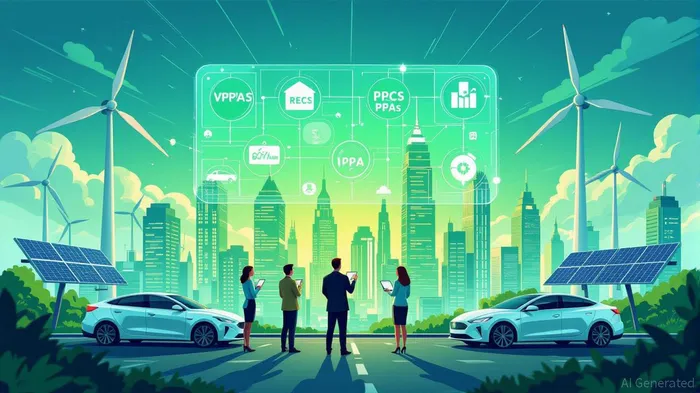 CleanTrade's integration of advanced analytics, including carbon risk and grid congestion modeling, further enhances its value proposition. These tools allow investors to quantify environmental impacts and optimize asset valuations, bridging the gap between financial and sustainability outcomes. By automating compliance with Dodd-Frank reporting requirements, the platform also reduces operational complexity, enabling seamless participation in a previously fragmented market.
Institutional Adoption and Strategic Opportunities
The institutional adoption of CleanTrade has been swift and significant. Major players such as Cargill and Mercuria have leveraged the platform to manage energy risks and hedge against price swings, reflecting its appeal to entities with large-scale energy procurement needs according to industry reports. For ESG-focused funds, CleanTrade provides a structured framework to align portfolios with decarbonization goals. A 2025 Morgan Stanley report highlights that 84% of institutional investors plan to increase holdings in sustainable assets, with renewables and energy efficiency as top priorities. CleanTrade's role in facilitating $1.1 trillion in global sustainable debt issuance underscores its growing influence in this space.
Investors are also capitalizing on CleanTrade's ability to standardize VPPAs and RECs. For example, the platform's transparent pricing mechanisms enable securitization vehicles to package clean energy assets into tradable instruments, attracting capital from infrastructure funds and pension funds seeking long-term, stable returns. Additionally, real-time analytics on carbon capture and grid performance allow investors to identify high-impact projects, enhancing both financial and environmental returns.
Market Expansion and Future Prospects
The implications of CleanTrade's success extend beyond individual investors. By Q3 2025, U.S. clean energy investment surged to $75 billion, contributing to a global total of $2.2 trillion in 2025-marking the first time clean energy investments surpassed fossil fuels. This shift is driven by CleanTrade's role in creating a liquid, transparent marketplace that reduces entry barriers for institutional capital. As the clean energy derivatives market expands, platforms like CleanTrade are likely to become critical infrastructure, enabling scalable participation and fostering innovation in ESG-aligned finance according to industry analysts.
For investors, the next phase of the energy transition presents opportunities to engage with markets that combine financial rigor with sustainability. Strategies could include:
1. VPPA Hedging: Utilizing CleanTrade's standardized contracts to lock in energy prices and mitigate exposure to fossil fuel volatility.
2. ESG-Linked Securitization: Leveraging CleanTrade's tools to structure and trade green bonds or renewable asset-backed securities.
3. Carbon Risk Analytics: Incorporating CleanTrade's data into portfolio risk assessments to identify undervalued clean energy assets.
Conclusion
The CFTC's approval of CleanTrade has catalyzed a new era in clean energy markets, transforming them from opaque, fragmented spaces into liquid, institutional-grade ecosystems. As regulatory clarity and technological innovation converge, investors are uniquely positioned to capitalize on this momentum. By adopting strategies that leverage CleanTrade's infrastructure, market participants can align their portfolios with the dual imperatives of profitability and planetary stewardship-ensuring they remain competitive in a rapidly evolving energy landscape.

Blending traditional trading wisdom with cutting-edge cryptocurrency insights.
Latest Articles
Stay ahead of the market.
Get curated U.S. market news, insights and key dates delivered to your inbox.
AInvest
PRO
AInvest
PRO



Comments
No comments yet