
The Emergence of a Liquid Clean Energy Market: How CleanTrade is Reshaping Institutional Investment in Renewable Assets


 Aime Summary
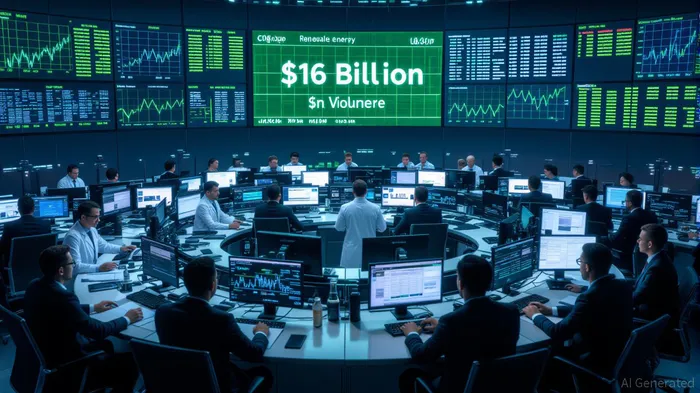 Let's start with the basics: CleanTrade's SEF designation in September 2025 has transformed Virtual Power Purchase Agreements (VPPAs), Power Purchase Agreements (PPAs), and Renewable Energy Certificates (RECs) into institutional-grade commodities. Think of it as the Intercontinental ExchangeICE-- (ICE) for renewables. By operating under the same compliance framework as traditional energy markets, CleanTrade has erased the "wild west" stigma that once deterred big money from clean energy derivatives. Within two months of approval, the platform facilitated $16 billion in notional trading volume-a figure that screams "liquidity unlocked." This isn't just growth; it's validation.
The real magic here is how CleanTrade addresses the historic pain points of clean energy investing. Legacy markets were riddled with counterparty risk and lack of transparency, making it tough for institutions to hedge or scale. CleanTrade's automated compliance tools, real-time pricing, and centralized trading infrastructure? That's the holy grail for risk managers. For example, a hedge fund can now hedge against fossil fuel price swings by shorting a VPPA while buying a REC to meet ESG targets-all on a platform that's as regulated as the NYMEX.This dual alignment of financial and environmental goals? That's the future of institutional investing.
And let's talk about the players. Cargill and Mercuria-two of the biggest names in commodities-are already on board. Their participation isn't just a vote of confidence; it's a signal that clean energy is now a serious asset class. These firms aren't here to play-they're here to build long-term portfolios. With CleanTrade's structure, they can execute complex strategies like arbitraging solar vs. wind contracts or locking in prices for green hydrogen projects. The result? A market that's not only liquid but also dynamic enough to attract alpha-hungry investors.
But here's the kicker: This isn't just about today's numbers. CleanTrade is accelerating the transition to a low-carbon economy by bridging the gap between legacy energy markets and renewable innovation. Global clean energy investment has already outpaced fossil fuels in 2025, and CleanTrade's platform is the infrastructure that turns that capital into scalable, tradable assets. For investors, this means new alpha opportunities in a sector that's scaling faster than anyone predicted.
So, what's the takeaway? Clean energy is no longer a moral play-it's a financial one. The CFTC's blessing has turned CleanTrade into the gateway for institutions to capitalize on the green transition. With $16 billion in volume already under its belt and a regulatory framework that mirrors traditional markets, this is a market structure innovation that's here to stay. For those who've been on the sidelines, the message is clear: The clean energy train has left the station, and CleanTrade is the conductor.

Mezclando la sabiduría tradicional en el comercio con las perspectivas más avanzadas sobre las criptomonedas.
Latest Articles
Stay ahead of the market.
Get curated U.S. market news, insights and key dates delivered to your inbox.
AInvest
PRO
AInvest
PRO



Comments
No comments yet