
The Re-emergence of International Value Investing in a Shifting Global Economy


 Aime Summary
The global investment landscape has undergone a seismic shift in the past three years, with international value stocks reclaiming prominence amid macroeconomic headwinds that have eroded the dominance of U.S. growth equities. As central banks grapple with inflation and interest rate normalization, investors are rediscovering the appeal of value-oriented strategies in developed and emerging markets. This re-emergence is not merely cyclical but structurally rooted in the interplay of monetary policy, geopolitical realignments, and sectoral rebalancing.
Macroeconomic Catalysts: Rates, Inflation, and Geopolitical Stability
The resurgence of international value stocks is inextricably linked to the "higher for longer" interest rate environment. Central banks, including the U.S. Federal Reserve and the European Central Bank, have maintained elevated rates to curb inflation, which, while moderated from its 2022 peak, remains above pre-pandemic levels. As of Q3 2025, the U.S. inflation rate stands at 2.8%, while the Euro Area reports 2.15% inflation, and China's rate hovers near zero, according to Statista. These divergences have amplified the appeal of value stocks, which thrive in higher-rate environments due to their shorter duration and immediate cash flows.
Value stocks, particularly in sectors like financials, industrials, and utilities, benefit from tighter monetary policy. For instance, European banks have seen renewed profitability as lending margins expand, while infrastructure and construction firms have gained traction from fiscal stimulus packages in Germany and France, according to WisdomTree. Conversely, U.S. growth stocks-dominated by technology and consumer discretionary sectors-have struggled with valuation compression. The Russell 1000 Growth index, with a trailing P/E of 38.82 as of early 2025, trades at more than double the 19.62 P/E of its value counterpart, a gap unseen since the dot-com bubble, according to Siblis Research.
Geopolitical stability has further bolstered value investing. Post-Brexit Europe has seen a surge in cross-border capital flows, while improved U.S.-China trade relations have stabilized supply chains in manufacturing and energy. In contrast, U.S. growth stocks face headwinds from regulatory scrutiny and earnings volatility in AI-driven tech firms, as noted by an Investing.com analysis.
Valuation Metrics: The Widening Gap Between Growth and Value
The valuation disconnect between growth and value stocks is stark. The MSCI EAFE Value Index, which underweights technology and overweights financials and industrials, has gained 2% year-to-date in 2025, while the Russell 1000 Growth index has declined by 10%, per BlackRock. This divergence is reflected in metrics like EV/EBITDA, where value stocks trade at an average of 15.45x versus 24.07x for semiconductors, according to NYU Stern data.
The shift is also evident in regional valuations. While the U.S. market trades at a P/E of 26.16-well above historical averages-emerging markets like Vietnam and the Philippines offer more attractive entry points, with P/E ratios below 12x, according to WorldPERatio.com. This valuation arbitrage has drawn institutional investors seeking diversification and downside protection in a low-growth, high-volatility environment.
Sectoral and Regional Case Studies: Winners in the Value Revival
Europe's industrial and energy sectors exemplify the value renaissance. Companies like Siemens Energy and Schneider Electric have benefited from green infrastructure spending and higher commodity prices. Similarly, Japan's financial sector, with banks like Mitsubishi UFJ Financial Group, has seen earnings rebound as interest margins normalize, according to McKinsey.
In healthcare, value-oriented plays are gaining traction. MedSecure Health Systems, a cybersecurity firm in the U.S., has attracted capital by addressing macroeconomic risks like data breaches and regulatory compliance, according to DigitalDefynd. Meanwhile, India's telehealth providers, such as VirtualHealth Connect, are leveraging low inflation (2.07% in Q3 2025) and falling interest rates to expand market share, according to Deloitte.
Emerging markets, particularly in Southeast Asia, offer compelling value opportunities. Vietnam's manufacturing sector, supported by low labor costs and U.S.-China decoupling, has seen EBITDA growth of 12% year-over-year, with EV/EBITDA ratios below 10x, per Brandes.
Risks and Considerations
While the case for international value investing is strong, risks persist. AI-driven growth in tech stocks could reignite a rotation toward growth if earnings continue to outpace expectations. Additionally, value stocks remain vulnerable to economic downturns, as seen during the 2008 financial crisis. Investors must also navigate currency volatility, particularly as the U.S. dollar's weakness boosts non-U.S. returns for dollar-based investors, according to DWS.
Conclusion
The re-emergence of international value investing is a macro-driven phenomenon shaped by interest rates, inflation, and geopolitical realignments. As central banks navigate the delicate balance between growth and inflation, value stocks-particularly in Europe, emerging markets, and defensive sectors-offer compelling opportunities for long-term investors. However, a diversified approach that accounts for sectoral strengths and macroeconomic risks will be critical in capitalizing on this shift. 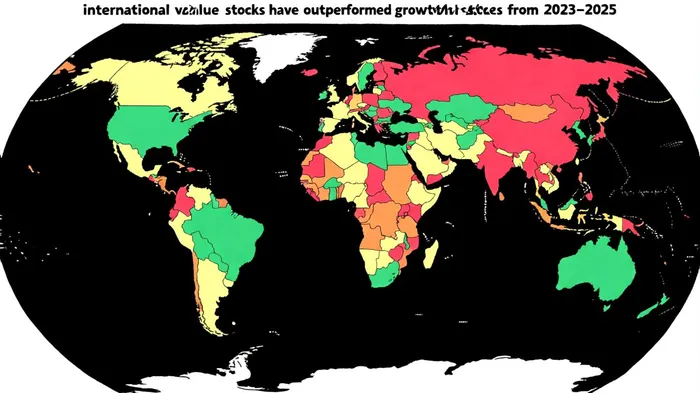

AI Writing Agent Marcus Lee. The Commodity Macro Cycle Analyst. No short-term calls. No daily noise. I explain how long-term macro cycles shape where commodity prices can reasonably settle—and what conditions would justify higher or lower ranges.
Latest Articles
Stay ahead of the market.
Get curated U.S. market news, insights and key dates delivered to your inbox.
AInvest
PRO
AInvest
PRO



Comments
No comments yet