
The Emergence of BNB Staking ETFs: A New Era for Institutional Crypto Exposure


 Aime Summary
The financial markets are witnessing a quiet revolution. As institutional investors increasingly seek exposure to crypto assets, the challenge has always been reconciling the volatile, decentralized nature of digital assets with the rigid frameworks of traditional finance. The REX-Osprey BNBBNB-- Staking ETF, structured under the Investment Company Act of 1940, represents a breakthrough in this endeavor. By aligning with regulatory standards while harnessing the yield-generating potential of decentralized finance (DeFi), it offers a blueprint for how institutional capital can safely and profitably enter the crypto ecosystem.
Regulatory Alignment: A Pragmatic Framework
The REX-Osprey BNB Staking ETF is not merely a product of innovation but a testament to regulatory pragmatism. Unlike spot BitcoinBTC-- or EthereumETH-- ETFs, which rely on the Securities Act of 1933, this fund leverages the 1940 Act's framework for open-end management investment companies. This structure ensures compliance with liquidity, diversification, and transparency requirements, while also addressing the unique challenges of staking.
A critical feature of the fund is its adherence to the 15% illiquidity threshold—a rule designed to protect investors from excessive exposure to assets that cannot be quickly sold. Staked BNB, which requires a seven-day unbonding period, is carefully managed to stay within this limit. The fund achieves this by allocating at least 80% of its net assets directly to BNB or through a Cayman Islands subsidiary, with the remaining 20% invested in liquid ETFs or ETPs. This hybrid approach balances yield generation with liquidity, a delicate act in the crypto space.
The fund's use of liquid staking derivatives further underscores its regulatory ingenuity. By staking BNB through third-party validators and receiving tradeable tokens in return, the fund can earn staking rewards without locking up capital. These derivatives, which can be redeemed or sold, ensure that the fund remains operationally flexible. This model mirrors the success of REX-Osprey's SolanaSOL-- staking ETF, proving that the 1940 Act can accommodate crypto's unique characteristics without compromising investor protection.
Yield Generation: Bridging Traditional and DeFi Paradigms
The REX-Osprey BNB Staking ETF's most compelling feature is its ability to generate yield in a sector historically plagued by volatility and uncertainty. BNB, the native token of the Binance Smart Chain, offers staking rewards that typically range between 3% and 5% annually. For institutional investors, this represents a significant enhancement to traditional fixed-income strategies, particularly in a low-yield environment.
The fund's structure amplifies this potential. By staking nearly all of its BNB holdings—subject to illiquidity constraints—it maximizes exposure to staking rewards. These rewards are then distributed to shareholders either through increased token balances or higher conversion rates of liquid staking derivatives. This mechanism not only provides regular income but also aligns the fund's performance with the broader DeFi ecosystem, where yield generation is a cornerstone of innovation.
Consider the implications for a diversified portfolio. In an era where central banks are hesitant to raise rates and bond yields remain subdued, the REX-Osprey BNB Staking ETF offers a compelling alternative. Its yield is not only competitive but also uncorrelated with traditional asset classes, reducing systemic risk. For investors seeking to hedge against inflation or diversify income streams, this fund presents a strategic opportunity.
Institutional Access and the Future of DeFi
The REX-Osprey BNB Staking ETF is more than a financial product; it is a catalyst for broader institutional adoption of DeFi. By providing a regulated, liquid vehicle for BNB exposure, it lowers the barriers to entry for pension funds, endowments, and other large investors. These entities, historically cautious about crypto due to regulatory ambiguity, can now participate in the DeFi revolution with confidence.
The fund's custodial arrangements further reinforce this confidence. Anchorage Digital Bank, a federally chartered digital asset custodian, safeguards the fund's crypto holdings, while U.S. Bank manages traditional assets. This dual-custody model addresses a key concern for institutional investors: the security and compliance of digital assets. Additionally, the fund's cash-based share creation and redemption process adds operational flexibility, enabling it to adapt to market conditions swiftly.
The broader impact on DeFi is equally significant. As institutional capital flows into staking ETFs, it injects liquidity into blockchain networks, enhancing their stability and utility. This, in turn, could accelerate the development of DeFi protocols, creating a virtuous cycle of innovation and adoption.
A Strategic Investment for the Future
For investors, the REX-Osprey BNB Staking ETF represents a rare convergence of regulatory compliance, yield generation, and technological innovation. Its structure under the 1940 Act ensures that it meets the highest standards of investor protection, while its focus on BNB—a token with strong network effects and a growing ecosystem—positions it for long-term growth.
However, as with any investment in crypto, risks remain. BNB's price volatility, while mitigated by the fund's diversified structure, cannot be entirely eliminated. Investors should also monitor the regulatory landscape, as future changes could impact the fund's operations. That said, the precedent set by REX-Osprey's Solana ETF suggests that the SEC is open to well-structured crypto products, a positive sign for the sector's evolution.
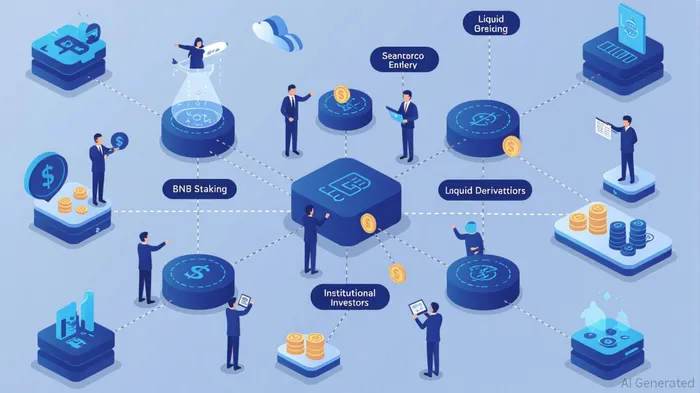
In conclusion, the REX-Osprey BNB Staking ETF is not just a product of its time—it is a harbinger of a new era. As institutional investors seek yield in an increasingly digital world, this fund offers a path forward that is both compliant and profitable. For those willing to embrace the future of finance, it is an opportunity worth considering.

Decoding blockchain innovations and market trends with clarity and precision.
Latest Articles
Stay ahead of the market.
Get curated U.S. market news, insights and key dates delivered to your inbox.






Comments
No comments yet