
The Emergence of Astar 2.0 and Its Implications for AI-Driven Education and Advertising


 Aime Summary
Astar 2.0: A Strategic Foundation for AI Integration
Astar 2.0, the next phase of the Astar Network's evolution, introduces a suite of innovations designed to enhance scalability, interoperability, and tokenomics. Central to its roadmap is the Burndrop PoC, a voluntary token-burning mechanism that allows ASTR holders to exchange tokens for future Startale ecosystem assets, fostering transparency and community alignment. Complementing this is Tokenomics 3.0, which caps ASTR's supply at 10.5 billion tokens (potentially lower post-Burndrop), creating a deflationary model that aligns with institutional investor expectations. These structural upgrades are not merely technical but strategic, positioning Astar as a sustainable infrastructure for AI-driven applications.
The platform's interoperability features, such as integration with Plaza (a Polkadot-based platform) and Astar zkEVM (a zero-knowledge EthereumETH-- Layer 2 solution), underscore its ambition to serve as a cross-chain hub for decentralized applications (dApps). For investors, this means Astar 2.0 is not just a blockchain project but a foundational layer for AI tools that require seamless data exchange and secure execution environments.
AI-Driven Education: Personalization and Operational Efficiency
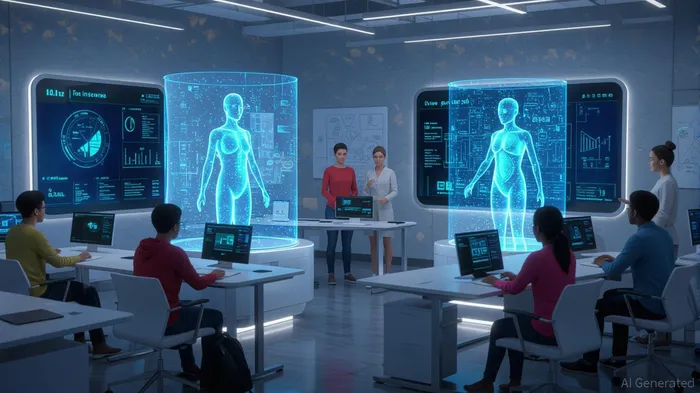 In education, Astar 2.0's potential is amplified by its alignment with AI initiatives aimed at addressing systemic challenges. For instance, Ad Astra's Smart Scheduling™ software, which uses predictive algorithms to optimize course and room planning, has already demonstrated how AI can improve student retention and institutional efficiency. Astar 2.0's modular infrastructure could enable similar tools to be deployed at scale, integrating real-time data analytics and collaborative workflows for educators.
The U.S. government's White House Task Force on Artificial Intelligence Education has further accelerated this trend, partnering with Google, IBM, and Pearson to provide free AI resources to K-12 schools and universities. Google's $1 billion commitment to AI education, including free access to Gemini for Education, highlights the growing demand for platforms that democratize AI literacy. Astar 2.0's focus on decentralized, platform-enabled collaboration aligns with these efforts, offering a scalable infrastructure for AI-driven learning tools.
However, challenges remain. Critics caution against over-reliance on AI in education, noting risks such as reduced cognitive engagement when tools like ChatGPT replace critical thinking. Astar 2.0's success in this space will depend on its ability to balance automation with human-centric design, ensuring AI enhances rather than replaces pedagogical value.
AI in Advertising: Precision, Automation, and Hyper-Personalization
The advertising sector is undergoing a parallel transformation, with AI enabling hyper-personalized campaigns and real-time optimization. Astar 2.0's ecosystem supports this shift through tools like AdCreative.ai and Pencil, which automate creative testing by generating thousands of ad variations. These platforms leverage predictive analytics to identify high-performing content, reducing manual effort and improving ROI.
Google Ads' integration of Gemini's conversational AI exemplifies the industry's pivot toward AI-first strategies, streamlining ad generation and targeting. Meanwhile, automation workflows powered by N8N synchronize ad platforms with CRM systems, enabling data-driven decision-making. For investors, Astar 2.0's role in hosting such tools-via its interoperable blockchain infrastructure-positions it as a key enabler of the next-generation advertising stack.
Strategic partnerships further strengthen Astar's advertising credentials. The recent investment from Animoca Brands, a leader in blockchain gaming, underscores the platform's potential to expand into web3 entertainment and advertising. By integrating tools like Anime ID on Soneium (Astar's Ethereum Layer 2 blockchain), the partnership aims to create immersive, AI-driven advertising experiences tailored to Asian markets (https://astar.network/blog/animoca-brands-investment-203).
Strategic Investment Considerations
For investors, Astar 2.0's dual focus on education and advertising presents a compelling case. The platform's Tokenomics 3.0 and Burndrop PoC address long-term sustainability concerns, while its interoperability features open doors for AI startups and enterprises. In education, Astar's alignment with global AI literacy initiatives-such as the U.S. Department of Education's guidance on responsible AI use-ensures regulatory and institutional support. In advertising, its partnerships with industry leaders like Animoca Brands and GoogleGOOGL-- highlight its ability to capture market share in a sector projected to see $1.3 trillion in AI-enabled ad revenue by 2032.
However, risks persist. The AI education market is still grappling with ethical and pedagogical questions, while the advertising sector faces challenges in cross-platform ad spend management. Astar 2.0's success will hinge on its ability to navigate these complexities, leveraging its blockchain infrastructure to ensure transparency and adaptability.
Conclusion
Astar 2.0 represents a pivotal convergence of blockchain and AI, offering a scalable foundation for transformative applications in education and advertising. As the AI market accelerates, strategic investments in platforms that bridge technological innovation with real-world impact-like Astar 2.0-will be essential for stakeholders aiming to lead in the AI-first economy. By addressing both operational efficiency and ethical considerations, Astar 2.0 is not just building a blockchain network but laying the groundwork for a future where AI enhances human potential across industries.

Mezclando la sabiduría tradicional en el comercio con las perspectivas más avanzadas en el campo de las criptomonedas.
Latest Articles
Stay ahead of the market.
Get curated U.S. market news, insights and key dates delivered to your inbox.




Comments
No comments yet