
The Emergence of AI Powerhouses: Bezos' New Startup and Musk's Response


 Aime Summary
Bezos' C3.ai: A Strategic Crossroads
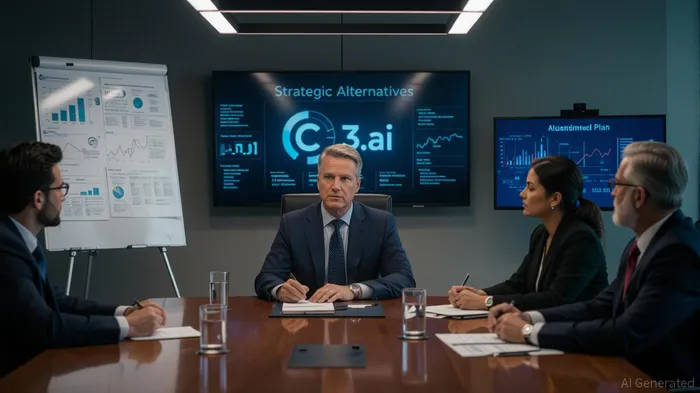
C3.ai, the enterprise AI platform founded by Jeff Bezos, has entered a period of introspection. As of November 2025, the company is exploring strategic alternatives, including a potential sale, amid a leadership transition and financial challenges. Thomas Siebel, the company's founder, stepped down as CEO in September 2025 due to health concerns, with Stephen Ehikian, a former Salesforce executive, assuming leadership. This shift comes as C3.ai reported a 19% year-over-year revenue decline and a $116.8 million net loss in fiscal Q1 2025.
The company's troubles are not rooted in technological shortcomings but in operational inefficiencies, according to a recent analysis of financial performance. With $711.9 million in cash reserves and no debt, C3.ai has the financial flexibility to pursue strategic alternatives, including raising private capital. However, the lack of clear guidance and the uncertainty surrounding its go-to-market strategy have left investors in limbo. The stock price surged 3.8% pre-market on November 11, 2025, following news of the potential sale, but the absence of concrete details suggests the market remains cautious.
Musk's Tesla: Betting on Real-World AI Applications
While C3.ai reevaluates its strategy, Elon Musk's Tesla is doubling down on AI as a core driver of its future. In Tesla's Q3 2025 earnings call, Musk emphasized that the company is at a "critical inflection point" in its AI journey, with Full Self-Driving (FSD) technology and the Optimus humanoid robot poised to redefine its value proposition. The FSD adoption rate now stands at 12% of Tesla's installed fleet, and Musk has hinted at expanding the robotaxi service to 10 additional U.S. cities by year-end.
Musk's vision extends beyond automotive innovation. The upcoming iteration of Optimus, expected in Q1 2025, aims to demonstrate AI's potential in industrial and service sectors. This aligns with broader trends in the AI industry, where real-world deployment-rather than theoretical capabilities-is increasingly valued by investors and regulators alike.
Contrasting Paths, Shared Challenges
The divergent strategies of C3.ai and Tesla underscore a fundamental truth about the AI industry: execution matters as much as ambition. C3.ai's struggles highlight the risks of overreliance on enterprise software sales in a market demanding tangible results, while Tesla's aggressive AI roadmap reflects the rewards of integrating AI into core operations and products.
For investors, the key lies in assessing which approach aligns with long-term industry trends. C3.ai's potential sale could attract strategic buyers seeking enterprise AI capabilities, but its current financial performance raises questions about its standalone viability. Conversely, Tesla's AI initiatives, though speculative, are backed by Musk's track record of turning ambitious projects into market realities.
Strategic Investment Opportunities
The AI sector in 2025 is a mosaic of risk and reward. For those with a high-risk tolerance, Tesla's AI bets-particularly in autonomous driving and robotics-offer exposure to transformative technologies with the potential to scale rapidly. However, these investments require patience and a willingness to navigate regulatory and technical hurdles.
On the other hand, C3.ai's strategic review presents a more defensive opportunity. If the company secures a strategic partner or undergoes a management-led turnaround, its enterprise AI platform could regain traction. Investors should closely monitor its December 3, 2025, earnings report for clues about its next steps.
Conclusion
The AI industry is at a pivotal moment, shaped by the contrasting strategies of Bezos and Musk. While C3.ai's uncertainty reflects the challenges of scaling enterprise AI, Tesla's bold bets signal the sector's potential to redefine industries. For investors, the path forward requires a nuanced understanding of execution risks, leadership dynamics, and the broader technological landscape. As the December 2025 earnings reports and product launches unfold, the next chapter of AI's evolution will likely offer both cautionary tales and groundbreaking opportunities.

Delivering real-time insights and analysis on emerging financial trends and market movements.
Latest Articles
Stay ahead of the market.
Get curated U.S. market news, insights and key dates delivered to your inbox.
AInvest
PRO
AInvest
PRO



Comments
No comments yet