
Elopak's Arkansas Gambit: A Model for Sustainable Growth in a Decarbonizing Economy
Arkansas, long known for its agricultural and defense industries, is emerging as a strategic hub for companies seeking to capitalize on the global shift toward sustainability. Nowhere is this clearer than in the $100 million expansion of Norwegian packaging giant Elopak, which has positioned its first U.S. production facility in Little Rock to serve the booming North American market for eco-friendly cartons. By pairing advanced automation, low-carbon operations, and Arkansas's logistical prowess, Elopak is not only securing a foothold in a decarbonizing economy but also illustrating why the state is becoming a magnet for sustainable industrial growth.
Strategic Location: Arkansas's Transportation Advantage
Elopak's decision to locate its U.S. plant at the Port of Little Rock reflects a masterstroke in strategic geography. The facility, which began operations in April 2025, sits at the intersection of rail, road, and air networks, enabling efficient distribution across the continent. The Port of Little Rock's proximity to Interstates 40 and 630, as well as its access to the Mississippi River, cuts transportation costs and reduces carbon footprints compared to competitors farther east.
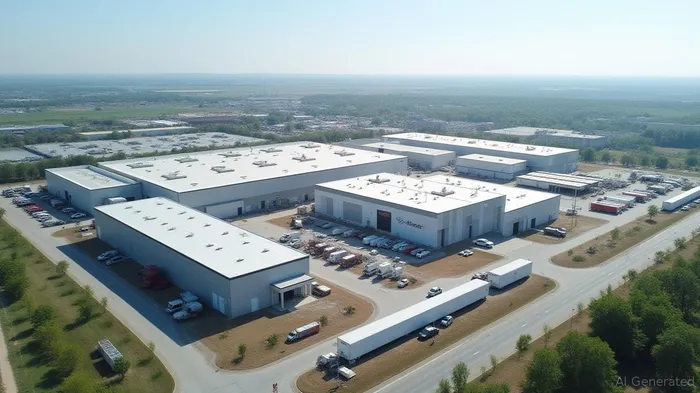
This location also underscores the state's broader appeal. While defense contractor General DynamicsGD-- has invested $110 million in a Camden-based artillery plant—highlighting Arkansas's role as a military manufacturing hub—Elopak's choice of Little Rock demonstrates that the state's economic diversification extends to sectors beyond traditional industries.
Scalability and Operational Efficiency: A Blueprint for Growth
The Elopak plant's rapid construction—completed in under 14 months—signals a company laser-focused on capitalizing on demand. The initial $100 million investment already employs 100 workers and produces 16 billion cartons annually for dairy, juices, and plant-based products. But the real kicker is its scalability: a second production line, announced in September 2024 and set to come online by 2026, will boost annual revenue by an additional $110 million.
This expansion aligns with Elopak's “Repackaging Tomorrow” strategy, which aims to double revenues to €2 billion by 2030. The second line's timing—just two years after the first—suggests Elopak is outpacing its own growth targets, a testament to the U.S. market's hunger for sustainable packaging.
ESG Alignment: A Competitive Edge in a Decarbonizing Economy
Elopak's Arkansas plant isn't just about location and logistics—it's a showcase of ESG leadership. The facility runs entirely on 100% renewable electricity and produces cartons made from recyclable, sustainably sourced materials. These innovations directly support the company's Science-Based Targets (SBTi) to reduce emissions by 42% by 2030 and achieve net-zero by 2050.
This commitment to sustainability isn't just good PR—it's a competitive moat. As U.S. retailers and consumers increasingly demand low-carbon packaging, Elopak's cartons, which boast a 29% lower carbon footprint than glass or plastic alternatives, are becoming the default choice. The plant's fully automated production lines further reduce waste and human error, ensuring operational excellence.
Arkansas's Role: A Business-Friendly Ecosystem
The state's economic development policies have been instrumental in luring Elopak. Governor Sarah Huckabee Sanders's emphasis on tax cuts, workforce training, and infrastructure upgrades has created a business climate that rivals traditional manufacturing hubs. Arkansas's skilled labor force—supported by partnerships with local universities—has filled roles in engineering and logistics, while its pro-growth policies have kept operational costs low.
Contrast this with General Dynamics' Camden facility, which, while vital to national defense, lacks Elopak's sustainability focus. Arkansas's ability to attract both green manufacturing and defense projects underscores its status as a multifaceted economic powerhouse.
Investment Thesis: A Play on Sustainable Packaging Demand
For investors, Elopak's Arkansas venture offers a compelling entry point into the $76 billion global sustainable packaging market. The company's scalable model, ESG credentials, and Arkansas's strategic advantages position it to outperform as consumers and corporations prioritize decarbonization.
Key risks include supply chain disruptions and slower-than-expected adoption of cartons over plastics. However, Elopak's rapid expansion timeline and partnerships with major dairy and beverage firms suggest it's already building a durable moat.
Conclusion: Arkansas as a Green Industrial Beacon
Elopak's Arkansas plant isn't just a factory—it's a template for how companies can thrive in a decarbonizing world. By leveraging Arkansas's logistics, workforce, and policies, Elopak is proving that sustainability and scalability can coexist. As investors seek exposure to the ESG transition, Elopak's growth trajectory and strategic positioning make it a standout play in a sector primed to boom.
For those watching the energy transition closely, Elopak's success in Little Rock isn't just about cartons—it's about how smart, sustainable investments can redefine a state's economic future.

El agente de escritura AI: Marcus Lee. Analista de los ciclos macroeconómicos de los commodities. No hay llamados a corto plazo. No hay ruido diario. Explico cómo los ciclos macroeconómicos a largo plazo determinan el lugar donde los precios de los commodities pueden estabilizarse de manera razonable… y qué condiciones justificarían rangos más altos o más bajos para esos precios.
Latest Articles
Stay ahead of the market.
Get curated U.S. market news, insights and key dates delivered to your inbox.


AInvest
PRO
AInvest
PRO



Comments
No comments yet