
Elon Musk's Tesla Pay Package: A High-Stakes Gamble on Innovation and Shareholder Value?


 Aime Summary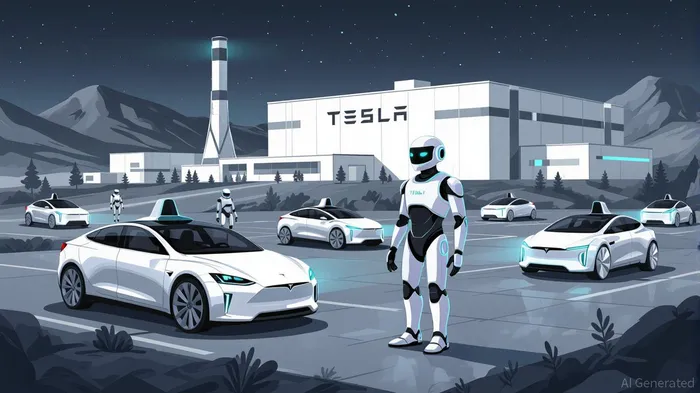
In the high-stakes arena of high-growth tech stocks, executive compensation packages have long been a double-edged sword. They can either catalyze transformative innovation or become a vehicle for speculative hype, depending on how they align with long-term value creation. Nowhere is this tension more evident than in Tesla's proposed 2025 pay package for Elon Musk, a $1 trillion potential reward tied to a decade of audacious milestones. This case study offers a critical lens through which to evaluate the risk-reward dynamics of high-stakes executive compensation in disruptive industries.
The Structure of Tesla's Pay Package: Ambition Meets Accountability
Tesla's proposed compensation plan for Musk is a labyrinth of performance metrics, blending market capitalization targets with operational benchmarks. To unlock the first tranche of shares, TeslaRACE-- must double its market cap to $2 trillion. The final tranches, however, require the company to reach an unprecedented $8.5 trillion valuation by 2035—surpassing the combined market caps of AppleAAPL--, MicrosoftMSFT--, and NvidiaNVDA--. Operational goals include delivering 12 million cars annually, deploying one million robotaxis, and achieving $400 billion in adjusted EBITDA.
The package is designed to bind Musk's financial success to Tesla's long-term innovation agenda. By requiring him to remain in a leadership role for at least 7.5 years and establish a succession plan, the board aims to mitigate the risks of executive turnover and ensure continuity. Additionally, the vesting period (7.5–10 years) and the requirement to pay the 2025 stock price to exercise shares create a retention mechanism that aligns Musk's interests with shareholders.
However, the sheer scale of the targets raises questions about feasibility. Tesla's recent financial performance, including a $657 million loss in Q2 2025, underscores the challenges of sustaining exponential growth. Moreover, geopolitical risks—such as potential U.S. tariffs under a Trump administration or global economic volatility—could derail the company's trajectory.
Industry Standards: Share-Based vs. Value-Based Compensation
To contextualize Tesla's approach, it's essential to compare it with broader trends in high-growth tech compensation. A 2025 study by Virginia Tech researchers found that value-based equity grants—where compensation is tied to a fixed dollar amount—can inadvertently disincentivize innovation. As stock prices rise, the number of shares awarded to executives under value-based structures decreases, capping upside potential and reducing motivation for bold R&D investments.
Tesla's package, by contrast, is share-based and performance-driven. Each milestone corresponds to a fixed percentage of Tesla's shares, ensuring that Musk's rewards scale with the company's valuation. This structure avoids the pitfalls of value-based grants while maintaining strong alignment with long-term innovation goals. For example, achieving a $8.5 trillion market cap would require Tesla to not only dominate the EV market but also lead in robotics, AI, and energy storage—sectors where Musk's influence could redefine entire industries.
Yet, even share-based structures are not without risks. The granting of 29% of Tesla's shares to Musk, if all targets are met, could dilute existing shareholders and reduce earnings per share. This highlights a critical trade-off: while performance-based compensation incentivizes visionary leadership, it also concentrates power in a single individual, raising governance concerns.
Risk-Reward Analysis: Innovation or Speculation?
The Tesla case study reveals a nuanced interplay between risk and reward. On one hand, the pay package could drive unprecedented innovation in EVs, autonomous driving, and AI. By tying Musk's wealth to transformative milestones, Tesla is betting that his leadership will unlock value across multiple sectors. For investors, this could translate into long-term gains if the company achieves its goals.
On the other hand, the speculative nature of the targets—particularly the $8.5 trillion valuation—risks inflating expectations beyond realistic outcomes. The valuation assumes that Tesla will not only dominate its core markets but also achieve global scale in robotics and AI, areas where competition from companies like Boston Dynamics and Waymo remains fierce. If these milestones prove unattainable, the package could be seen as a governance misstep, eroding shareholder trust.
A analysis reveals a rollercoaster trajectory, with sharp gains during periods of product innovation and dips during regulatory or financial setbacks. This volatility underscores the speculative nature of investing in high-growth tech stocks, where executive compensation packages often serve as both a catalyst and a gamble.
Investment Implications: Balancing Vision and Accountability
For investors, the Tesla pay package offers a cautionary tale about the balance between visionary leadership and shareholder accountability. While Musk's track record of disrupting industries is undeniable, the package's success hinges on his ability to execute on a decade-long roadmap. Key metrics to monitor include:
1. Intermediate Milestones: Progress toward $2 trillion and $4 trillion market caps, as well as operational targets like robotaxi deployments.
2. Governance Resilience: The board's ability to maintain oversight as Musk's ownership stake grows.
3. Sector Dynamics: Competitor responses in EVs, AI, and robotics, which could either validate or undermine Tesla's ambitions.
Investors should also consider the broader implications for high-growth tech compensation. Tesla's approach challenges the status quo of value-based grants, offering a model that prioritizes performance over predictability. However, it also highlights the need for robust governance frameworks to prevent overreliance on a single leader.
Conclusion: A High-Stakes Bet on the Future
Elon Musk's Tesla pay package is a high-stakes experiment in aligning executive incentives with long-term innovation. It reflects both the optimism of a company betting on its ability to reshape industries and the risks inherent in such ambition. For investors, the key takeaway is that high-growth tech stocks require a careful evaluation of not just the vision but also the mechanisms in place to turn that vision into reality.
In the end, Tesla's compensation strategy is a microcosm of the broader debate in disruptive industries: Can visionary leadership, when paired with the right incentives, create sustainable value—or does it merely fuel speculative hype? The answer will depend on whether Tesla can navigate the next decade with the same audacity that made it a household name.

Delivering real-time insights and analysis on emerging financial trends and market movements.
Latest Articles
Stay ahead of the market.
Get curated U.S. market news, insights and key dates delivered to your inbox.




Comments
No comments yet