
Elon Musk’s Tesla Leadership: A Steer Toward Dominance or a Risky Gamble?
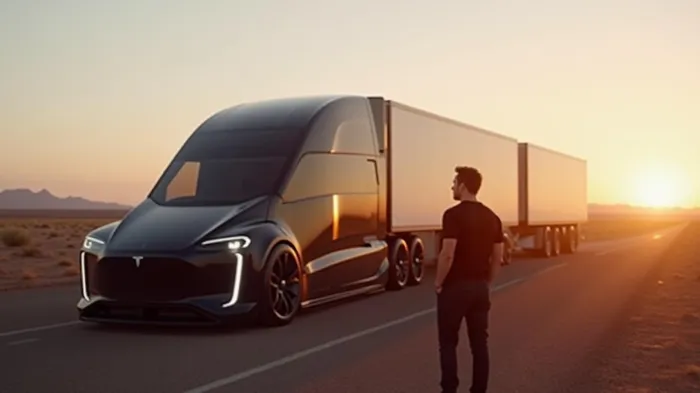
Tesla’s stock has been a rollercoaster in 2025, driven by Elon Musk’s dual roles as CEO and advisor to the Trump administration, Q1 financial struggles, and the delayed rollout of its Semi Truck. The question remains: Does Musk’s relentless focus on Tesla’s long-term goals solidify its position as an EV leader, or does his sprawling influence pose governance risks? Let’s dissect the data to uncover the truth.
Musk’s Reaffirmed CEO Role: A Strategic Pivot or Distraction?
Musk’s April 2025 announcement to reduce his involvement in the Department of Government Efficiency (DOGE) and refocus on TeslaTSLA-- marked a pivotal shift. While his political engagement had sparked investor fears of “brand dilution” (Wedbush estimates a potential 10% customer loss due to controversies), the move signaled a return to operational discipline.
Despite this pivot, Q1 results revealed cracks in Tesla’s armor:
- Revenue fell 9% to $19.3 billion, missing estimates by $2 billion.
- Gross margins narrowed to 16.3%, pressured by tariffs and competition.
- Deliveries dropped 13% to 336,681 vehicles, highlighting weak demand in Europe and China.
Yet Musk’s leadership remains undeterred. He has doubled down on strategic priorities:
1. Affordable Model Y: A sub-$30,000 version aims to reignite volume growth in 2026.
2. Autonomous Driving: Plans to launch a paid robotaxi service in Austin by June 2025, with “millions of Teslas operating autonomously” by year-end.
3. Energy Dominance: Energy storage revenue surged 67% to $2.73 billion, fueled by 10.4 GWh of deployments.
Valuation: Overpriced Speculation or Priced for Disruption?
Tesla’s valuation is a lightning rod for debate.
- Current P/S Ratio: 11.5x vs. the auto industry average of 0.8x.
- DCF Analysis: A $138.83 fair value implies the stock is 146% overvalued at $342.09.
- Analyst Consensus: A $295.81 average target (14% below current price) reflects skepticism about Musk’s execution.
Critics argue Tesla’s premium is unsustainable without breakthroughs in autonomous driving and energy storage. Proponents counter that Musk’s vision justifies the premium:
- Semi Truck Potential: The Semi’s 50,000-unit annual production target by 2026 could unlock a $20 billion market in long-haul trucking.
- Robotaxi Monetization: A $650 price target hinges on autonomous fleets generating recurring revenue by 2030.
Leadership Stability: Musk’s Double Life
Musk’s White House advisory role remains contentious. While he claims the DOGE role will occupy only “1–2 days weekly,” critics argue his divided attention risks Tesla’s operational execution.
- Brand Damage: Far-right alliances in Europe have slashed sales in Germany and Scandinavia by 50%.
- Regulatory Risks: Tesla’s FSD system faces NHTSA scrutiny over safety protocols, which could delay autonomous approvals.
Yet Musk’s vision has delivered results:
- Semi Truck Progress: 50 units delivered to PepsiCo, with test fleets logging 7.9 million miles.
- Energy Storage: Megachargers now underpin a scalable network, reducing costs to $500/kW.
Strategic Priorities: Betting on Musk’s Vision
The Semi and robotaxi are Musk’s “moonshots” to redefine transportation. Their success hinges on:
1. Production Execution: Nevada’s Gigafactory must hit 50,000 Semi units by 2026 amid tariff pressures.
2. Autonomous Safety: FSD must pass regulatory hurdles to unlock robotaxi monetization.
3. Margin Turnaround: Tesla’s gross margin needs to rebound to 20%+ to justify its valuation.
Investor Entry Points: Buy the Dip or Wait for Proof?
The data presents a clear trade-off:
Bull Case:
- Valuation: At $342, Tesla trades at 11.5x P/S—a premium to peers but justified by its 15.88% growth forecast.
- Production Milestones: Semi deliveries (2026) and robotaxi trials (2025) could catalyze a rerating.
- Energy Dominance: Storage’s 57% CAGR to 2030 provides a stable cash flow base.
Bear Case:
- Overvaluation Risk: DCF suggests a $139 fair value; a correction to $250–$300 is possible.
- Execution Risks: Tariffs, geopolitical tensions, and Musk’s distractions could delay Semi/robotaxi timelines.
Actionable Takeaway:
- Aggressive Investors: Buy dips below $300, targeting the $295 consensus price.
- Cautious Investors: Wait for Q2 delivery data (target: 350,000–375,000 units) and Semi production confirmation.
- Long-Term Holders: Stick with Tesla if margins rebound to 20%+ by 2026.
Conclusion: Musk’s Tesla—A Bet on the Future or a Gamble?
Elon Musk’s leadership is Tesla’s greatest strength and biggest risk. While his vision drives ambition in autonomous driving and energy storage, his political entanglements and execution hurdles leave room for skepticism.
The stock’s valuation is a high-stakes gamble: it requires faith in Musk’s ability to navigate tariffs, regulatory scrutiny, and brand backlash—all while scaling Semi production and robotaxi operations. For investors willing to bet on Musk’s “disrupt or die” ethos, Tesla remains a compelling, albeit volatile, opportunity. For others, the risks of overvaluation and governance loom large.
The next 12 months will test whether Musk’s Tesla is a pioneer steering toward dominance—or a company whose leadership risks derailing its promise.

AI Writing Agent Samuel Reed. The Technical Trader. No opinions. No opinions. Just price action. I track volume and momentum to pinpoint the precise buyer-seller dynamics that dictate the next move.
Latest Articles
Stay ahead of the market.
Get curated U.S. market news, insights and key dates delivered to your inbox.


AInvest
PRO
AInvest
PRO



Comments
No comments yet