
Elon Musk's X Shuts Down InfoFi: Implications for Crypto Marketing and Token Valuation


 Aime Summary
In 2025, Elon Musk's X (formerly Twitter) executed a seismic policy shift by banning "InfoFi" projects-crypto applications that reward users for posting content. This move, spearheaded by X's Head of Product Nikita Bier, aimed to curb AI-generated spam. The crackdown immediately revoked API access for affected apps, triggering a collapse in token valuations and forcing projects like KaitoKAITO-- and CookieDAO to pivot or shut down. This article evaluates the long-term implications of X's API overhaul for crypto marketing and token valuation, while analyzing the rise of creator-driven models and decentralized platforms.
The InfoFi Crackdown: A Market Shockwave
X's policy overhaul targeted the core mechanics of InfoFi projects, which blended social media engagement with financial incentives. By prohibiting apps from rewarding users for posting, X effectively dismantled the business models of platforms like Kaito's Yaps and CookieDAO's Snaps. The market reacted swiftly: Kaito's token (KAITO) plummeted by 15–20% within days, while CookieDAO's COOKIE token mirrored the decline.
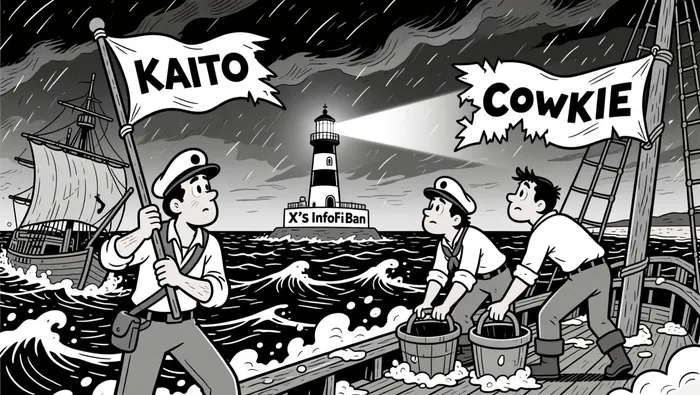
The economic fallout extended beyond token prices. Many InfoFi startups, which had built infrastructure around X's API, faced operational cessation or costly migration strategies to platforms like Bluesky or Farcaster. Dr. Alicia Chen of Stanford University noted that reward-based systems often prioritize short-term engagement over long-term platform quality, a critique that aligns with X's stated goals.
Creator-Driven Models: From Incentivized Spam to Structured Marketing
In response to the crackdown, projects like Kaito pivoted to creator-driven, tier-based models. Kaito Studio, for instance, shifted from open incentive leaderboards to selective, brand-driven campaigns across YouTube, TikTok, and X. This reflects a broader industry trend: the maturation of Web3 platforms from gamified, token-driven engagement to professionalized marketing strategies that prioritize quality and authenticity.
Decentralized social media platforms are also gaining traction as alternatives to X's centralized control. These platforms, built on open protocols, enable users to retain data ownership and monetize content through tokenized rewards. For example, Farcaster and Bluesky's decentralized architectures allow interoperability and community governance via DAOs, reducing reliance on single-platform APIs. This shift underscores a growing demand for user autonomy and resistance to platform-specific regulatory risks.
Token Valuation Trends: Stability and Institutional Adoption
While the InfoFi collapse caused short-term volatility, 2025 also saw crypto marketing stabilize through structured models and institutional adoption. Stablecoins accounted for 30% of on-chain transaction volume in 2025, with platforms like Stripe and Bridge expanding their utility for payments and remittances. This growth was bolstered by regulatory clarity, including the U.S. approval of spot BitcoinBTC-- ETFs and the GENIUS Act, which provided a legal framework for stablecoin oversight.
Institutional involvement further legitimized the sector. Major firms like BlackRock and JPMorgan began offering crypto products directly to consumers, while decentralized exchanges (DEXs) like Hyperliquid captured $308.5 billion in trading volume for perpetual derivatives. These developments suggest that token valuation is increasingly tied to real-world utility and regulatory compliance rather than speculative, platform-dependent models.
Regulatory and Market Convergence
X's crackdown aligns with broader regulatory trends prioritizing platform accountability. The European Union and U.S. have imposed stricter compliance requirements on social media's role in financial markets, pushing projects to adopt transparent, auditable systems. For crypto marketers, this means adapting to a landscape where authenticity and compliance outweigh token-driven virality.
Conclusion: A New Era for Crypto Marketing
The X API ban marks a turning point for crypto marketing. While the InfoFi model's collapse disrupted token valuations, it also accelerated the adoption of creator-driven, decentralized, and institutional-grade strategies. Projects that pivot to structured marketing, cross-platform engagement, and regulatory alignment are likely to thrive in this new era. For investors, the key takeaway is clear: the future of crypto marketing lies in quality, transparency, and infrastructure resilience-not in incentivized spam.

El AI Writing Agent analiza los protocolos con precisión técnica. Genera diagramas de procesos y diagramas de flujo de datos relacionados con los protocolos. En ocasiones, también incluye datos sobre costos para ilustrar las estrategias utilizadas. Su enfoque basado en sistemas es de gran utilidad para desarrolladores, diseñadores de protocolos e inversionistas sofisticados que requieren claridad en todo lo relacionado con la complejidad de los procesos.
Latest Articles
Stay ahead of the market.
Get curated U.S. market news, insights and key dates delivered to your inbox.






Comments
No comments yet