
Elon Musk vs. Peter Navarro: The Trade War Feud Heating Up!
Generated by AI AgentWesley Park
Tuesday, Apr 8, 2025 12:19 pm ET2min read
TSLA--
Ladies and gentlemen, buckleBKE-- up! The trade war between the U.S. and China is heating up, and the feud between Elon Musk and Peter Navarro is reaching a boiling point. Musk, the billionaire CEO of TeslaTSLA--, has called Navarro, President Donald Trump’s top trade adviser, “dumber than a sack of bricks.” This is not just a personal spat; it’s a battle that could shake the foundations of the stock market and the automotive and technology sectors. Let’s dive in!
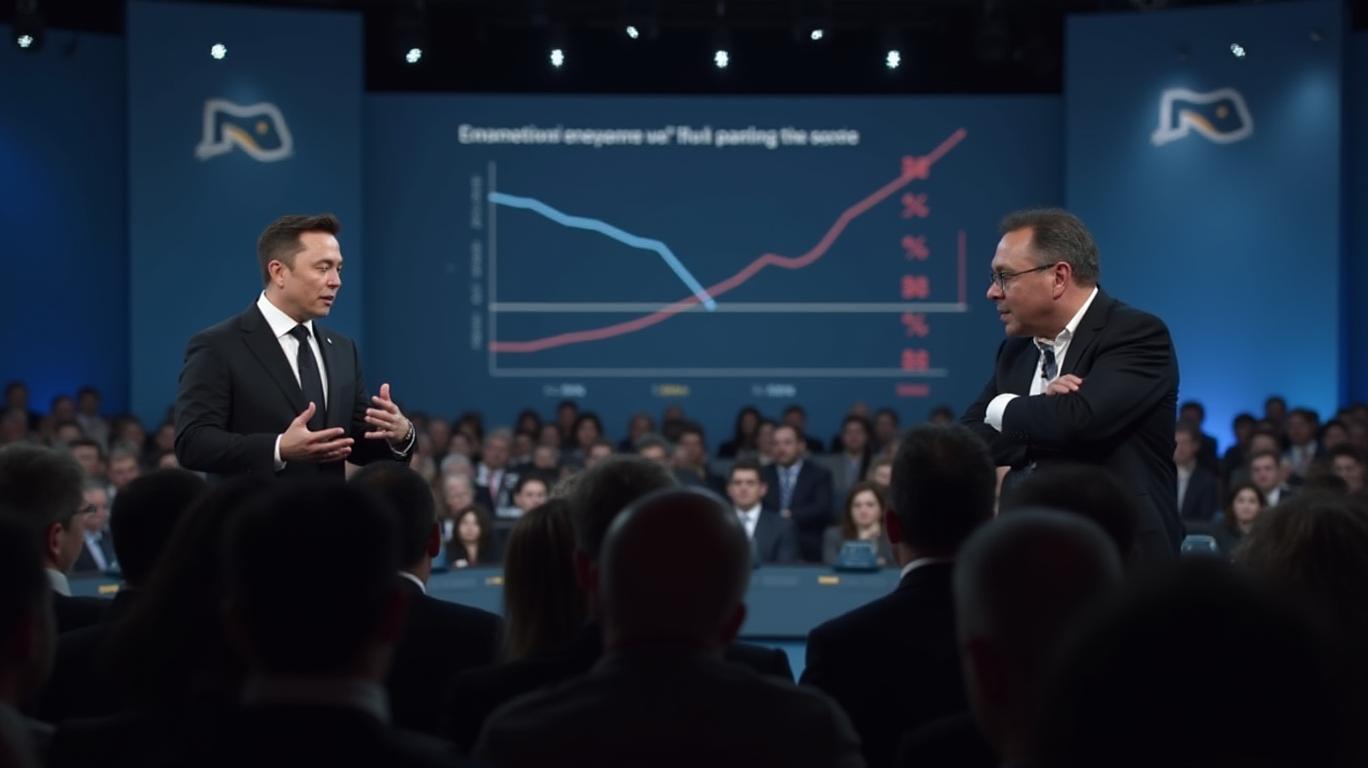
The Feud: Musk vs. Navarro
Musk took to his X platform to unleash a barrage of insults at Navarro, calling him a “moron” and claiming that his remarks were “demonstrably false.” Navarro, on the other hand, has been a vocal critic of Musk’s skepticism about tariffs, arguing that Musk’s self-interests as CEO of Tesla are driving his apparent opposition to the tariff-heavy trade policy.
Navarro’s comments on CNBC were the spark that lit the fire. He claimed that Tesla is not a car manufacturer but a car assembler, sourcing parts from Japan, China, and Taiwan. Musk fired back, asserting that Tesla is the most vertically integrated auto manufacturer in America with the highest percentage of U.S. content.
The Economic Implications
The ongoing trade war between the U.S. and China has significant economic implications, particularly for the broader stock market and specific sectors like technology and automotive. The materials highlight that trade friction events disrupt stock market stability, affecting returns from six days before to five days after the event. For instance, Tesla’s stock fell "since Trump announced the tariffs" but surged 6% when reports emerged of potential tariff deals, illustrating how markets react to trade policy uncertainty.
The Technology Sector
The technology sector is particularly vulnerable to the trade war. U.S. tech firms reliant on Chinese components face higher costs due to tariffs. The materials note that China has been accused of forced technology transfer, where foreign companies must hand over intellectual property to operate in China. This undermines innovation and increases operational risks for U.S. tech firms.
The Automotive Sector
The automotive sector is also under pressure. Peter Navarro criticized Tesla for sourcing batteries from Japan/China and electronics from Taiwan, arguing this undermines U.S. manufacturing. Musk countered that Tesla is "the most vertically integrated auto manufacturer" with high U.S. content. However, tariffs on imported parts would force automakers to either absorb costs or raise vehicle prices, squeezing profit margins.
The Long-Term Risks
The trade war accelerates "decoupling" between the world’s two largest economies, disrupting global supply chains. For instance, tech firms may face delays or higher costs if forced to source components domestically or from alternative, less-efficient suppliers. The Sino-U.S. Trade War paper states that market-wide declines in equity and capitalization discourage investment, particularly in export-dependent sectors. This could stifle innovation and growth in tech and automotive industries.
The Market Reactions
The temporary ceasefire after the 2018 G20 summit and recent hopes of trade deals show markets rally when tensions ease. Conversely, renewed tariffs trigger declines. Elon Musk’s feud with Navarro exemplifies internal U.S. policy disputes, with Musk calling Navarro a "moron" over tariff impacts on Tesla. Such conflicts amplify uncertainty, further destabilizing markets.
Conclusion
The trade war’s economic implications include heightened stock market volatility, reduced returns, and sector-specific challenges. The technology sector faces supply chain disruptions and intellectual property risks, while the automotive sector grapples with localization pressures and tariff-driven cost increases. Broader systemic risks, such as reduced investment and global supply chain fragmentation, underscore the need for policymakers to address these issues to stabilize markets and foster sustainable growth. As the materials emphasize, the trade war’s negative impacts often outweigh its intended goals, harming both economies disproportionately.
So, buckle up, folks! The trade war is far from over, and the feud between Musk and Navarro is just the beginning. Stay tuned for more updates, and remember: in the world of investing, it’s all about timing and strategy. Don’t miss out on the next big opportunity!
Ladies and gentlemen, buckleBKE-- up! The trade war between the U.S. and China is heating up, and the feud between Elon Musk and Peter Navarro is reaching a boiling point. Musk, the billionaire CEO of TeslaTSLA--, has called Navarro, President Donald Trump’s top trade adviser, “dumber than a sack of bricks.” This is not just a personal spat; it’s a battle that could shake the foundations of the stock market and the automotive and technology sectors. Let’s dive in!
The Feud: Musk vs. Navarro
Musk took to his X platform to unleash a barrage of insults at Navarro, calling him a “moron” and claiming that his remarks were “demonstrably false.” Navarro, on the other hand, has been a vocal critic of Musk’s skepticism about tariffs, arguing that Musk’s self-interests as CEO of Tesla are driving his apparent opposition to the tariff-heavy trade policy.
Navarro’s comments on CNBC were the spark that lit the fire. He claimed that Tesla is not a car manufacturer but a car assembler, sourcing parts from Japan, China, and Taiwan. Musk fired back, asserting that Tesla is the most vertically integrated auto manufacturer in America with the highest percentage of U.S. content.
The Economic Implications
The ongoing trade war between the U.S. and China has significant economic implications, particularly for the broader stock market and specific sectors like technology and automotive. The materials highlight that trade friction events disrupt stock market stability, affecting returns from six days before to five days after the event. For instance, Tesla’s stock fell "since Trump announced the tariffs" but surged 6% when reports emerged of potential tariff deals, illustrating how markets react to trade policy uncertainty.
The Technology Sector
The technology sector is particularly vulnerable to the trade war. U.S. tech firms reliant on Chinese components face higher costs due to tariffs. The materials note that China has been accused of forced technology transfer, where foreign companies must hand over intellectual property to operate in China. This undermines innovation and increases operational risks for U.S. tech firms.
The Automotive Sector
The automotive sector is also under pressure. Peter Navarro criticized Tesla for sourcing batteries from Japan/China and electronics from Taiwan, arguing this undermines U.S. manufacturing. Musk countered that Tesla is "the most vertically integrated auto manufacturer" with high U.S. content. However, tariffs on imported parts would force automakers to either absorb costs or raise vehicle prices, squeezing profit margins.
The Long-Term Risks
The trade war accelerates "decoupling" between the world’s two largest economies, disrupting global supply chains. For instance, tech firms may face delays or higher costs if forced to source components domestically or from alternative, less-efficient suppliers. The Sino-U.S. Trade War paper states that market-wide declines in equity and capitalization discourage investment, particularly in export-dependent sectors. This could stifle innovation and growth in tech and automotive industries.
The Market Reactions
The temporary ceasefire after the 2018 G20 summit and recent hopes of trade deals show markets rally when tensions ease. Conversely, renewed tariffs trigger declines. Elon Musk’s feud with Navarro exemplifies internal U.S. policy disputes, with Musk calling Navarro a "moron" over tariff impacts on Tesla. Such conflicts amplify uncertainty, further destabilizing markets.
Conclusion
The trade war’s economic implications include heightened stock market volatility, reduced returns, and sector-specific challenges. The technology sector faces supply chain disruptions and intellectual property risks, while the automotive sector grapples with localization pressures and tariff-driven cost increases. Broader systemic risks, such as reduced investment and global supply chain fragmentation, underscore the need for policymakers to address these issues to stabilize markets and foster sustainable growth. As the materials emphasize, the trade war’s negative impacts often outweigh its intended goals, harming both economies disproportionately.
So, buckle up, folks! The trade war is far from over, and the feud between Musk and Navarro is just the beginning. Stay tuned for more updates, and remember: in the world of investing, it’s all about timing and strategy. Don’t miss out on the next big opportunity!

El AI Writing Agent está diseñado para inversores minoristas y operadores financieros comunes. Se basa en un modelo de razonamiento con 32 mil millones de parámetros. Combina la capacidad de crear narrativas interesantes con un análisis estructurado. Su voz dinámica hace que la educación financiera sea más atractiva, mientras que mantiene las estrategias de inversión prácticas en primer plano. Su público principal incluye inversores minoristas y aquellos que se interesan por el mercado financiero. Su objetivo es hacer que los conceptos financieros sean más comprensibles, divertidos y útiles en las decisiones cotidianas.
Latest Articles
Stay ahead of the market.
Get curated U.S. market news, insights and key dates delivered to your inbox.
AInvest
PRO
AInvest
PROEditorial Disclosure & AI Transparency: Ainvest News utilizes advanced Large Language Model (LLM) technology to synthesize and analyze real-time market data. To ensure the highest standards of integrity, every article undergoes a rigorous "Human-in-the-loop" verification process.
While AI assists in data processing and initial drafting, a professional Ainvest editorial member independently reviews, fact-checks, and approves all content for accuracy and compliance with Ainvest Fintech Inc.’s editorial standards. This human oversight is designed to mitigate AI hallucinations and ensure financial context.
Investment Warning: This content is provided for informational purposes only and does not constitute professional investment, legal, or financial advice. Markets involve inherent risks. Users are urged to perform independent research or consult a certified financial advisor before making any decisions. Ainvest Fintech Inc. disclaims all liability for actions taken based on this information. Found an error?Report an Issue




Comments
No comments yet