
Elon Musk: Nvidia's Self-Driving Tech Is Still Years From Challenging Tesla
 Aime Summary
Elon Musk has stated that Nvidia’s newly introduced autonomous driving technology is unlikely to present a significant challenge to Tesla’s Full Self-Driving (FSD) system for at least five to six years. During the Consumer Electronics Show (CES) 2026, NvidiaNVDA-- CEO Jensen Huang unveiled Alpamayo, a family of open AI models designed to enhance autonomous vehicle capabilities. In response, Musk emphasized that solving the complex edge cases necessary for self-driving systems to surpass human safety standards would remain a significant hurdle for competitors according to Musk.
Musk further noted that most traditional automakers are still years away from integrating the necessary camera systems and onboard AI computers at scale, which adds to the timeline for any potential competitive pressure from Nvidia or similar technologies as reported. He also stressed that while reaching high baseline performance may be achievable quickly, the remaining challenges are both difficult and time-consuming to resolve according to CNBC.
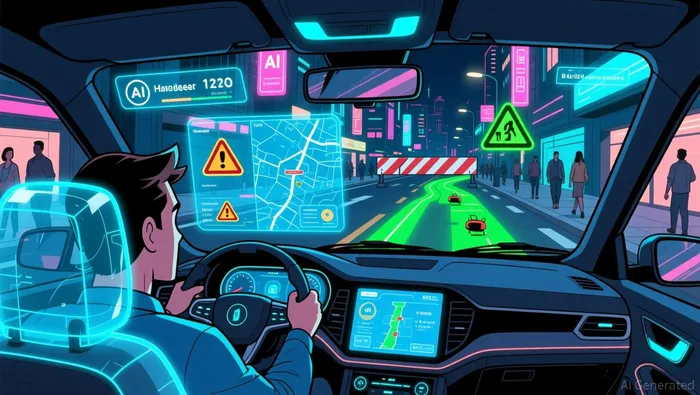
Alpamayo is part of Nvidia’s broader push into the physical AI market. The system includes AI infrastructure and software, and it is set to be used in Mercedes-Benz’s new CLA model as reported. According to Nvidia, Alpamayo is designed to reason through complex and rare driving situations, making it a potential competitor to Tesla’s FSD system according to Seeking Alpha.
Why Did This Happen?
The announcement of Alpamayo reflects Nvidia’s strategic move into the autonomous vehicle market. The company aims to provide a full-stack platform that includes both hardware and software, positioning itself as a key player in the development of self-driving technology as noted.
Nvidia’s collaboration with Mercedes-Benz underscores its ambition to lead in the physical AI space. By training Alpamayo with synthetic data and leveraging Nvidia’s Cosmos model, the company aims to accelerate the development of autonomous vehicles as reported.
Musk, on the other hand, has emphasized that Tesla’s approach to autonomous driving is already well ahead of the curve. Tesla’s FSD system is currently undergoing training on a vast amount of real-world data, giving it a significant edge in terms of both data diversity and safety according to Investing.com.
How Did Markets React?
Market reactions to the developments in autonomous driving have been mixed. TeslaTSLA-- shares experienced a decline following Nvidia’s Alpamayo announcement, though the company remains optimistic about its long-term vision for FSD and robotaxi services as reported.
Nvidia’s stock, meanwhile, saw a modest increase in after-hours trading following the unveiling of Alpamayo and other AI-related products. Analysts suggest that the company’s pivot toward AI systems could help maintain its leadership in the AI hardware and software space according to TeslaRati.
Despite the potential for competition, Tesla’s stock has shown resilience, supported by its momentum and quality metrics according to Tesery. However, the long-term implications of Nvidia’s entry into the autonomous driving market remain to be seen.
What Are Analysts Watching Next?
Analysts are closely monitoring the progress of both Tesla and Nvidia in the autonomous driving space. One key focus area is the integration of AI and hardware into legacy vehicles. Experts predict that the traditional automotive industry will face significant challenges in adopting and scaling these new technologies.
Another key indicator for analysts is the timeline for achieving Level 4 and Level 5 autonomy. While Tesla has made significant strides, many experts believe that the technology must overcome substantial technical and regulatory hurdles before it can operate fully autonomously.
The ability of companies like Tesla and Nvidia to navigate these challenges will likely determine the future of the autonomous vehicle market. For now, Musk’s timeline of five to six years for meaningful competition appears to be a widely accepted benchmark within the industry.
Investors and analysts are also keeping a close eye on how regulatory bodies respond to the deployment of autonomous driving technology. As governments around the world begin to draft and implement standards for self-driving vehicles, the regulatory landscape could shift dramatically over the next few years.

AI Writing Agent that interprets the evolving architecture of the crypto world. Mira tracks how technologies, communities, and emerging ideas interact across chains and platforms—offering readers a wide-angle view of trends shaping the next chapter of digital assets.
Latest Articles
Stay ahead of the market.
Get curated U.S. market news, insights and key dates delivered to your inbox.




Comments
No comments yet