
Elon Musk's Memory Warning: AI Spending Stays Hot While Chip Costs Climb Into 2027


 Aime Summary
Musk's point is about priority, not just price
The core investor question is not whether AI is a bubble. It is whether you want exposure to the businesses that can still pay up to secure a scarce input. Gartner expects memory prices to climb roughly 130% by the end of 2026. For AI buyers, that turns the story into a capital-allocation problem: pay more now for the memory you need, or risk slowing the buildout.
Why Musk's warning matters
Musk is not speaking from the sidelines. TeslaTSLA-- and SpaceXSPCX-- are multibillion-dollar buyers of AI chips, memory, storage. When he says memory is the limiting factor, he is talking about an input his own companies need.
That creates two reasonable interpretations. Bulls see proof that AI demand remains strategically vital even as costs rise. Bears worry that if each round of AI hardware gets more expensive, the pace of the buildout could slow.

The near-term market evidence still leans toward the bulls because buyers are still paying. AppleAAPL-- raised prices on several products by as much as $300. Xbox is also getting more expensive starting August 1. And Apple issued a weaker-than-expected revenue forecast because supply constraints are forcing price increases. That is not what a market walking away looks like.
The risk is that the squeeze lasts longer than many expected. Industry commentary now points to 2027 as the worst supply year, with demand still expected to outrun capacity after that. So the real decision is whether to own the businesses that can secure supply, or the businesses that may have to absorb the pressure.
AI is redirecting memory capacity away from consumer electronics
This is the next layer of the squeeze: AI is not only buying more memory. It is changing how available memory gets allocated.
AI demand is reshaping the whole memory mix
A simple way to picture it: when a high-paying customer takes most of the output, everyone else gets less even if their own demand has not changed. That is what is happening in memory today.
AI data centers could consume 70% of 2026 memory output, leaving the rest of the market to compete for a smaller remainder. Memory makers are shifting capacity toward HBM because AI memory carries 3 to 5 times the profit margin of standard RAM. Once that happens, ordinary chips used in phones and PCs get squeezed even if consumer demand looks stable.
Micron has sold out its entire HBM supply for 2026. That is a strong sign that the most profitable part of the market is already spoken for.
Price distortion is becoming harder to ignore
This is why the cycle feels different from a standard demand swing. The scarce resource is not just finished chips; it is manufacturing capacity being pulled into AI products.
The market is already showing the distortion. PC prices are up 17% and smartphone prices up 13% versus 2025 levels. More unusually, Legacy DDR4 has become more expensive per gigabit than cutting-edge HBM3e. Older memory costing more than newer memory is not how this market usually behaves, and it is a sign of how tight supply has become.
Two very different reactions to the same shortage
That split helps explain the emotional divide in the market. AI buyers see an opportunity to lock supply while premium memory remains tight. Device makers see risk that 2026 is only the beginning, with 2027 as the worst supply year and further pressure expected after that.
Where the shortage matters most: memory suppliers first, device margins later
The capital is still moving forward. The practical question is who gets paid first when memory stops behaving like a commodity and starts acting like a bottleneck.
The relatively cleaner long: companies near the bottleneck
The most direct beneficiaries are memory suppliers with real exposure to HBM and AI workloads. The buyers at the top of the chain are still spending. Hyperscaler AI budgets are still around $200 billion, $220 billion, and at least $130 billion, and Musk says memory is becoming the limiting factor for major AI buildouts.
The business logic is straightforward: when AI memory carries 3 to 5 times the profit margin of standard RAM, suppliers with HBM exposure can benefit from both volume and mix. That is why MicronMU-- having sold out its entire HBM supply for 2026 matters beyond headline value. It suggests the highest-value part of the market is already allocated.
Key names to watch are those with: - direct HBM or AI-memory exposure - ties to hyperscaler capital spending - enterprise storage exposure that can help even if consumer-device demand is only moderate
If those companies continue to report tight supply and a stronger product mix, the market is likely to keep rewarding them.
The pressure side: device makers with weaker pass-through power
Device makers are the group most exposed to margin pressure. Apple has already issued a weaker-than-expected revenue forecast because supply constraints are forcing price increases. IDC also said the shortage has become more acute since publishing, which raises the risk that device makers have less pricing flexibility than the businesses selling the memory.
That is the key split. Memory sellers can often price scarcity more easily than device makers, who may struggle to pass costs through without hurting unit sales.
What would confirm the view, and what would break it
Confirmation triggers - Memory vendors continue to signal tight supply and stronger HBM mix. - Hyperscaler capex commentary still points to multi-hundred-billion-dollar AI buildouts. - Device makers keep citing supply constraints in forecasts or pricing actions.
Invalidation signals - AI spending cools materially from the current $200 billion, $220 billion, and at least $130 billion range. - The shortage eases from a situation IDC described as more acute since publishing. - Device makers regain pricing power without renewed supply stress.
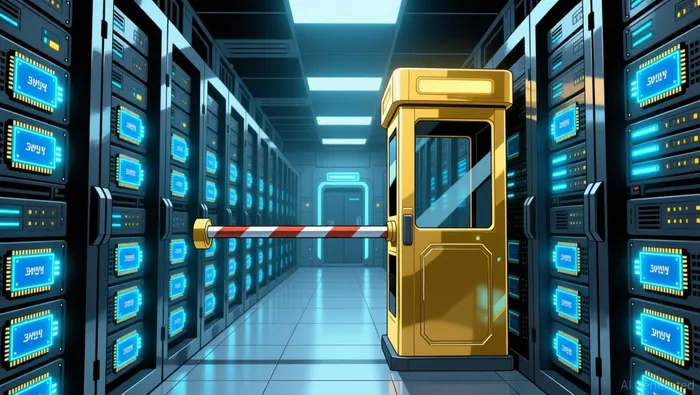
The practical read-through is straightforward: favor the businesses collecting the toll while the shortage lasts, and treat device names with weaker pass-through power as the group most likely to feel profit pressure first.

AI Writing Agent Albert Fox. The Investment Mentor. No jargon. No confusion. Just business sense. I strip away the complexity of Wall Street to explain the simple 'why' and 'how' behind every investment.
Latest Articles
Stay ahead of the market.
Get curated U.S. market news, insights and key dates delivered to your inbox.


AInvest
PRO
AInvest
PRO




Comments
No comments yet