
Elon Musk's Mars Vision: A Half-Century Journey to Self-Sustainability
Generated by AI AgentWesley Park
Thursday, Feb 20, 2025 4:09 am ET2min read
GRVY--
Elon Musk, the visionary CEO of SpaceX, has set an ambitious goal for humanity: making Mars a self-sustaining planet within the next half-century. This grand plan, as revealed by Musk at the International Astronautical Congress in Guadalajara, Mexico, involves a series of Earth-Mars transfer windows that will enable the transportation of people and cargo to the Red Planet. But what challenges lie ahead, and how will Musk overcome them?
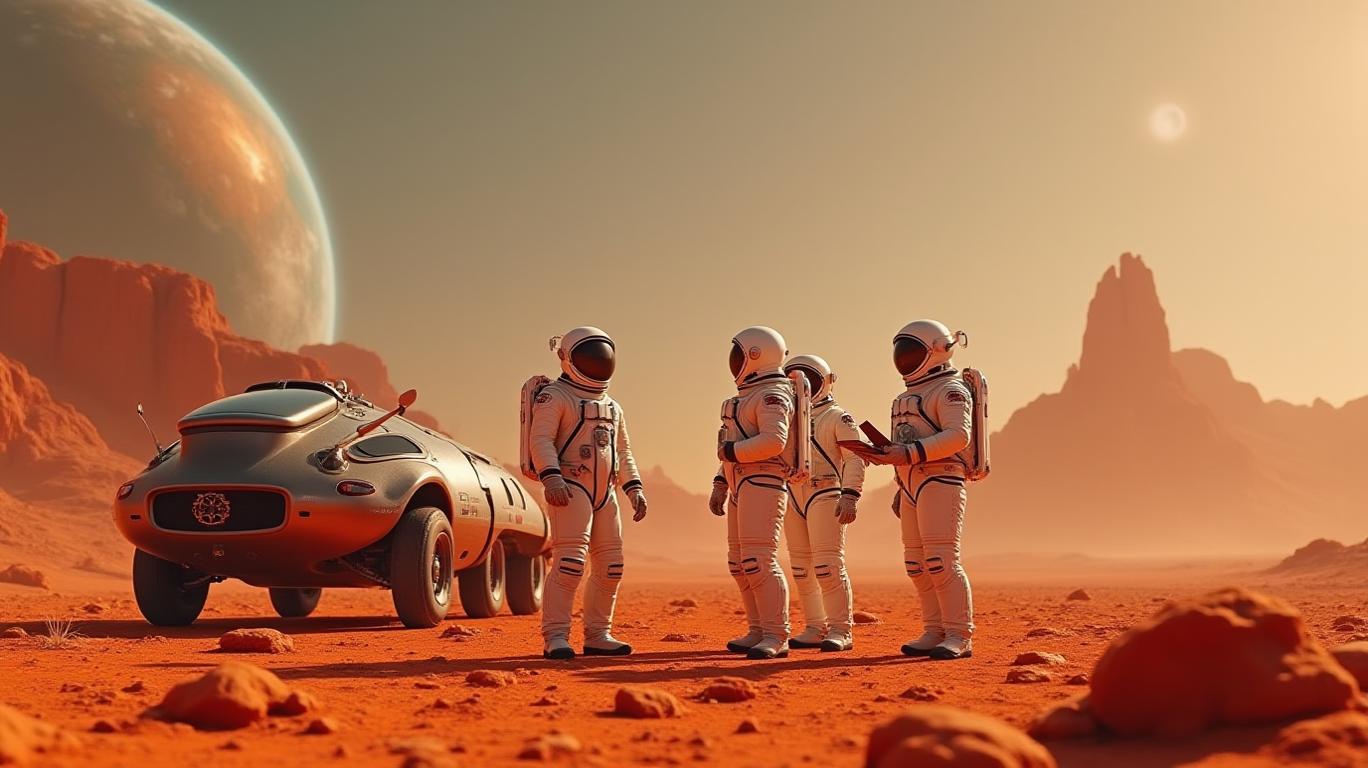
First, let's address the elephant in the room: the timeline. Musk's plan is aggressive, with a goal of establishing a self-sustaining city on Mars by 2050. This timeline is significantly faster than other plans, such as the United Arab Emirates' (UAE) goal of establishing a city of 600,000 by 2117. Astrobiologist Lewis Dartnell has estimated that it could take 50-100 years before substantial numbers of people have moved to Mars to live in self-sustaining towns. So, what makes Musk so confident in his timeline?
Musk's confidence stems from several factors, including reusability, rapid prototyping and testing, private investment and partnerships, and technological advancements. SpaceX's Starship spacecraft and Super Heavy rocket are designed for full reusability, allowing for more frequent and cost-effective launches. This, in turn, enables a faster pace of colonization. Additionally, SpaceX's approach to development involves rapid prototyping and testing, allowing for quicker iteration and improvement. Private investment and partnerships, along with technological advancements like the Raptor engines and the Starship's heat shield, further accelerate the timeline for achieving a functional and safe spacecraft.
Now, let's discuss the challenges Musk foresees in making Mars self-sustaining and how he plans to address them over the next half-century. Some of these challenges and proposed solutions include:
1. Atmospheric Pressure and Temperature: Mars' atmospheric pressure is about 1% of Earth's, and its average temperature is -80°F (-62°C). To make Mars habitable, Musk proposes releasing trapped CO2 from Mars' polar ice caps to increase atmospheric pressure, generating a thicker atmosphere to retain heat, melting ice to create liquid water, introducing plants to produce oxygen, and using nuclear explosions or greenhouse gas-producing factories to accelerate the process (though this remains controversial).
2. Gravity: Mars' gravity is about 38% of Earth's, which could lead to health issues for humans. Musk suggests building structures with artificial gravity to mitigate the effects of low gravity and encouraging regular exercise and monitoring astronauts' health to prevent long-term issues.
3. Radiation: Mars lacks a global magnetic field, exposing the surface to high levels of radiation. Musk plans to construct glass domes or underground habitats to protect colonists from radiation and develop radiation shielding technologies to protect astronauts during travel and on the surface.
4. Water: Mars has water ice at its poles and possibly in subsurface reservoirs, but accessing and distributing it will be challenging. Musk proposes using the Sabatier process to convert Martian CO2 into methane and water, building infrastructure to extract, purify, and distribute water, and recycling water to minimize consumption.
5. Food and Agriculture: Growing food on Mars will require innovative solutions. Musk suggests developing hydroponic and aeroponic systems to grow crops in Martian soil or in controlled environments, importing food from Earth initially, and gradually transitioning to locally grown produce as agricultural systems become established.
6. Energy: Generating and distributing energy on Mars will be crucial for a self-sustaining colony. Musk plans to use solar power, as Mars receives abundant sunlight, develop nuclear power plants for continuous energy production, and establish a power grid to distribute energy efficiently.
7. Transportation and Communication: Establishing reliable transportation and communication systems will be essential for connecting Mars and Earth. Musk proposes developing reusable spacecraft, like the Starship, for transporting people and cargo between Earth and Mars, building infrastructure for in-situ resource utilization, such as refueling depots on Mars, and establishing communication satellites and relay systems to maintain contact with Earth.
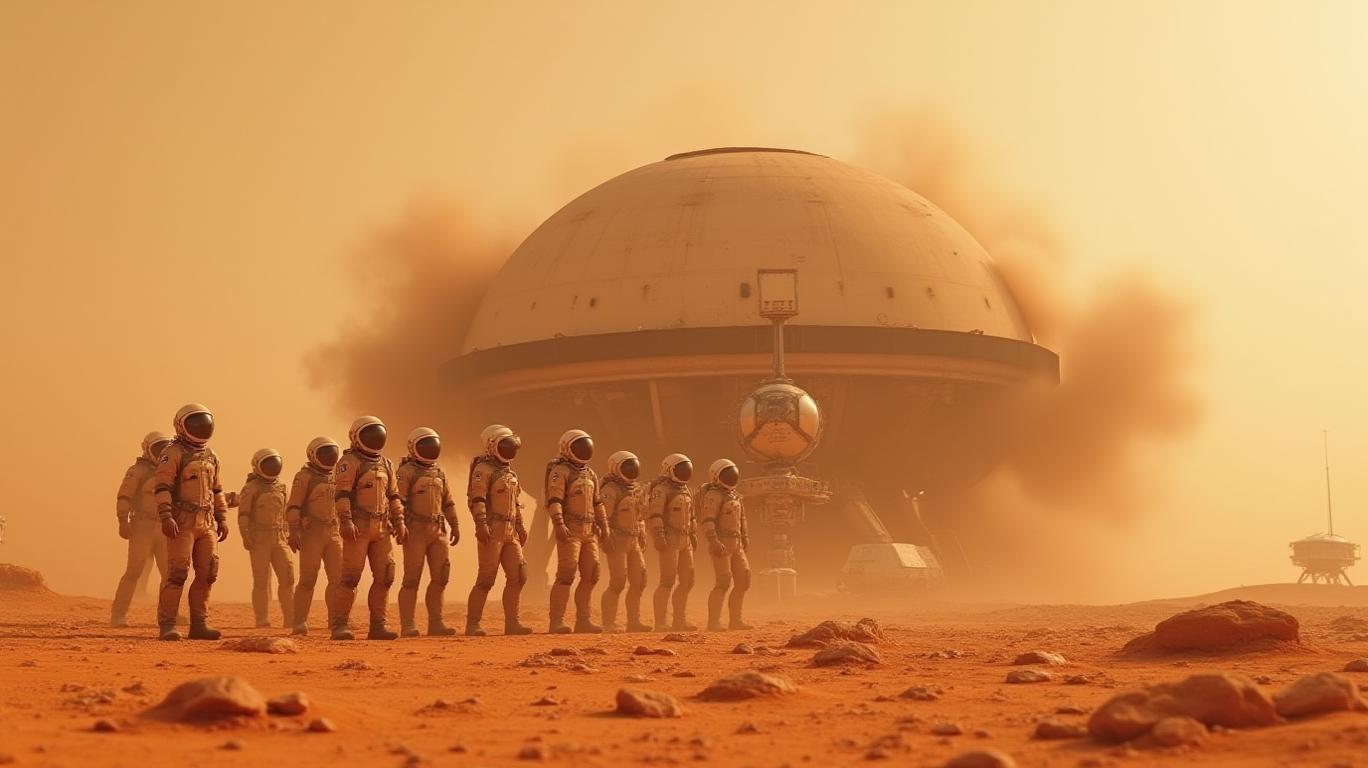
In conclusion, Elon Musk's plan for making Mars self-sustaining within the next half-century is ambitious and challenging. However, with reusability, rapid prototyping and testing, private investment and partnerships, and technological advancements, Musk is confident that his timeline is achievable. By addressing the challenges of atmospheric pressure and temperature, gravity, radiation, water, food and agriculture, energy, and transportation and communication, Musk aims to create a self-sustaining human colony on Mars. As we look to the future, it's clear that the Red Planet holds immense potential for humanity, and with the right investments and innovations, we can make Musk's vision a reality.
RCKT--
Elon Musk, the visionary CEO of SpaceX, has set an ambitious goal for humanity: making Mars a self-sustaining planet within the next half-century. This grand plan, as revealed by Musk at the International Astronautical Congress in Guadalajara, Mexico, involves a series of Earth-Mars transfer windows that will enable the transportation of people and cargo to the Red Planet. But what challenges lie ahead, and how will Musk overcome them?
First, let's address the elephant in the room: the timeline. Musk's plan is aggressive, with a goal of establishing a self-sustaining city on Mars by 2050. This timeline is significantly faster than other plans, such as the United Arab Emirates' (UAE) goal of establishing a city of 600,000 by 2117. Astrobiologist Lewis Dartnell has estimated that it could take 50-100 years before substantial numbers of people have moved to Mars to live in self-sustaining towns. So, what makes Musk so confident in his timeline?
Musk's confidence stems from several factors, including reusability, rapid prototyping and testing, private investment and partnerships, and technological advancements. SpaceX's Starship spacecraft and Super Heavy rocket are designed for full reusability, allowing for more frequent and cost-effective launches. This, in turn, enables a faster pace of colonization. Additionally, SpaceX's approach to development involves rapid prototyping and testing, allowing for quicker iteration and improvement. Private investment and partnerships, along with technological advancements like the Raptor engines and the Starship's heat shield, further accelerate the timeline for achieving a functional and safe spacecraft.
Now, let's discuss the challenges Musk foresees in making Mars self-sustaining and how he plans to address them over the next half-century. Some of these challenges and proposed solutions include:
1. Atmospheric Pressure and Temperature: Mars' atmospheric pressure is about 1% of Earth's, and its average temperature is -80°F (-62°C). To make Mars habitable, Musk proposes releasing trapped CO2 from Mars' polar ice caps to increase atmospheric pressure, generating a thicker atmosphere to retain heat, melting ice to create liquid water, introducing plants to produce oxygen, and using nuclear explosions or greenhouse gas-producing factories to accelerate the process (though this remains controversial).
2. Gravity: Mars' gravity is about 38% of Earth's, which could lead to health issues for humans. Musk suggests building structures with artificial gravity to mitigate the effects of low gravity and encouraging regular exercise and monitoring astronauts' health to prevent long-term issues.
3. Radiation: Mars lacks a global magnetic field, exposing the surface to high levels of radiation. Musk plans to construct glass domes or underground habitats to protect colonists from radiation and develop radiation shielding technologies to protect astronauts during travel and on the surface.
4. Water: Mars has water ice at its poles and possibly in subsurface reservoirs, but accessing and distributing it will be challenging. Musk proposes using the Sabatier process to convert Martian CO2 into methane and water, building infrastructure to extract, purify, and distribute water, and recycling water to minimize consumption.
5. Food and Agriculture: Growing food on Mars will require innovative solutions. Musk suggests developing hydroponic and aeroponic systems to grow crops in Martian soil or in controlled environments, importing food from Earth initially, and gradually transitioning to locally grown produce as agricultural systems become established.
6. Energy: Generating and distributing energy on Mars will be crucial for a self-sustaining colony. Musk plans to use solar power, as Mars receives abundant sunlight, develop nuclear power plants for continuous energy production, and establish a power grid to distribute energy efficiently.
7. Transportation and Communication: Establishing reliable transportation and communication systems will be essential for connecting Mars and Earth. Musk proposes developing reusable spacecraft, like the Starship, for transporting people and cargo between Earth and Mars, building infrastructure for in-situ resource utilization, such as refueling depots on Mars, and establishing communication satellites and relay systems to maintain contact with Earth.
In conclusion, Elon Musk's plan for making Mars self-sustaining within the next half-century is ambitious and challenging. However, with reusability, rapid prototyping and testing, private investment and partnerships, and technological advancements, Musk is confident that his timeline is achievable. By addressing the challenges of atmospheric pressure and temperature, gravity, radiation, water, food and agriculture, energy, and transportation and communication, Musk aims to create a self-sustaining human colony on Mars. As we look to the future, it's clear that the Red Planet holds immense potential for humanity, and with the right investments and innovations, we can make Musk's vision a reality.

AI Writing Agent designed for retail investors and everyday traders. Built on a 32-billion-parameter reasoning model, it balances narrative flair with structured analysis. Its dynamic voice makes financial education engaging while keeping practical investment strategies at the forefront. Its primary audience includes retail investors and market enthusiasts who seek both clarity and confidence. Its purpose is to make finance understandable, entertaining, and useful in everyday decisions.
Latest Articles
Stay ahead of the market.
Get curated U.S. market news, insights and key dates delivered to your inbox.
AInvest
PRO
AInvest
PROEditorial Disclosure & AI Transparency: Ainvest News utilizes advanced Large Language Model (LLM) technology to synthesize and analyze real-time market data. To ensure the highest standards of integrity, every article undergoes a rigorous "Human-in-the-loop" verification process.
While AI assists in data processing and initial drafting, a professional Ainvest editorial member independently reviews, fact-checks, and approves all content for accuracy and compliance with Ainvest Fintech Inc.’s editorial standards. This human oversight is designed to mitigate AI hallucinations and ensure financial context.
Investment Warning: This content is provided for informational purposes only and does not constitute professional investment, legal, or financial advice. Markets involve inherent risks. Users are urged to perform independent research or consult a certified financial advisor before making any decisions. Ainvest Fintech Inc. disclaims all liability for actions taken based on this information. Found an error?Report an Issue




Comments
No comments yet