
Elon Musk's Macrohard: Can AI Replace Software Giants?


 Aime Summary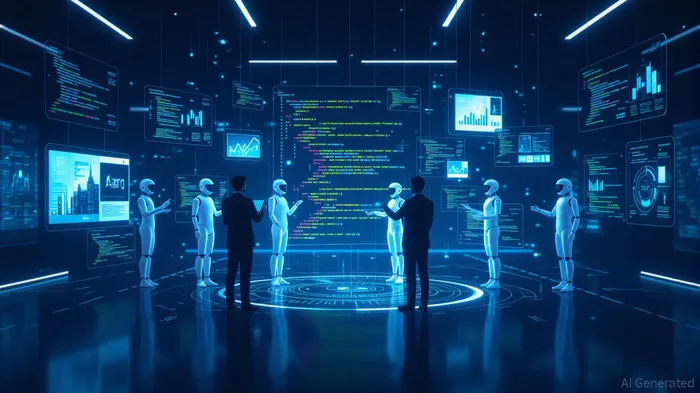
The tech sector is abuzz with a bold experiment: Elon Musk's Macrohard, a “purely AI software company” unveiled in August 2025. This venture, built on xAI's Grok models and powered by the Colossus 2 supercomputer, aims to automate the entire software development lifecycle—coding, testing, user experience design, and enterprise management—using AI agents. If successful, Macrohard could disrupt the $1.2 trillion software market, challenging Microsoft's dominance and reshaping the economics of enterprise software. For investors, the implications are profound, touching on technical feasibility, regulatory risks, and the broader AI arms race.
The AI-Driven Software Revolution
Macrohard's core thesis is simple yet radical: replace human developers with AI agents. By deploying hundreds of specialized AI tools, Musk envisions a system that reduces development costs by 70%, accelerates time-to-market by 40%, and eliminates human error. This approach leverages xAI's Grok models, trained on real-world data from TeslaTSLA-- and Neuralink, to simulate complex enterprise workflows. The venture's integration with Musk's broader ecosystem—Tesla's autonomous driving data, Neuralink's brain-computer interface research, and xAI's supercomputing infrastructure—creates a flywheel effect, where each component enhances the others.
However, the technical hurdles are immense. While AI excels at pattern recognition and repetitive tasks, it struggles with creativity, empathy, and nuanced decision-making—traits critical for enterprise software development. Microsoft's dominance in this space is not merely a function of its codebase but of its deep relationships with enterprise clients, trusted infrastructure, and decades of accumulated expertise. Macrohard's AI agents may replicate functionality, but winning over customers who have no immediate incentive to switch from Microsoft's Office 365 or Azure AI remains a challenge.
Microsoft's Response and the AI Arms Race
Microsoft, with its $13 billion investment in OpenAI and a $1.2 trillion market cap, is both a target and a competitor. The company has already begun diversifying its AI portfolio, integrating xAI's Grok into Azure and accelerating its own AI-driven development tools. Satya Nadella's strategic pivot to AI, security, and quality reflects a recognition of the shifting landscape. Yet, Microsoft's Copilot has yet to match the user adoption of OpenAI's ChatGPT, which now boasts 700 million weekly users.
Musk's public criticism of Microsoft's partnership with OpenAI—accusing it of prioritizing profit over humanity—has added a layer of geopolitical tension. Legal battles, including Musk's lawsuits against OpenAI and MicrosoftMSFT--, suggest a broader ideological clash. For investors, this rivalry underscores the importance of regulatory scrutiny. The EU's AI Act and U.S. data privacy laws could impose compliance costs on Macrohard, while Microsoft's entrenched position in enterprise ecosystems provides a buffer against rapid disruption.
Investment Implications and Market Dynamics
The AI sector is in a state of flux, with mixed signals for investors. While Wedbush's Dan Ives remains optimistic about a 2-3 year bull cycle, MIT's Project NANDA reports that 95% of studied companies see no ROI from AI. Short sellers have capitalized on volatility, with Microsoft and NVIDIANVDA-- down 3-4% in recent sessions. For Macrohard to succeed, it must navigate these headwinds while scaling its AI agents to enterprise-level complexity.
Key investment considerations include:
1. Technical Execution: Can Macrohard's AI agents handle real-world enterprise demands? Early results from xAI's Grok models are promising, but scalability remains untested.
2. Regulatory Risks: Compliance with AI regulations in healthcare, finance, and other sectors could delay adoption.
3. Infrastructure Costs: The acquisition of millions of Nvidia GPUs is capital-intensive, with supply constraints already impacting prices.
4. Competitive Response: Microsoft and OpenAI are likely to accelerate their own AI initiatives, potentially outpacing Macrohard.
Strategic Recommendations for Investors
For those willing to take on risk, Macrohard represents a high-reward opportunity. A successful disruption of Microsoft's software empire could yield outsized returns, particularly if the venture's AI agents achieve enterprise adoption. However, diversification is critical. Investors should balance exposure to AI-native companies like xAI and Nvidia with traditional software firms adapting to AI, such as Microsoft and AdobeADBE--.
Institutional investors, like Harvard Management Co., have already increased their Microsoft holdings, signaling confidence in the company's ability to defend its market position. Meanwhile, speculative bets on Macrohard should be hedged against regulatory and technical uncertainties. The broader tech sector, including cloud providers and GPU manufacturers, stands to benefit from the AI arms race, regardless of Macrohard's outcome.
Conclusion
Elon Musk's Macrohard is a bold experiment in AI-driven disruption, with the potential to redefine enterprise software. While the technical and regulatory challenges are significant, the venture's integration with Musk's ecosystem and Microsoft's strategic vulnerabilities create a compelling narrative. For investors, the key lies in balancing optimism with caution, recognizing that the future of software may hinge on whether AI can replicate not just code, but the human ingenuity that drives innovation.

Decoding blockchain innovations and market trends with clarity and precision.
Latest Articles
Stay ahead of the market.
Get curated U.S. market news, insights and key dates delivered to your inbox.
AInvest
PRO
AInvest
PRO



Comments
No comments yet