
Elon Musk Launches America Party Targeting 2026 Midterms
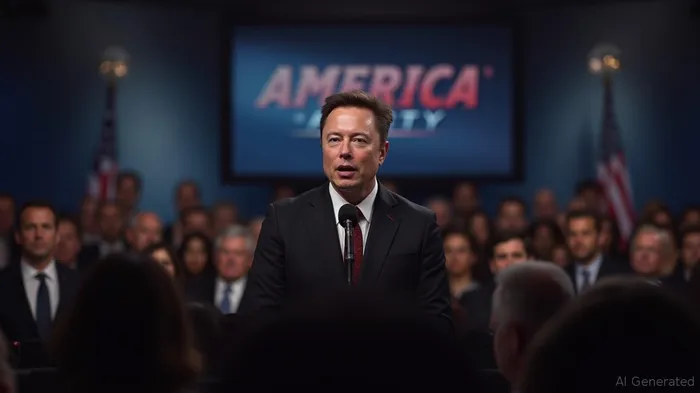
Elon Musk’s recent announcement of the “America Party” has sparked a significant political debate, with Donald Trump expressing strong opposition. This development has raised concerns about the potential impact on the 2026 midterm elections and the Republican vote. Musk’s plan to establish a third political party threatens to disrupt the traditional two-party dominance in the U.S., with a strategic focus on key congressional seats to influence legislative outcomes.
Musk’s move is seen as a strategic effort to challenge entrenched political spending. He has labeled the recent bipartisan spending bill as a “disgusting abomination” that jeopardizes fiscal responsibility. This stance aligns with his previous role at the Department of Government Efficiency, where he advocated for significant government spending cuts. Musk’s America Party positions itself as a champion of economic prudence, appealing to voters frustrated by perceived government inefficiency and unchecked spending.
Musk’s formation of the America Party marks a significant departure from traditional U.S. political dynamics, introducing a third-party contender that could reshape the electoral landscape. His initiative follows the passage of a major tax and spending bill, which he vehemently opposes due to its projected $3.3 trillion increase in national debt over the next decade. By positioning his party as a fiscal watchdog, Musk aims to attract voters disillusioned with both Republicans and Democrats, particularly those concerned about government overspending.
The strategic focus on a select number of congressional districts underscores Musk’s pragmatic approach. By concentrating resources on a handful of key House and Senate races, the America Party could leverage the razor-thin margins in Congress to become a decisive swing vote, potentially blocking or shaping legislation according to its platform. This approach could enable the party to act as a kingmaker, shaping legislative agendas and ensuring that laws reflect the party’s priorities.
Donald Trump’s public condemnation of Musk’s political venture highlights the tension within the Republican Party. Trump’s characterization of Musk’s efforts as “off the rails” reflects deep apprehension about the potential fracturing of the GOP base. Historically, third parties have struggled to gain traction at the national level, but Musk’s considerable financial resources and high-profile status present a unique challenge.
Republican leaders and loyalists fear that the America Party could siphon off critical votes, especially in competitive districts, thereby jeopardizing the GOP’s slim majority in Congress. This concern is amplified by the U.S. first-past-the-post electoral system, where vote splitting often benefits the opposing party. Influential figures within the party, such as Representatives Marjorie Taylor Greene and Thomas Massie, have been speculated to consider alignment with Musk’s new political movement, further intensifying intra-party divisions.
In a calculated move to maximize political influence, Musk has publicly outlined plans to “laser-focus” on a limited number of congressional races. By targeting 2 to 3 Senate seats and 8 to 10 House districts, the America Party aims to hold the balance of power in a closely divided Congress. This strategy leverages the current political environment, where narrow margins often dictate legislative success or failure. Musk’s ability to inject substantial funding and media attention into these races could disrupt traditional campaign dynamics, compelling both Republicans and Democrats to negotiate with the America Party for support.
The emergence of Elon Musk’s America Party introduces a novel variable into the U.S. political equation, with significant implications for the 2026 midterm elections. By challenging the entrenched two-party system and focusing on fiscal responsibility, Musk seeks to carve out a distinct political niche. However, the potential for vote splitting raises concerns among Republican leaders about preserving their congressional majority. As the political landscape evolves, Musk’s strategic targeting of key races could redefine legislative power balances, underscoring the growing influence of non-traditional political actors in American politics.

Stay ahead of the market.
Get curated U.S. market news, insights and key dates delivered to your inbox.


AInvest
PRO
AInvest
PRO



Comments
No comments yet