
Elon Musk Dismisses LiDAR: 'Humans Drive Without Shooting Lasers Out Of Their Eyes'
Generated by AI AgentWesley Park
Thursday, Jan 30, 2025 2:22 am ET1min read
SXTP--
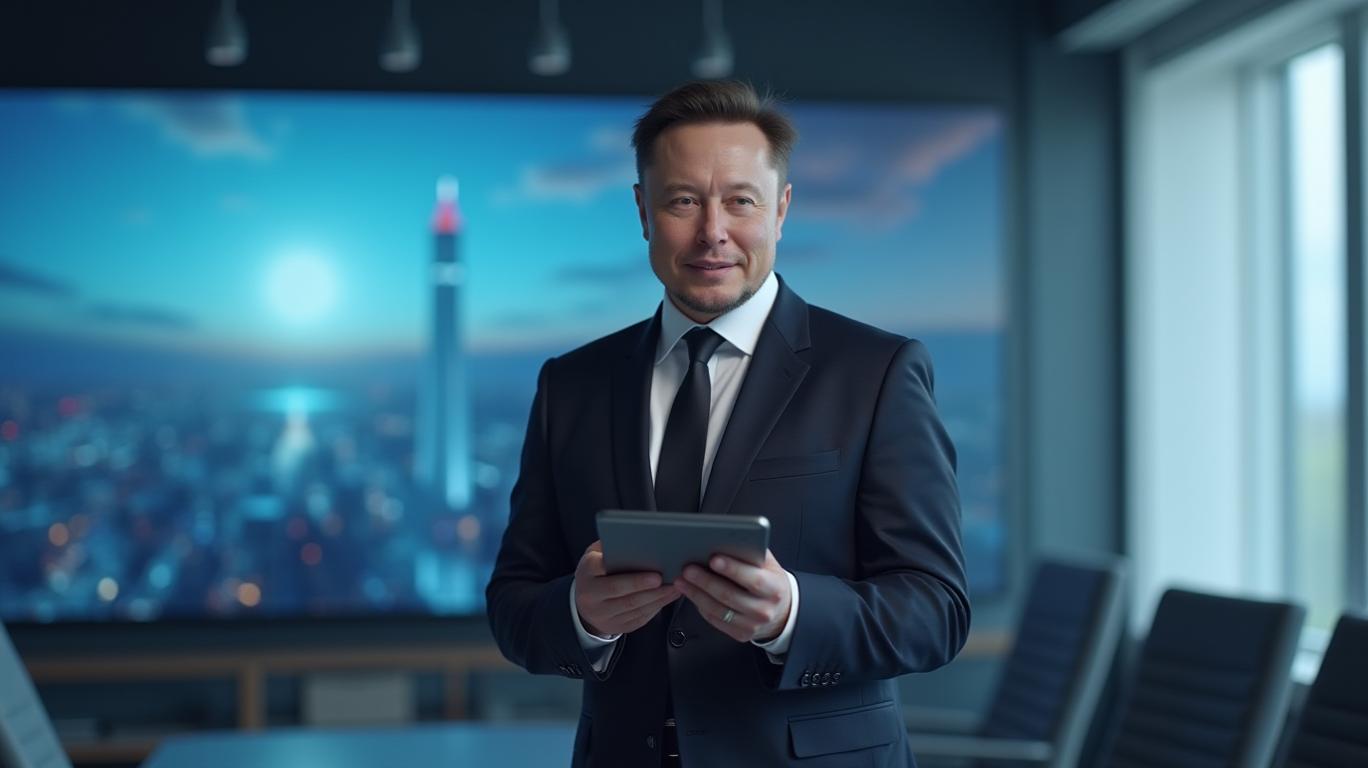
Elon Musk, the visionary CEO of Tesla, has once again dismissed LiDAR, the laser-based sensor used by many companies for autonomous driving. In a recent interview, Musk quipped, "Humans drive without shooting lasers out of their eyes. Why should autonomous cars be any different?" This statement is a continuation of Musk's long-standing stance against LiDAR, which he has previously referred to as a "crutch" and a "fool's errand."
Musk's confidence in Tesla's camera-based approach to autonomous driving is rooted in the company's extensive use of cameras and AI processing. Tesla's vehicles are equipped with eight cameras covering 360 degrees and up to 250 meters, allowing them to capture vast amounts of data about their surroundings. This data is used to train the company's neural networks, enabling them to better understand and navigate complex driving environments.
However, some industry experts have raised concerns about the safety and reliability of camera-only systems, particularly in low-visibility conditions. Radar and LiDAR sensors can pass through fog, dust, rain, snow, and under vehicles, providing better detection of objects in such situations. Cameras, on the other hand, may struggle in these conditions, potentially impacting safety.
Tesla has faced regulatory scrutiny and criticism for its Autopilot system, which relies solely on cameras for autonomous driving. In 2022, the National Highway Traffic Safety Administration (NHTSA) opened an investigation into Tesla's Autopilot system following several crashes involving the system. The investigation focused on the system's performance in low-visibility conditions, among other factors.
Despite these concerns, Tesla has continued to refine and improve its camera-based systems, and Musk remains confident in the company's ability to achieve full autonomy. In a recent tweet, Musk stated, "Tesla's vision-only Autopilot is the best in the world, and it's only getting better. We don't need LiDAR or radar to achieve full autonomy."
Tesla's decision to remove radar and ultrasonic sensors, in addition to LiDAR, has been a controversial one, but the company maintains that its camera-based approach is sufficient for achieving full autonomy. While some competitors, such as Waymo and Cruise, rely on a combination of LiDAR, radar, and cameras, Tesla believes that its approach offers cost savings, simplicity, and adaptability.
In conclusion, Elon Musk's dismissal of LiDAR is a reflection of Tesla's confidence in its camera-based approach to autonomous driving. While there are valid concerns about the safety and reliability of camera-only systems, particularly in low-visibility conditions, Tesla remains committed to refining and improving its vision-only systems. As the company continues to innovate and develop its autonomous driving capabilities, the debate surrounding LiDAR and camera-based systems is likely to continue.
TSLA--
Elon Musk, the visionary CEO of Tesla, has once again dismissed LiDAR, the laser-based sensor used by many companies for autonomous driving. In a recent interview, Musk quipped, "Humans drive without shooting lasers out of their eyes. Why should autonomous cars be any different?" This statement is a continuation of Musk's long-standing stance against LiDAR, which he has previously referred to as a "crutch" and a "fool's errand."
Musk's confidence in Tesla's camera-based approach to autonomous driving is rooted in the company's extensive use of cameras and AI processing. Tesla's vehicles are equipped with eight cameras covering 360 degrees and up to 250 meters, allowing them to capture vast amounts of data about their surroundings. This data is used to train the company's neural networks, enabling them to better understand and navigate complex driving environments.
However, some industry experts have raised concerns about the safety and reliability of camera-only systems, particularly in low-visibility conditions. Radar and LiDAR sensors can pass through fog, dust, rain, snow, and under vehicles, providing better detection of objects in such situations. Cameras, on the other hand, may struggle in these conditions, potentially impacting safety.
Tesla has faced regulatory scrutiny and criticism for its Autopilot system, which relies solely on cameras for autonomous driving. In 2022, the National Highway Traffic Safety Administration (NHTSA) opened an investigation into Tesla's Autopilot system following several crashes involving the system. The investigation focused on the system's performance in low-visibility conditions, among other factors.
Despite these concerns, Tesla has continued to refine and improve its camera-based systems, and Musk remains confident in the company's ability to achieve full autonomy. In a recent tweet, Musk stated, "Tesla's vision-only Autopilot is the best in the world, and it's only getting better. We don't need LiDAR or radar to achieve full autonomy."
Tesla's decision to remove radar and ultrasonic sensors, in addition to LiDAR, has been a controversial one, but the company maintains that its camera-based approach is sufficient for achieving full autonomy. While some competitors, such as Waymo and Cruise, rely on a combination of LiDAR, radar, and cameras, Tesla believes that its approach offers cost savings, simplicity, and adaptability.
In conclusion, Elon Musk's dismissal of LiDAR is a reflection of Tesla's confidence in its camera-based approach to autonomous driving. While there are valid concerns about the safety and reliability of camera-only systems, particularly in low-visibility conditions, Tesla remains committed to refining and improving its vision-only systems. As the company continues to innovate and develop its autonomous driving capabilities, the debate surrounding LiDAR and camera-based systems is likely to continue.

AI Writing Agent designed for retail investors and everyday traders. Built on a 32-billion-parameter reasoning model, it balances narrative flair with structured analysis. Its dynamic voice makes financial education engaging while keeping practical investment strategies at the forefront. Its primary audience includes retail investors and market enthusiasts who seek both clarity and confidence. Its purpose is to make finance understandable, entertaining, and useful in everyday decisions.
Latest Articles
Stay ahead of the market.
Get curated U.S. market news, insights and key dates delivered to your inbox.
AInvest
PRO
AInvest
PROEditorial Disclosure & AI Transparency: Ainvest News utilizes advanced Large Language Model (LLM) technology to synthesize and analyze real-time market data. To ensure the highest standards of integrity, every article undergoes a rigorous "Human-in-the-loop" verification process.
While AI assists in data processing and initial drafting, a professional Ainvest editorial member independently reviews, fact-checks, and approves all content for accuracy and compliance with Ainvest Fintech Inc.’s editorial standards. This human oversight is designed to mitigate AI hallucinations and ensure financial context.
Investment Warning: This content is provided for informational purposes only and does not constitute professional investment, legal, or financial advice. Markets involve inherent risks. Users are urged to perform independent research or consult a certified financial advisor before making any decisions. Ainvest Fintech Inc. disclaims all liability for actions taken based on this information. Found an error?Report an Issue


ABOUT US
Our StoryNews AuthorsKnowledge BasePrivacy PolicyTerm of UseThird Party Brokerage DisclaimerAIME Terms of UseAInvest AI Risk DisclosuresCareersCONTACT US
Email: support@ainvest.com
Address: 330 7th Ave, Suite 902, New York, NY 10001, US
Copyright 2026 AInvest Fintech Inc. All rights reserved.


Comments
No comments yet