
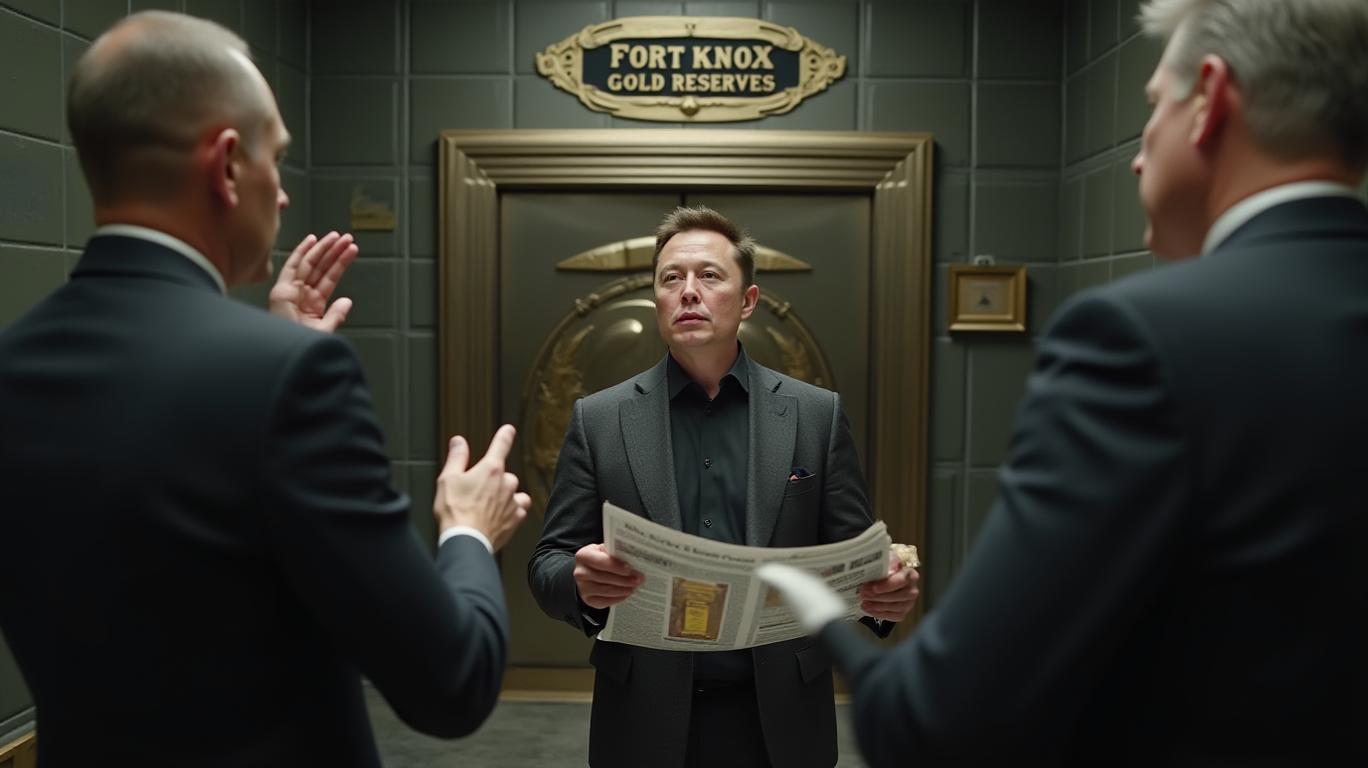
Elon Musk Demands Audit of Fort Knox Gold Reserves Amidst Concerns of Theft and Fake Gold
Elon Musk has sparked a fresh controversy by calling for an audit of Fort Knox's gold reserves, following U.S. Senator Mike Lee's revelation that he was denied access to the facility. This has raised concerns about the U.S. gold supply, especially given the lack of a full audit since 1953 and Australia's recent discovery of fake gold in the Bank of England's reserves. India has already moved 102 tonnes of its reserves in response to these developments.
Musk's X post, "Who is confirming that gold wasn’t stolen from Fort Knox? Maybe it’s there, maybe it’s not," has drawn attention from prominent figures like Senator Rand Paul, who are now pushing for transparency. The last full audit of Fort Knox's gold reserves was conducted in 1953, with a partial audit in 1974. Since then, no one has verified the actual amount of gold in the vaults, leading to concerns about whether the gold is still there or if it has been replaced or stolen.
Bets on Polymarket suggest doubts about an audit by April, with 56% odds against it. However, as gold prices surge towards Goldman Sachs' $3,100 target, concerns over Fort Knox's transparency are gaining momentum. If doubts turn into revelations of missing or fake gold, confidence in traditional reserves could collapse, potentially strengthening the case for Bitcoin as a superior alternative.
Bitcoin advocates, including Senator Cynthia Lummis, argue that BTC's transparent and verifiable nature makes it a better reserve asset than gold. If a scandal surrounding Fort Knox were to emerge, it could act as a catalyst for Bitcoin to surge towards $100,000, according to Crypto analyst MaxPain. However, if an audit confirms that all gold is intact, the Bitcoin market may remain unaffected, and some analysts predict Bitcoin could reach $270,000-$300,000 by 2025.
The financial world is watching closely as Musk's audit push could have far-reaching effects on gold, Bitcoin, and investor confidence. If the U.S. continues to resist transparency, lingering doubts could still fuel concerns about the U.S. gold supply and the credibility of traditional reserves.

Stay ahead of the market.
Get curated U.S. market news, insights and key dates delivered to your inbox.
AInvest
PRO
AInvest
PRO



Comments
No comments yet