
Elon Musk's America Party: A Political Wildcard in Tech and Infrastructure Investing
The sudden emergence of Elon Musk's America Party in July 2025 marks a bold pivot for the tech titan, who now aims to reshape U.S. politics to accelerate his vision for innovation, energy dominance, and deregulation. While the party's viability in a two-party system remains uncertain, its policy priorities—shaped by Musk's business interests—could create seismic shifts in regulatory landscapes, supply chains, and investment opportunities across tech and infrastructure sectors. Here's what investors need to know.
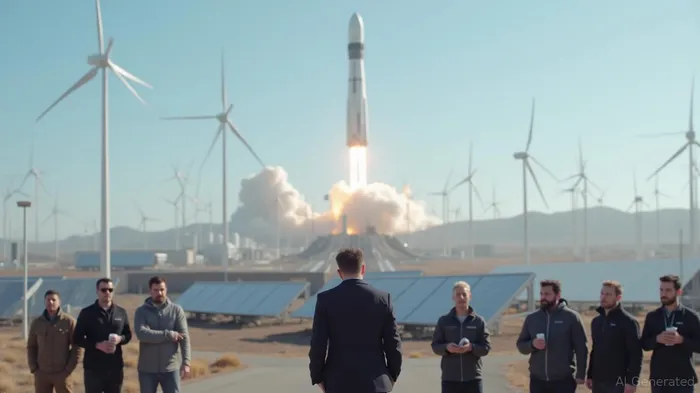
The Regulatory Reset: Musk's Policy Playbook
The America Party's core agenda is a mix of fiscal hawkishness and tech maximalism. Musk's disdain for bipartisan spending bills that “add trillions to debt” aligns with his push to slash red tape for industries he dominates: EVs, AI, and space tech. Key policies include:
Battery & EV Dominance: Musk wants tax breaks for battery manufacturers and consumers, federal funding for recycling infrastructure, and vertical integration in mining (e.g., Tesla's Nevada Gigafactory).
Nuclear Renaissance: Tax credits for nuclear projects and permitting reforms aim to revive this sector, backed by Musk's Foundation for American Innovation.
AI Deregulation: Minimal oversight for AI development (e.g., OpenAI, Neuralink) contrasts with global calls for ethical governance, creating regulatory arbitrage opportunities.
Space Tech as Infrastructure: Streamlining aerospace regulations to support SpaceX's NASA contracts and Starlink broadband, positioning these as nonpartisan priorities.
Investment Hotspots: Winners and Risks
Musk's influence could supercharge sectors aligned with his agenda. Here's where to look—and what to watch:
1. EVs and Battery Supply Chains
- Opportunity: TeslaTSLA-- (TSLA), lithium miners (Livent, Albemarle), and recycling firms (Redwood Materials, Li-Cycle) stand to gain from tax incentives and domestic production mandates.
- Risk: Tesla's Q1 2025 sales dropped 13% due to geopolitical backlash, highlighting market volatility tied to Musk's political clashes.
2. Clean Energy Infrastructure
- Opportunity: NextEra EnergyNEE-- (NEE) benefits from bipartisan grid modernization efforts, while NVIDIANVDA-- (NVDA) gains from AI-driven grid optimization tools.
- Risk: Geothermal and wind projects face permitting hurdles, even with Musk's push for streamlining.
3. Nuclear Energy
- Opportunity: ExelonEXC-- (EXC) gains from tax credits and Musk's focus on nuclear as a “clean” baseload power source.
- Risk: Public skepticism over nuclear safety and competition with renewables could cap growth.
4. AI and Robotics
- Opportunity: NVIDIA (again) and startups like Rethink Robotics (if backed by Musk) could thrive under lax regulations.
- Risk: Ethical AI backlash or Musk's overreach (e.g., Tesla's autonomous rides in Austin, June 2025) might trigger liability issues.
The Elephant in the Room: Third-Party Viability
The America Party's success hinges on overcoming systemic barriers. Ballot access costs alone could exceed $500 million, but Musk's $350 billion net worth makes it feasible. However, historical precedents are grim: no third party has won a U.S. presidential election since 1912.
Investors should treat Musk's political push as a “tailwind” rather than a sure bet. Focus on companies that benefit from his policies regardless of electoral outcomes. For example:
- SpaceX's NASA contracts rely on bipartisan infrastructure funds, not party success.
- Tesla's Gigafactories gain from tax incentives even if the America Party falters.
The Geopolitical Gauntlet
China's dominance in lithium and rare earths poses a critical risk. Musk's “vertical integration” strategy can't offset supply chain vulnerabilities overnight. Meanwhile, Tesla's sales in markets hostile to Musk's politics (e.g., Europe, Southeast Asia) remain volatile.
Investment Strategy: Balance Musk's Vision with Pragmatism
- Overweight: Tesla, Livent, Redwood Materials (direct beneficiaries of Musk's agenda).
- Hedge: NextEraNEE-- and NVIDIA (tech-infrastructure resilience).
- Avoid: Overexposure to China-dependent supply chains (e.g., cobalt for batteries).
Conclusion: A Wild Ride, but a Calculated Gamble
Musk's America Party is a high-risk, high-reward play. Its success could redefine U.S. tech and energy policy, but investors must anchor decisions in structural trends—like clean energy demand—and diversify across sectors. Monitor Musk's ability to navigate regulatory battles (e.g., EPA permitting for nuclear plants) and geopolitical headwinds. For now, bet on companies that thrive in Musk's orbit and stand on their own merits.
In a world where politics and markets are increasingly intertwined, Musk's gamble could turn into a goldmine—or a costly distraction. The key is to invest in the future he's betting on, while hedging against the storms he's courting.

Delivering real-time insights and analysis on emerging financial trends and market movements.
Latest Articles
Stay ahead of the market.
Get curated U.S. market news, insights and key dates delivered to your inbox.
AInvest
PRO
AInvest
PRO



Comments
No comments yet