
Elon Musk's America Party: A Policy Shift with Profits in Renewable Energy, Space Tech, and Autonomous Transport
The rise of Elon Musk's “America Party” in mid-2025 marks a pivotal moment in U.S. politics, with profound implications for infrastructure spending and tech innovation. While critics question its viability in a two-party system, the party's focus on fiscal restraint, deregulation, and tech-driven growth creates both risks and opportunities for investors. This article analyzes how Musk's policy priorities could redirect capital toward sectors aligned with his ventures—Tesla, SpaceX, and X (Twitter)—while exposing vulnerabilities tied to regulatory pushback and political fragmentation.
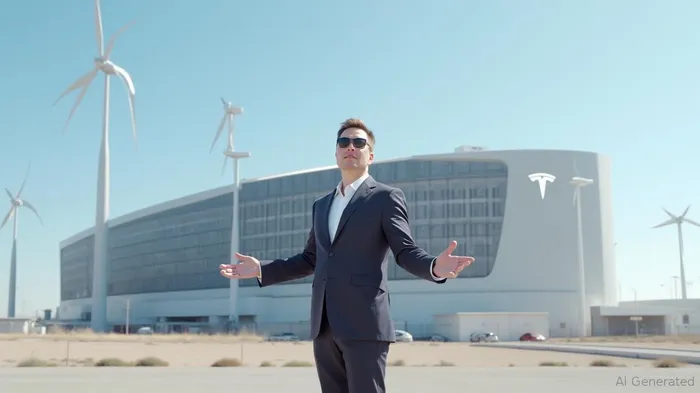
Policy Priorities: A Blueprint for Tech and Infrastructure Reinvestment
The America Party's core agenda centers on three pillars: fiscal conservatism, tech investment, and regulatory overhaul. Musk's opposition to the $5 trillion “Big Beautiful Bill” signed by President Trump underscores his disdain for deficit-driven spending. Instead, he advocates for reallocating funds to future-oriented sectors:
Renewable Energy and Electric Vehicles (EVs):
Musk's TeslaTSLA-- stands to benefit from policies favoring EV infrastructure, including subsidies for charging networks and tax incentives for battery production. The party's push to phase out fossilFOSL-- fuel subsidies could accelerate Tesla's market dominance.
Tesla's stock performance has historically tracked federal EV incentives, suggesting further upside if Musk's party gains influence.Space Technology and Satellite Networks:
SpaceX's Starlink project and lunar ambitions align with the America Party's emphasis on space exploration. Deregulation of aerospace could lower launch costs, while federal partnerships for lunar bases or satellite broadband may expand SpaceX's revenue streams.Autonomous Transport and AI:
Musk's vision for autonomous vehicles (e.g., Tesla's Full Self-Driving) and AI-driven infrastructure (e.g., X's data analytics) could secure funding through streamlined regulations. The party's free-speech absolutism may also shield companies like X from content moderation costs.
Regulatory Risks: The Flip Side of Deregulation
While Musk's tech-friendly policies promise growth, they also invite headwinds:
Environmental and Labor Scrutiny:
Critics argue that Musk's focus on fiscal austerity could delay climate regulations, favoring short-term profits over long-term sustainability. Meanwhile, Tesla's labor practices—a recurring point of controversy—may face heightened scrutiny if the America Party's libertarian ethos clashes with worker protections.Political Fragmentation:
The America Party's strategy to target key congressional seats risks fracturing conservative voting bases. A split Republican coalition could empower Democrats, who might prioritize legacy industries (e.g., fossil fuels) over Musk's vision.
Global Competition:
U.S. tech dominance hinges on bipartisan support. If the America Party's “anti-porky pig” stance alienates allies, rivals like China (e.g., Huawei's AI) or Europe (e.g., Airbus's space partnerships) could gain ground.
Investment Implications: Play the Pivot, Not the Party
While betting directly on the America Party's success is risky, investors can position for policy-driven shifts:
Overweight Renewable Energy and EVs:
Allocate to companies like Tesla, NextEra EnergyNEE-- (NEE), and NIONIO-- (NIO), which benefit from EV subsidies and grid modernization. Avoid fossil fuel stocks (e.g., ExxonMobil (XOM)) if Musk's party gains traction.Space Tech and Infrastructure Plays:
Consider aerospace firms like Lockheed MartinLMT-- (LMT) or Virgin GalacticSPCE-- (SPCE), which could partner with SpaceX on government projects. ETFs like the Global X Space Exploration & Tech ETF (SPCX) offer diversified exposure.AI and Data Infrastructure:
Musk's emphasis on AI-driven education and free speech could boost companies like NVIDIANVDA-- (NVDA) (AI chips) or PalantirPLTR-- (PLTR) (data analytics).Hedging Against Regulatory Uncertainty:
Use inverse ETFs (e.g., ProShares Short Technology (TECS)) to mitigate risks from potential backlash against deregulation.
Conclusion: A Long-Term Bet on Musk's Vision
The America Party's success hinges on its ability to navigate systemic political barriers, but its policy agenda already signals a pivot toward tech-driven growth. Investors should treat Musk's ventures as proxies for broader sectoral shifts: renewables, space, and AI are the new frontiers. While regulatory and political risks loom, the alignment of Musk's wealth, influence, and policy goals makes this a trend worth betting on—cautiously, but decisively.
Final Note: Monitor congressional races in key states (e.g., Nevada for Tesla's Gigafactory, Texas for SpaceX's Starbase) as early indicators of the America Party's influence. Policy wins here could validate the investment thesis.

Delivering real-time insights and analysis on emerging financial trends and market movements.
Latest Articles
Stay ahead of the market.
Get curated U.S. market news, insights and key dates delivered to your inbox.
AInvest
PRO
AInvest
PRO



Comments
No comments yet