
Elon Musk's AI Breakthrough: Accelerating America's Technological Dominance
ByAinvest
Saturday, Aug 30, 2025 11:05 am ET1min read
NVDA--
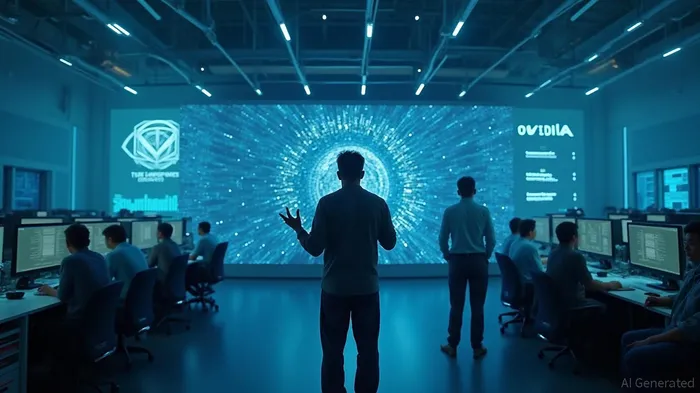
The Stargate project, led by Elon Musk, involves the deployment of hundreds of thousands of Nvidia's most advanced chips. This deployment has been lauded by industry experts, with Nvidia CEO Jensen Huang describing Musk's build as "the fastest supercomputer on the planet" [1]. The mission of Stargate is to uncover "the deepest secrets of the universe" and achieve breakthroughs that are currently beyond human comprehension.
James Altucher, a prominent figure in the field of artificial intelligence, emphasizes that Stargate is just the beginning. He posits that the current AI tools, such as ChatGPT, represent AI 1.0, which provides humans with access to vast amounts of knowledge. However, the future lies in AI 2.0, which equips intelligent machines with the ability to solve problems for humans. Altucher describes this next stage as a turning point in human history, comparable to the discovery of electricity, the wheel, and even fire [1].
The potential economic impact of AI is substantial. According to Altucher, AI could contribute $20 trillion annually to the global economy by 2030, with some forecasts suggesting as high as $14 quadrillion over two decades [1]. In India, the tech services industry is expected to unlock $300–500 billion in new opportunities through Agentic AI, a new form of AI that combines human expertise with intelligent automation [2]. This shift towards hybrid teams, where humans and AI agents collaborate, is anticipated to reshape the future of technology services.
The Stargate project, along with other AI initiatives, underscores the transformative potential of artificial intelligence. As governments and corporations invest heavily in AI, the global economy is poised for significant growth and innovation. However, this growth will require substantial investments in reskilling and reinventing service models to keep pace with the evolving technological landscape.
References:
[1] https://finance.yahoo.com/news/james-altucher-spotlights-elon-musk-150000942.html
[2] https://www.financialexpress.com/artificial-intelligence/mckinsey-and-nasscom-expect-ai-to-unlock-500-billion-opportunity-for-indias-tech-services/3958274/
Elon Musk's latest AI breakthrough is set to accelerate the US in technology and reshape the future. The project, known as Stargate, aims to make America the "AI capital of the world" with a $500 billion investment. Musk has deployed hundreds of thousands of Nvidia chips and is praised by industry experts. James Altucher emphasizes that this is just the beginning, with AI 2.0 giving intelligent machines the ability to solve problems for humans, marking a turning point in human history.
Elon Musk's latest AI breakthrough, the Stargate project, is set to propel the United States to the forefront of technological innovation. With a $500 billion investment, the project aims to make America the "AI capital of the world" [1]. This initiative, which has garnered significant industry praise, is expected to have far-reaching implications for both the U.S. economy and global technological advancements.The Stargate project, led by Elon Musk, involves the deployment of hundreds of thousands of Nvidia's most advanced chips. This deployment has been lauded by industry experts, with Nvidia CEO Jensen Huang describing Musk's build as "the fastest supercomputer on the planet" [1]. The mission of Stargate is to uncover "the deepest secrets of the universe" and achieve breakthroughs that are currently beyond human comprehension.
James Altucher, a prominent figure in the field of artificial intelligence, emphasizes that Stargate is just the beginning. He posits that the current AI tools, such as ChatGPT, represent AI 1.0, which provides humans with access to vast amounts of knowledge. However, the future lies in AI 2.0, which equips intelligent machines with the ability to solve problems for humans. Altucher describes this next stage as a turning point in human history, comparable to the discovery of electricity, the wheel, and even fire [1].
The potential economic impact of AI is substantial. According to Altucher, AI could contribute $20 trillion annually to the global economy by 2030, with some forecasts suggesting as high as $14 quadrillion over two decades [1]. In India, the tech services industry is expected to unlock $300–500 billion in new opportunities through Agentic AI, a new form of AI that combines human expertise with intelligent automation [2]. This shift towards hybrid teams, where humans and AI agents collaborate, is anticipated to reshape the future of technology services.
The Stargate project, along with other AI initiatives, underscores the transformative potential of artificial intelligence. As governments and corporations invest heavily in AI, the global economy is poised for significant growth and innovation. However, this growth will require substantial investments in reskilling and reinventing service models to keep pace with the evolving technological landscape.
References:
[1] https://finance.yahoo.com/news/james-altucher-spotlights-elon-musk-150000942.html
[2] https://www.financialexpress.com/artificial-intelligence/mckinsey-and-nasscom-expect-ai-to-unlock-500-billion-opportunity-for-indias-tech-services/3958274/
Stay ahead of the market.
Get curated U.S. market news, insights and key dates delivered to your inbox.
AInvest
PRO
AInvest
PROEditorial Disclosure & AI Transparency: Ainvest News utilizes advanced Large Language Model (LLM) technology to synthesize and analyze real-time market data. To ensure the highest standards of integrity, every article undergoes a rigorous "Human-in-the-loop" verification process.
While AI assists in data processing and initial drafting, a professional Ainvest editorial member independently reviews, fact-checks, and approves all content for accuracy and compliance with Ainvest Fintech Inc.’s editorial standards. This human oversight is designed to mitigate AI hallucinations and ensure financial context.
Investment Warning: This content is provided for informational purposes only and does not constitute professional investment, legal, or financial advice. Markets involve inherent risks. Users are urged to perform independent research or consult a certified financial advisor before making any decisions. Ainvest Fintech Inc. disclaims all liability for actions taken based on this information. Found an error?Report an Issue




Comments
No comments yet