
Elon Musk's $1 Trillion Tesla Pay Package: A High-Stakes Gamble for Innovation and Investor Risk


 Aime Summary
In November 2025, , tying his compensation to a series of audacious performance milestones. This decision, , reflects a strategic bet on Musk's ability to drive innovation while aligning his interests with long-term shareholder value. However, the package's scale and structure raise critical questions about investor risk, corporate governance, and the sustainability of Tesla's moonshot ambitions.
A Pay Package Designed for Moonshot Innovation
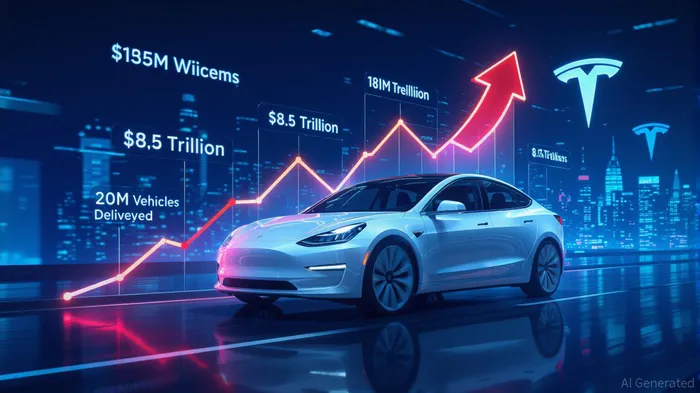
The compensation plan is entirely stock-based, with Musk's rewards contingent on TeslaTSLA-- achieving 12 escalating performance tranches. These include operational milestones like delivering 20 million vehicles annually, deploying 1 million robotaxis, , , according to a
France24 report. For context, .
The package's design mirrors Tesla's broader strategy to pivot toward AI-driven technologies, with Musk emphasizing that the incentives are tied to transformative products like humanoid robots and Full Self-Driving (FSD) software. As stated by the board, the structure ensures Musk's focus remains on "long-term value creation" while mitigating short-term distractions, as noted in a
Parameter report. Analysts like Wedbush's argue this aligns with Tesla's AI-driven future, calling it a "strategic move to lock in Musk's leadership during a critical phase of innovation," according to
Investopedia.
The Innovation-Incentive Paradox
Performance-based compensation is often praised for aligning executive goals with corporate success. In Tesla's case, the pay package explicitly ties Musk's rewards to technological breakthroughs. For example, , , and . Similarly, , both of which are still in development, according to a
Finimize article.
Academic studies on suggest that such high-stakes incentives can drive innovation by creating "skin in the game" for leaders. A 2025 paper titled "Musk's $56 Billion: Pay, Incentives, or Rewards?", available on SSRN, notes that are "consistent with sound contracting principles," as they motivate executives to pursue transformative projects that might otherwise be deemed too risky. However, the study also cautions that such packages can backfire if targets are unrealistic or if executives prioritize short-term gains over long-term stability.
Investor Risk: A Double-Edged Sword
While the pay package aims to reward innovation, it also exposes investors to significant risk. , for instance, , regulatory support, and global demand. , , governance challenges, .
Critics, including , have raised concerns about the lack of "guardrails" in the package. The fund argued that Musk's growing involvement in xAI and his political ties to the Trump administration could create , diverting attention from Tesla's operational needs, as reported by
WTOP. Additionally, . As investor noted, , according to a
Nasdaq article.
Balancing Ambition and Accountability
Tesla's board has defended the package as a necessary step to retain Musk's leadership during a pivotal phase. , according to a
StudyDocu case analysis. However, , as reported by
BTimeOnline.
For investors, . , , . Conversely, if the milestones prove unattainable, . As one analyst put it, , but also on his ability to execute it without distractions," according to
Investopedia.
Conclusion
. , the package aims to drive innovation while aligning leadership with shareholder interests. However, . , .

Delivering real-time insights and analysis on emerging financial trends and market movements.
Latest Articles
Stay ahead of the market.
Get curated U.S. market news, insights and key dates delivered to your inbox.
AInvest
PRO
AInvest
PRO



Comments
No comments yet