
Elon Musk's $1 Trillion Pay Package and Its Implications for Tesla's Future Growth


 Aime Summary
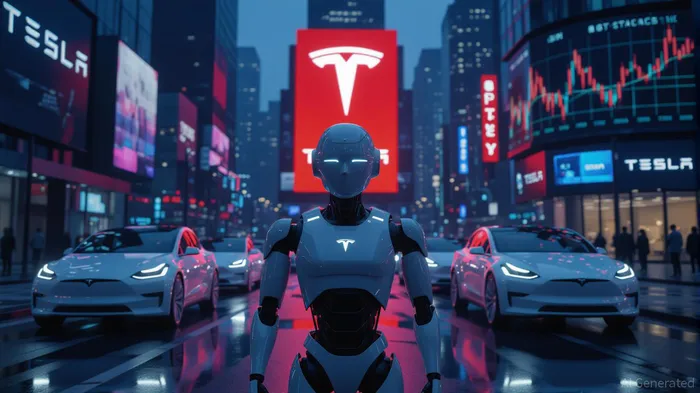
Elon Musk's recent $1 trillion compensation package for TeslaTSLA-- has reignited debates about executive incentives, long-term shareholder alignment, and the sustainability of founder-led corporate governance. Approved by over 75% of Tesla shareholders in November 2025, the package is structured as a stock grant tied to ambitious milestones, including a $8.5 trillion market capitalization, 20 million annual vehicle deliveries, and the deployment of 1 million Tesla Bots and Robotaxis, according to
a report by IBTimes. This analysis explores how the package's unique design reflects Tesla's strategic priorities, its alignment with shareholder interests, and the risks inherent in such a high-stakes bet on Musk's leadership.
A Pay Package Designed for the Long Haul
The compensation structure is explicitly performance-based, with Musk's rewards contingent on Tesla achieving decade-long goals. To unlock the full 423.7 million additional shares, the company must not only scale production to 20 million vehicles annually but also pioneer advancements in AI and robotics, according to
a report by IBTimes. This mirrors modern trends in executive compensation, where performance shares and relative total shareholder return (TSR) metrics dominate, as noted by
a CompPort report. However, Tesla's approach diverges sharply from traditional metrics like revenue or EPS growth, instead prioritizing transformative innovation.
According to
a report by IBTimes, Wedbush analyst Dan Ives described this structure as a "smart move" to retain Musk's leadership during Tesla's critical transition into AI and robotics. By linking Musk's financial upside to the success of projects like the Optimus robot and full self-driving technology, Tesla aims to ensure his focus remains on long-term value creation. This contrasts with conventional executive incentives, which often emphasize short-term financial metrics and lack the same level of operational specificity, as noted in
a report by IBTimes.
Shareholder Alignment or Founder Control?
While the package's performance metrics align with Tesla's strategic goals, critics argue it risks overconcentration of power in Musk's hands. The requirement for a succession plan-a condition for unlocking the full payout-has been underexplored in public discourse. Analysts like Morgan Stanley's Adam Jonas warn that rejecting the package could destabilize investor sentiment, as it might be interpreted as a "vote of no confidence" in Musk's leadership, according to
a report by IBTimes. Conversely, Norway's sovereign wealth fund (NBIM) has opposed the plan, citing concerns over dilution and governance risks, according to
a Tech2 report.
The board's rationale for the package hinges on the belief that Musk's departure would jeopardize Tesla's vision. As Tesla Chair Robyn Denholm stated, "Musk's engagement is crucial for the company's future," according to
a report by IBTimes. This underscores a tension between founder-led governance and institutional investor demands for transparency. While the package includes a succession plan, its specifics remain opaque, raising questions about how Tesla will ensure continuity if Musk steps down.
Risks and Realities
Tesla's ambitious targets are not without challenges. The company faces operational hurdles, including scaling robot production and navigating regulatory scrutiny. A 2023 incident at Tesla's Fremont factory, where a FANUC robot caused serious injuries, highlighted the risks of rapid automation, according to
a Tesla Oracle report. Additionally, Tesla's recent financial performance-falling sales and profits-has raised concerns about its ability to meet the package's metrics, according to
a report by Engadget.
Despite these risks, Musk's personal investment in Tesla stock-$1 billion in 2025-signals confidence in the company's trajectory, according to
a report by IBTimes. Analysts project Tesla could reach $2 trillion by early 2026 and $3 trillion by 2027, driven by AI and robotics, according to
a report by IBTimes. If these forecasts materialize, the pay package could indeed make Musk the first trillionaire CEO, with daily earnings of $275 million, according to
a report by IBTimes.
Conclusion: A High-Stakes Bet on Innovation
Elon Musk's $1 trillion pay package represents a bold experiment in aligning executive incentives with long-term innovation. By tying Musk's rewards to transformative milestones, Tesla aims to secure its position as a leader in AI and robotics while maintaining shareholder confidence. However, the package's success hinges on overcoming operational, regulatory, and governance challenges. For investors, the key question is whether Tesla's vision of a $8.5 trillion market cap is achievable-or if the package merely entrenches Musk's control at the expense of broader corporate accountability.

Delivering real-time insights and analysis on emerging financial trends and market movements.
Latest Articles
Stay ahead of the market.
Get curated U.S. market news, insights and key dates delivered to your inbox.




Comments
No comments yet