
Elon Musk's $1 Trillion Pay Package and Its Implications for Tesla's Future


 Aime Summary
A Pay Package Designed for the Long Haul
The structure of Musk's compensation is as ambitious as it is unprecedented. To unlock the full value, , , , , as described in a Los Angeles Times article. If these goals are met, , , according to an NC State analysis. Proponents argue this aligns Musk's incentives with shareholders, rewarding him only if Tesla's vision materializes. Critics, however, question whether such a package is a reward for past performance or a bet on speculative future outcomes.
Corporate Governance at a Crossroads
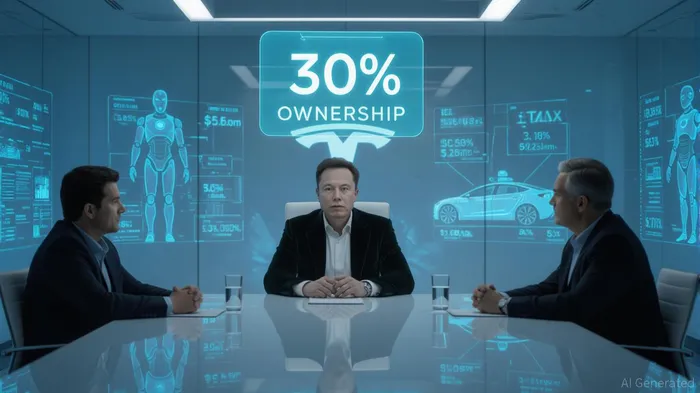
The pay package has exposed deep fissures in Tesla's corporate governance. (ISS) and Glass Lewis, two leading proxy advisors, strongly opposed the deal, warning that it entrenches Musk's control and weakens board oversight, as reported in a TCW analysis. By increasing Musk's ownership to a near-controlling stake, the package risks creating a governance vacuum where dissenting voices-whether on the board or among shareholders-are marginalized. Norway's sovereign wealth fund, among others, voted against the proposal, citing concerns over dilution and the lack of independent board members, as noted in an Inews article.
This concentration of power raises a critical question: Can a company thrive when its CEO's interests are so deeply intertwined with its survival? While Tesla's board argues that Musk's hands-on leadership is essential for navigating the complexities of AI, robotics, and global markets, skeptics point to the lack of checks and balances. The absence of a tax deduction for the package-due to U.S. law's $1 million cap on deductible executive compensation-further underscores its symbolic nature: a vote of confidence in Musk's ability to deliver, rather than a fiscally prudent decision, as noted in a .
A Tech Industry Benchmark or a Red Flag?
The broader tech sector offers mixed precedents. While companies like Apple and Amazon have long tied executive compensation to stock performance, Musk's package dwarfs even the most aggressive benchmarks. For context, , as discussed in a Medium post. This raises concerns about whether such compensation structures are sustainable or scalable.
Academic research suggests that value-based equity grants-where executives receive shares based on stock price performance-can inadvertently discourage innovation by rewarding stagnation, as described in a WTW report. In contrast, long-term stock ownership, as advocated by governance experts, fosters alignment with shareholders. Tesla's approach, however, leans heavily on aspirational metrics, which may incentivize short-term gains over prudent risk management.
The Long-Term Value Equation
The ultimate test of this pay package will be its impact on Tesla's long-term value. If Musk achieves the stated milestones, the package could be viewed as a masterstroke of corporate strategy, rewarding shareholders with exponential growth. However, , supply chain bottlenecks, and the sheer scale of robotaxi deployment.
Moreover, the package's success hinges on Tesla's ability to maintain investor confidence. The post-approval stock slide suggests that markets are already pricing in skepticism. As one analyst noted, "This isn't just about Musk's vision-it's about whether TeslaTSLA-- can execute without alienating its shareholders," according to a Tesla Accessories blog.
A New Era or a Governance Warning?
Musk's pay package may signal a new era in tech governance, where visionary leaders are rewarded with near-controlling stakes in their companies. Yet it also serves as a cautionary tale about the risks of concentrated power. As institutional investors increasingly prioritize ESG factors and governance maturity, Tesla's approach could either set a precedent for bold, long-term thinking-or become a case study in the perils of unchecked executive influence.
For now, the world watches as Tesla races toward its audacious targets. Whether this pay package proves to be a catalyst for innovation or a red flag for institutional balance will depend on the company's ability to deliver on its promises-and the board's willingness to hold Musk accountable.

Delivering real-time insights and analysis on emerging financial trends and market movements.
Latest Articles
Stay ahead of the market.
Get curated U.S. market news, insights and key dates delivered to your inbox.




Comments
No comments yet