
Elon Musk's $1 Trillion Pay Package and Its Implications for Corporate Governance and Investor Risk


 Aime Summary
Corporate Governance in Crisis: The Deliberate Erosion of Independence
Tesla's board has long faced scrutiny for its lack of independence, a flaw that culminated in the Delaware Chancery Court invalidating Musk's previous $56 billion pay package in 2024, according to a report. The court ruled that the board failed to act as an independent check on Musk's influence, instead rubber-stamping decisions that prioritized his personal interests over shareholder value. The new $1 trillion proposal, while technically shareholder-approved, replicates these governance failures. Proxy advisory firms like Glass Lewis and ISS have raised alarms, noting that Tesla's board remains heavily tilted toward Musk-aligned interests, with chair Robyn Denholm-a former CFO and close associate-defending the package as essential for "visionary leadership," as the report notes.
This dynamic exemplifies the concept of corporate capture, where executives consolidate power to shape governance structures in their favor. Tesla's reincorporation in Texas, a state with weaker shareholder protections, further insulates Musk from legal challenges, as the report explains. As one legal analyst observed, "The board's role as a check on executive power has been neutered. This is not governance-it's a power grab," as the report notes.
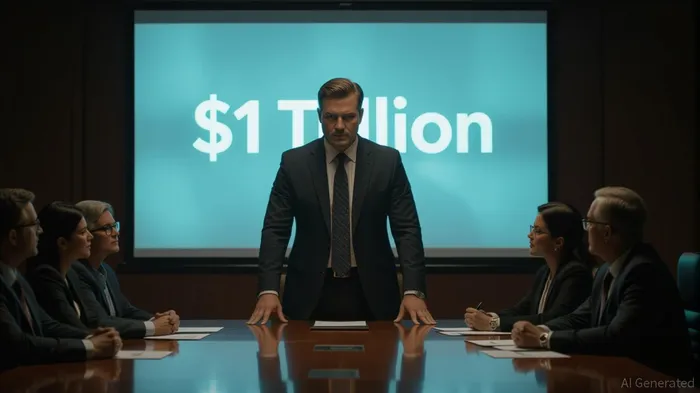
Performance Metrics: Ambition vs. Realism
The pay package's performance metrics are as audacious as they are unproven. Achieving an $8.5 trillion valuation would require Tesla to surpass the combined market caps of Apple, Microsoft, and Amazon-a feat that defies historical precedent, as the report notes. Similarly, producing 20 million vehicles annually would demand a 300% increase in current output, while deploying 1 million robotaxis hinges on regulatory and technological breakthroughs that remain speculative, as the report notes.
Academic research underscores the risks of linking executive pay to such unrealistic targets. A 2023 study in the Journal of Financial Economics found that overreliance on total shareholder return (TSR) as a performance metric often rewards executives for external market conditions rather than operational excellence, as the study notes. Tesla's package, which ties 70% of Musk's compensation to TSR, exacerbates this issue. As Harvard Law School's Corporate Governance Forum notes, "TSR incentivizes short-term stock manipulation, not long-term value creation," as the report notes.
The Cost of Excess: Shareholder Value at Risk
The package's scale is staggering. At $1 trillion, Musk's compensation would exceed the combined pay of all Fortune 500 CEOs by 10 times, according to the report. This raises urgent questions about alignment with shareholder interests. A 2014 study revealed that only 12% of CEO pay variance correlates with economic performance, while 60% is driven by company size and industry norms-factors unrelated to individual contribution, as the study notes. Tesla's proposal, which could grant Musk a 25% stake in the company, further blurs the line between owner and employee, creating conflicts of interest in decision-making, as the report notes.
Investor backlash is already emerging. Norway's Norges Bank, a major Tesla shareholder, has publicly opposed the plan, citing "excessive risk to long-term value," as the report notes. Yet, with Tesla's reincorporation in Texas limiting legal recourse, dissenting shareholders face a weak bargaining position. This dynamic mirrors the "say-on-pay" paradox identified in recent governance research: shareholder votes often rubber-stamp executive demands rather than enforce accountability, as the report notes.
Lessons for Investors: Navigating the Risks
For investors, the Tesla case highlights three critical risks:
1. Corporate Capture: Boards dominated by executive allies can entrench power structures that prioritize personal gains over shareholder returns.
2. Misaligned Incentives: Pay packages tied to unrealistic or short-term metrics may encourage risky behavior, such as overleveraging or regulatory shortcuts.
3. Legal Weaknesses: Reincorporation in states with lax governance standards (e.g., Texas) can shield executives from accountability, even when compensation is legally questionable.
Academic studies suggest remedies. The 2023 Harvard Law School report advocates for long-term stock ownership with extended holding periods to discourage short-termism, as the report notes. Similarly, replacing TSR with metrics like return on invested capital (ROIC) or economic profit could better align pay with sustainable performance, as the study notes. Tesla's current structure, by contrast, rewards speculation over execution-a recipe for long-term underperformance.
Conclusion: A Cautionary Tale for Corporate America
Elon Musk's $1 trillion pay package is not just a Tesla story-it is a bellwether for corporate governance in the 2020s. As boards increasingly defer to charismatic leaders, the risk of corporate capture grows. For investors, the lesson is clear: scrutinize governance structures as rigorously as financial statements. In an era where executive compensation outpaces economic reality, the true cost of excess may not be felt today-but it will be paid by shareholders tomorrow.

Delivering real-time insights and analysis on emerging financial trends and market movements.
Latest Articles
Stay ahead of the market.
Get curated U.S. market news, insights and key dates delivered to your inbox.
AInvest
PRO
AInvest
PRO



Comments
No comments yet