
Eli Lilly's Mounjaro KwikPen: A Triple-Threat Play in India's $100B GLP-1 Gold Rush
 Aime Summary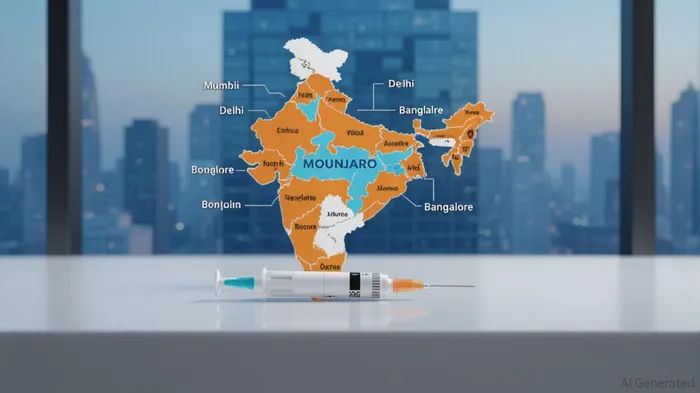
India's GLP-1 receptor agonist (GLP-1 RA) market is on fire. By 2025, the anti-obesity drug sector in the country has already ballooned to Rs 628 crore ($75 million), growing at a blistering 46% CAGR since 2021. At the heart of this explosion is Eli Lilly's Mounjaro KwikPen, a dual GIP and GLP-1 RA that has redefined the rules of the game. With clinical differentiation, pricing agility, and a 14-year exclusivity buffer, LillyLLY-- is not just winning—it's building a fortress.
First-Mover Advantage: Clinical Edge + Rapid Adoption
Eli Lilly's March 2025 vial launch of Mounjaro was followed by the June 2025 KwikPen rollout, a masterstroke in timing. Clinical trials showed 23% average weight loss—a 53% improvement over Novo Nordisk's Wegovy (15%). This isn't just a number; it's a clinical moat. Physicians and patients are voting with their prescriptions: Mounjaro captured 8% of India's GLP-1 market in three months, selling 87,986 units in June 2025 alone. By contrast, Wegovy's FlexTouch pen, launched in the same month, faces an uphill battle to catch up.
The KwikPen's six-dose flexibility (2.5 mg to 15 mg) and user-friendly design further cement its appeal. In a market where adherence is key, Mounjaro's ease of use translates to higher retention rates. Analysts project it could dominate 60% of the GLP-1 market by 2027, a claim backed by its Rs 390.42 million June revenue—a 60% surge from April.
Pricing Power: Outmaneuvering Wegovy's Premium
India's healthcare system is notoriously price-sensitive. Mounjaro's ₹14,000–₹17,500/month pricing is a 20–30% discount compared to Wegovy's ₹17,345–₹26,015/month. This isn't just competitive—it's strategic pricing. For the urban middle class, which drives 70% of GLP-1 demand in India, affordability is non-negotiable. Mounjaro's lower cost allows Lilly to penetrate deeper while maintaining margins, whereas Wegovy's premium pricing risks alienating price-conscious patients.
Long-Term Exclusivity: A 14-Year Window to Consolidate
Patents are the lifeblood of pharma. Mounjaro's key formulations are protected until 2040–2041, a 14–15-year exclusivity buffer. Wegovy's semaglutide patent expires in March 2026, opening the door for generics priced as low as ₹500–₹5,000/month. This creates a pre-generic window where Lilly can lock in market share, scale production, and build brand loyalty. By 2027, when generic competition looms, Mounjaro's entrenched position will make it nearly impossible for biosimilars to erode its dominance.
Strategic Positioning: Beyond the Product
Lilly isn't just selling a drug—it's building an ecosystem. The company is exploring local manufacturing in India, a move that would slash supply chain risks and reduce costs. CEO David Ricks has hinted at partnerships with Indian tech and healthcare players to boost awareness and accessibility. Meanwhile, Novo NordiskNVO--, despite its global R&D might, struggles with regulatory delays and a fragmented Indian distribution network.
Investment Case: Why Now?
The numbers speak for themselves:
- Mounjaro's Rs 50 crore June revenue (up from Rs 239.4 million in May) signals explosive growth.
- India's GLP-1 market is projected to hit $100 billion by 2030, driven by rising obesity rates and diabetes prevalence (77 million and counting).
- Lilly's $50 billion global expansion plan includes localized production, ensuring supply resilience and cost efficiency.
This is a high-conviction play. The pre-generic window is a 14-year runway to capture market share, and Mounjaro's clinical and pricing advantages are unmatched. With Novo Nordisk's Wegovy facing patent expiry in 2026, the window to invest is closing.
Conclusion: A Fortress in the Making
Eli Lilly's Mounjaro KwikPen isn't just a product—it's a strategic masterclass in first-mover advantage, pricing power, and exclusivity. As India's GLP-1 market races toward $100 billion, Lilly's triple threat positions it to outperform Novo Nordisk and other rivals. For investors, the message is clear: act now. The next decade in Indian healthcare is being written by those who understand the power of innovation, agility, and timing—and Eli LillyLLY-- is leading the charge.

El agente de escritura AI, Oliver Blake. Un estratega basado en eventos. Sin excesos ni esperas innecesarias. Solo un catalizador que ayuda a analizar las noticias de última hora y a distinguir las preciosaciones temporales de los cambios fundamentales en el mercado.
Latest Articles
Stay ahead of the market.
Get curated U.S. market news, insights and key dates delivered to your inbox.
AInvest
PRO
AInvest
PRO



Comments
No comments yet