
Eli Lilly's GLP-1 Empire: Navigating Blockbuster Sales and Stock Volatility in a High-Stakes Biotech Landscape
 Aime Summary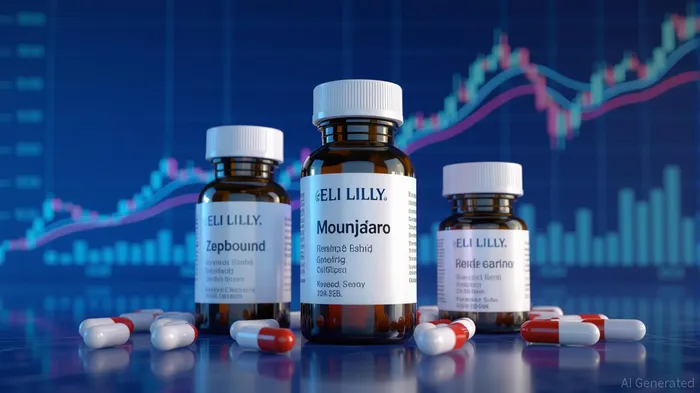
Eli LillyLLY-- and Company (LLY) has become the poster child of the GLP-1 revolution, with its blockbuster drugs Zepbound and Mounjaro dominating the obesity and diabetes markets. In Q2 2025, Zepbound raked in $3.38 billion in U.S. sales—a 172% year-over-year leap—while Mounjaro's global revenue hit $5.20 billion, a 68% increase. Together, these drugs now control 57% of the U.S. incretin drug market, a testament to Lilly's ability to capitalize on the exploding demand for weight-loss and metabolic therapies. But as the company's stock price tumbled 14% in a single day following underwhelming data from its oral GLP-1 candidate, orforglipron, investors are left wondering: Is this a buying opportunity, or a warning shot in a crowded and volatile sector?
The Double-Edged Sword of GLP-1 Dominance
Lilly's success with Zepbound and Mounjaro is undeniable. These injectable therapies have redefined standards in obesity care, with Zepbound's 23% average weight loss outpacing Novo Nordisk's Wegovy and Mounjaro's cardiovascular benefits in type 2 diabetes patients solidifying its role in chronic disease management. The company's 57% market share in the U.S. incretin space is a fortress, but it's also a target. Competitors like Novo NordiskNVO-- and PfizerPFE-- are racing to develop oral alternatives, and Lilly's own orforglipron—a once-daily pill—has stumbled in its first major test.
The Phase 3 trial for orforglipron showed a 12.4% average weight loss at the highest dose, falling short of the 15% Wall Street had hoped for and trailing Novo's 13.7% in the SURMOUNT-5 study. While the drug still met primary endpoints and demonstrated cardiovascular benefits, the side effects—nausea, vomiting, and a 10.3% discontinuation rate—raised red flags. This isn't just a data point; it's a market signal. Investors reacted swiftly, slashing $100 billion off Lilly's valuation in one day. The lesson here is clear: in the GLP-1 arms race, even a 12.4% weight loss can feel like a loss when expectations are sky-high.
Beta vs. Bull: Assessing the Risks
Lilly's stock has historically been a low-volatility play, with a beta of 0.44, meaning it's less sensitive to market swings than the S&P 500. Yet the recent orforglipron blowout shattered that illusion. The 14% drop in early August 2025 was the company's worst single-day performance in 26 years, wiping out months of gains. This volatility underscores a critical truth: even the most stable biotech stocks can become landmines when clinical data misses.
The short-term risks are twofold. First, orforglipron's underwhelming results could delay its regulatory approval or limit its market share. Novo Nordisk's oral semaglutide, which showed better efficacy, is now a stronger contender. Second, the gastrointestinal side effects—while typical for GLP-1s—could deter patients from switching from injectables. If Lilly can't convince users to adopt its pill, it risks ceding ground to rivals.
But here's the counterargument: Lilly's pipeline is a fortress. Beyond orforglipron, the company is advancing tirzepatide (Mounjaro's active ingredient) into new indications, including non-alcoholic steatohepatitis (NASH) and Alzheimer's. Its recent acquisitions of SiteOne and Verve Therapeutics add gene-editing and pain management platforms, diversifying its revenue streams. These moves suggest a long-term strategy to insulate itself from GLP-1 market saturation.
The Long Game: Is This a Buy-and-Hold Opportunity?
For investors with a 5–10 year horizon, Lilly's fundamentals remain compelling. The company raised its full-year revenue guidance to $60–62 billion, with non-GAAP EPS projected at $21.75–$23.00. Zepbound and Mounjaro alone could generate $10 billion in combined sales by 2026, and the GLP-1 market is projected to hit $150 billion by 2030. Even if orforglipron underperforms, Lilly's injectable dominance and expanding pipeline provide a safety net.
However, the stock's current valuation—trading at a P/E of 35x and a PEG ratio of 1.2x—reflects high expectations. If the company can't maintain its 30%+ revenue growth, the stock could face pressure. The key will be how quickly it scales orforglipron production and whether it can differentiate its oral pill from Novo's offerings.
Final Verdict: Balancing the Scales
Eli Lilly is a paradox: a low-beta stock with high-beta risks. Its GLP-1 dominance is a moat, but its reliance on a single therapeutic class makes it vulnerable to clinical setbacks. For conservative investors, the current pullback offers a chance to buy into a company with a proven track record and a $60 billion revenue runway. For the risk-averse, however, the recent volatility is a cautionary tale.
If you're considering LLYLLY--, ask yourself: Can you stomach a 10–15% swing in a single day? If yes, and you believe in the long-term potential of GLP-1s and Lilly's pipeline, this could be a strategic buy. If not, wait for clearer data on orforglipron's approval timeline and real-world adoption. Either way, one thing is certain: The GLP-1 gold rush is far from over, and Lilly remains a key player—just don't expect a smooth ride.

Delivering real-time insights and analysis on emerging financial trends and market movements.
Latest Articles
Stay ahead of the market.
Get curated U.S. market news, insights and key dates delivered to your inbox.


AInvest
PRO
AInvest
PRO



Comments
No comments yet