
Eli Lilly, Biogen, and Eisai face scrutiny for Alzheimer's disease drug efficacy
ByAinvest
Thursday, Aug 7, 2025 2:33 pm ET1min read
BIIB--
The companies highlighted the long-term effectiveness of their drugs, with Eli Lilly reporting that Kisunla slowed down early Alzheimer's disease progression by 0.6 points at 18 months and by 1.2 points at 3 years, compared to a placebo group. Biogen and Eisai reported similar results for Leqembi, with a 0.45-point less decline at 18 months and a 1.01-point less decline at 3 years [1].
However, the trial designs and populations used in these studies were criticized for being misleading. Both Eli Lilly and Biogen compared the effects of their drugs against a placebo group that included both APOE4 and non-APOE4 carriers in "early" Alzheimer's disease. This approach produced misleading results, as APOE4 carriers progress more rapidly than non-carriers in Alzheimer's disease [1].
Moreover, the companies' data showed that anti-amyloid antibody drugs had almost no impact on non-carriers, who have very little amyloid in their brains. This raises questions about the cost-effectiveness of these drugs, given their high annual list prices of $26,500 for Leqembi and $32,000 for Kisunla [1].
The findings have sparked debate about the potential benefits and limitations of anti-amyloid therapy for Alzheimer's disease. While the drugs may have a minimally clinically significant reduction in disease progression for APOE4 carriers, the risks and costs associated with these treatments are a concern. The debate highlights the need for more robust clinical trials and real-world data to better understand the effectiveness and cost-effectiveness of these drugs.
References:
[1] https://seekingalpha.com/article/4810476-eli-lilly-biogen-eisai-muddying-alzheimers-disease-expensive-drugs-little-benefit
[2] https://www.precisionmedicineonline.com/business-news/eli-lilly-eisai-share-data-differing-treatment-duration-strategies-pricey-alzheimers
LLY--
Eli Lilly, Biogen, and Eisai presented long-term data on their anti-amyloid Alzheimer's disease drugs at the Alzheimer's Association International Conference. The data showed that the drugs were effective in slowing cognitive decline, but the results were muddled by differences in trial designs and populations. The findings have sparked debate about the potential benefits and limitations of anti-amyloid therapy for Alzheimer's disease.
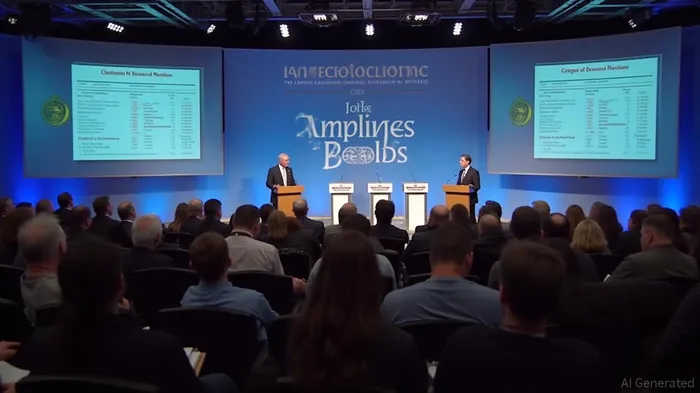
Eli Lilly, Biogen, and Eisai presented long-term data on their anti-amyloid Alzheimer's disease drugs at the Alzheimer's Association International Conference (AAIC) in Toronto. The companies showcased the effectiveness of their drugs, Kisunla (donanemab) and Leqembi (lecanemab), in slowing cognitive decline. However, the results were clouded by differences in trial designs and populations, sparking debate about the potential benefits and limitations of anti-amyloid therapy for Alzheimer's disease.The companies highlighted the long-term effectiveness of their drugs, with Eli Lilly reporting that Kisunla slowed down early Alzheimer's disease progression by 0.6 points at 18 months and by 1.2 points at 3 years, compared to a placebo group. Biogen and Eisai reported similar results for Leqembi, with a 0.45-point less decline at 18 months and a 1.01-point less decline at 3 years [1].
However, the trial designs and populations used in these studies were criticized for being misleading. Both Eli Lilly and Biogen compared the effects of their drugs against a placebo group that included both APOE4 and non-APOE4 carriers in "early" Alzheimer's disease. This approach produced misleading results, as APOE4 carriers progress more rapidly than non-carriers in Alzheimer's disease [1].
Moreover, the companies' data showed that anti-amyloid antibody drugs had almost no impact on non-carriers, who have very little amyloid in their brains. This raises questions about the cost-effectiveness of these drugs, given their high annual list prices of $26,500 for Leqembi and $32,000 for Kisunla [1].
The findings have sparked debate about the potential benefits and limitations of anti-amyloid therapy for Alzheimer's disease. While the drugs may have a minimally clinically significant reduction in disease progression for APOE4 carriers, the risks and costs associated with these treatments are a concern. The debate highlights the need for more robust clinical trials and real-world data to better understand the effectiveness and cost-effectiveness of these drugs.
References:
[1] https://seekingalpha.com/article/4810476-eli-lilly-biogen-eisai-muddying-alzheimers-disease-expensive-drugs-little-benefit
[2] https://www.precisionmedicineonline.com/business-news/eli-lilly-eisai-share-data-differing-treatment-duration-strategies-pricey-alzheimers
Stay ahead of the market.
Get curated U.S. market news, insights and key dates delivered to your inbox.
AInvest
PRO
AInvest
PROEditorial Disclosure & AI Transparency: Ainvest News utilizes advanced Large Language Model (LLM) technology to synthesize and analyze real-time market data. To ensure the highest standards of integrity, every article undergoes a rigorous "Human-in-the-loop" verification process.
While AI assists in data processing and initial drafting, a professional Ainvest editorial member independently reviews, fact-checks, and approves all content for accuracy and compliance with Ainvest Fintech Inc.’s editorial standards. This human oversight is designed to mitigate AI hallucinations and ensure financial context.
Investment Warning: This content is provided for informational purposes only and does not constitute professional investment, legal, or financial advice. Markets involve inherent risks. Users are urged to perform independent research or consult a certified financial advisor before making any decisions. Ainvest Fintech Inc. disclaims all liability for actions taken based on this information. Found an error?Report an Issue


ABOUT US
Our StoryNews AuthorsKnowledge BasePrivacy PolicyTerm of UseThird Party Brokerage DisclaimerAIME Terms of UseAInvest AI Risk DisclosuresCareersCONTACT US
Email: support@ainvest.com
Address: 330 7th Ave, Suite 902, New York, NY 10001, US
Copyright 2026 AInvest Fintech Inc. All rights reserved.


Comments
No comments yet