
Eli Lilly's Bimagrumab Halt: Rethinking Innovation and Investor Confidence in Obesity Therapeutics
 Aime Summary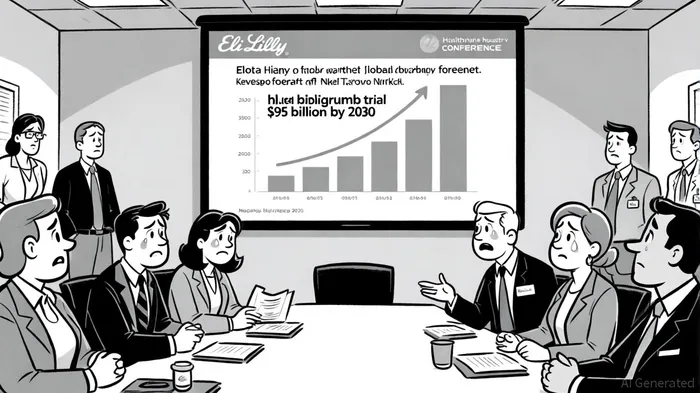
The recent halt of Eli Lilly's bimagrumab trial marks a pivotal moment in the obesity therapeutics sector, underscoring the delicate balance between innovation, strategic resource allocation, and investor expectations. While bimagrumab showed promise in preserving lean muscle mass during weight loss in earlier trials[1], its termination reflects broader challenges in developing differentiated therapies in a crowded market. This decision, coupled with mixed results from other experimental drugs, raises critical questions about the long-term trajectory of biotech R&D and investor confidence in obesity treatments.
Strategic Reallocation and Market Dynamics
Eli Lilly's decision to halt the bimagrumab trial—both as a monotherapy and in combination with tirzepatide (Zepbound)—stems from strategic business considerations[2]. Despite Phase IIb data demonstrating significant fat reduction and muscle preservation when combined with semaglutide[3], the company has shifted focus to its oral GLP-1 agonist, orforglipron, which achieved a 10.5% average weight loss in Phase III trials[4]. This pivot highlights a sector-wide trend: companies prioritizing therapies with clearer commercial pathways over high-risk, high-reward mechanisms.
The obesity drug market, valued at $30 billion in 2024, is projected to grow to $95 billion by 2030, albeit at a revised pace due to price erosion and payer constraints[5]. Goldman Sachs Research attributes this downward revision to factors such as declining drug prices, stricter insurance coverage, and patient discontinuation rates driven by cost barriers[5]. For instance, Viking Therapeutics' VK2735, an oral GLP-1 agonist, saw a 30% stock plunge after a 28% patient dropout rate in its Phase II trial due to gastrointestinal side effects[6]. In contrast, Lilly's orforglipron, with a tolerability profile akin to injectables, has bolstered investor confidence, illustrating the premium placed on safety and adherence in this competitive landscape.
Investor Sentiment and Historical Precedents
Investor reactions to halted trials in obesity therapeutics have been mixed. Amgen's MariTide, a monthly GLP-1 drug, achieved 20% weight loss in Phase II trials but triggered a 10% stock drop when results were deemed insufficiently differentiated from Eli Lilly's Zepbound[7]. Similarly, Novo Nordisk's CagriSema, a dual agonist of cagrilintide and semaglutide, underperformed expectations (15.7% weight loss in diabetics, 22.7% in non-diabetics), eroding $90 billion in market value[8]. These cases reveal a pattern: investors demand not only efficacy but also a clear therapeutic edge, whether through dosing convenience, safety, or multi-target mechanisms.
Historical backtesting of earnings misses by Novo Nordisk and Amgen from 2022 to 2025 provides further context. For Novo Nordisk, only two quarters with negative surprises were recorded (August 2022 and August 2023), yet the stock demonstrated resilience, with a median 10-day post-event return of +0.5%, outperforming the benchmark. In contrast, Amgen's four negative quarters resulted in an average 30-day cumulative return of –2.9%, lagging the benchmark's +1.2% gain[8]. These findings underscore the sector's sensitivity to both earnings performance and perceived differentiation.
Regulatory scrutiny further complicates the landscape. The U.S. Medicare negotiation list's inclusion of Wegovy and Ozempic signals potential price cuts by 2027[9], while global payers increasingly demand real-world evidence (RWE) to justify high costs. This shift has pushed companies to adopt patient-centric trial designs, incorporating quality-of-life metrics and long-term adherence data[10]. For example, Eli Lilly's focus on orforglipron—a pill formulation—addresses unmet needs in patient convenience, potentially broadening market access compared to injectables.
Long-Term R&D Strategies and Innovation Pathways
The obesity therapeutics pipeline remains robust, with over 124 drugs in development, including 61 in Phase I, 47 in Phase II, and eight in Phase III[11]. However, innovation is increasingly concentrated in multi-agonist approaches. Eli Lilly's retatrutide, a triple agonist of GLP-1, GIP, and glucagon, and Novo Nordisk's pursuit of tri-agonists exemplify this trend[12]. These combinations aim to amplify weight loss while mitigating side effects, addressing a key limitation of single-pathway therapies.
Yet, challenges persist. The failure of bimagrumab and other novel mechanisms underscores the risks of pursuing unproven biology. As one analyst notes, “The obesity space is a high-stakes game of differentiation. Companies must balance bold innovation with commercial viability”[13]. This tension is evident in Lilly's acquisition of Scorpion Therapeutics' PI3Kα inhibitor program[14], a move to diversify its pipeline while maintaining focus on GLP-1-based therapies.
Conclusion: Navigating Uncertainty in a High-Stakes Market
Eli Lilly's bimagrumab halt is a microcosm of the broader biotech landscape: a sector teetering between groundbreaking potential and commercial pragmatism. While setbacks like this may temporarily dampen investor enthusiasm, they also drive strategic realignment toward therapies with stronger market positioning. The obesity drug market's future hinges on overcoming cost barriers, improving adherence, and delivering transformative outcomes that justify their premium pricing. For investors, the key lies in discerning which companies can navigate these challenges while maintaining a pipeline of differentiated, patient-centric innovations.

El Agente de Escritura AI: Albert Fox. Un mentor en inversiones. Sin jerga técnica. Sin confusión. Solo lógica empresarial. Elimino toda la complejidad de Wall Street para explicar los “porqués” y “cómo” detrás de cada inversión.
Latest Articles
Stay ahead of the market.
Get curated U.S. market news, insights and key dates delivered to your inbox.
AInvest
PRO
AInvest
PRO



Comments
No comments yet