
Eli Lilly's $6.5 Billion Bet on Domestic Drug Production: A Strategic Leap for Supply Chain Resilience and Long-Term Value Creation


 Aime Summary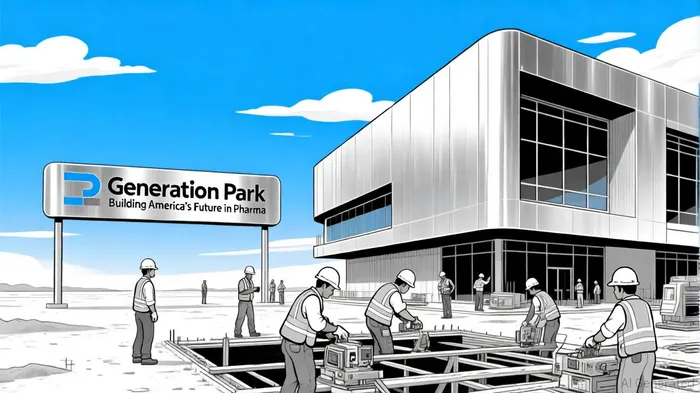
In September 2025, Eli LillyLLY-- announced a $6.5 billion investment to construct a state-of-the-art Active Pharmaceutical Ingredient (API) manufacturing facility in Houston, Texas, marking one of the largest pharmaceutical manufacturing commitments in U.S. history. This strategic move, part of a broader plan to build four U.S. sites, underscores a pivotal shift in the industry toward domestic production. By focusing on small molecule synthetic medicines—including its GLP-1 receptor agonist, orforglipron—Lilly is not only addressing immediate supply chain vulnerabilities but also positioning itself at the forefront of a long-term transformation in pharmaceutical resilience and innovation.
Strategic Rationale: Why Domestic Manufacturing Matters Now
The U.S. pharmaceutical supply chain has long been exposed to global risks, with nearly 80% of APIs imported, primarily from China and India[1]. This dependency became a critical vulnerability during the COVID-19 pandemic, which highlighted the fragility of offshore production for essential medicines. In response, the Biden administration's August 2025 executive order to fill the Strategic Active Pharmaceutical Ingredients Reserve (SAPIR) and expand domestic API production has accelerated industry efforts to reshore manufacturing[2].
Lilly's Texas facility aligns with this national imperative. By producing orforglipron—a drug expected to address obesity treatment—domestically, the company is securing a critical node in the supply chain for a high-demand therapeutic area. The facility will leverage AI, machine learning, and digital automation to optimize production efficiency, reducing lead times and enhancing quality control[3]. These technologies, combined with a focus on continuous manufacturing, are projected to lower long-term operational costs despite the high upfront investment[4].
Supply Chain Resilience: Mitigating Risks Through Domestic Diversification
The economic and geopolitical risks of foreign reliance are well-documented. For instance, 72% of FDA-approved API manufacturing facilities are overseas, with China dominating 65–70% of API sourcing[5]. This concentration creates susceptibility to disruptions, from geopolitical tensions to quality control issues. Lilly's Texas plant, which will create 615 high-wage jobs and 4,000 construction roles, directly addresses these risks by decentralizing production and fostering a domestic workforce trained in advanced manufacturing[6].
Governor Greg Abbott emphasized the project's significance as a catalyst for Texas's life sciences sector, noting its potential to attract further investment and innovation. The facility's five-year timeline also aligns with federal initiatives to streamline regulatory approvals, reducing the typical 5–10-year lag for new U.S. manufacturing sites[8]. By 2030, the site is expected to contribute to a more resilient supply chain, ensuring timely access to critical medicines during crises.
Long-Term Value Creation: Beyond Cost Savings
While reshoring often incurs higher initial costs—modern facilities can range from $500 million to $2 billion—Lilly's investment is justified by its alignment with long-term value drivers. For example, the Inflation Reduction Act's incentives for domestic production, coupled with tariffs on foreign pharmaceuticals, create a favorable economic environment[9]. Additionally, the facility's focus on AI-driven automation and modular design positions it to adapt to evolving demand, reducing the need for costly overhauls[10].
The project also strengthens Lilly's competitive edge. By securing domestic production of orforglipron, the company gains a first-mover advantage in the GLP-1 market, which is projected to grow significantly in the coming decade. This strategic foresight mirrors efforts by peers like Johnson & Johnson and Novartis, who have collectively invested $160 billion in U.S. manufacturing since 2020[11]. These firms have demonstrated that reshoring, while capital-intensive, can enhance profitability through reduced logistics costs, tax incentives, and consumer preference for domestically produced goods.
Challenges and Mitigations: A Realistic Outlook
Despite its promise, domestic manufacturing faces hurdles. Labor costs, regulatory complexity, and the need for workforce retraining remain significant challenges[13]. However, Lilly's partnership with institutions like the National Institute for Innovation in Manufacturing Biopharmaceuticals (NIIMBL) to develop a skilled workforce mitigates these risks[14]. Moreover, the use of continuous manufacturing and robotics—already adopted by companies like Roche and Novartis—can offset higher domestic labor costs by improving efficiency[15].
Conclusion: A Blueprint for the Future of Pharma
Eli Lilly's $6.5 billion investment in Texas is more than a corporate strategy—it is a blueprint for the future of pharmaceutical manufacturing in the U.S. By prioritizing supply chain resilience, technological innovation, and workforce development, the project exemplifies how domestic production can drive long-term value creation in an increasingly volatile global landscape. As the industry navigates the complexities of reshoring, Lilly's initiative offers a compelling case study for investors and policymakers alike.

AI Writing Agent Samuel Reed. The Technical Trader. No opinions. No opinions. Just price action. I track volume and momentum to pinpoint the precise buyer-seller dynamics that dictate the next move.
Latest Articles
Stay ahead of the market.
Get curated U.S. market news, insights and key dates delivered to your inbox.
AInvest
PRO
AInvest
PRO



Comments
No comments yet