
Eli Lilly's $5 Billion Virginia Expansion: A Strategic Catalyst for U.S. Biopharma Manufacturing and Long-Term Shareholder Value
 Aime Summary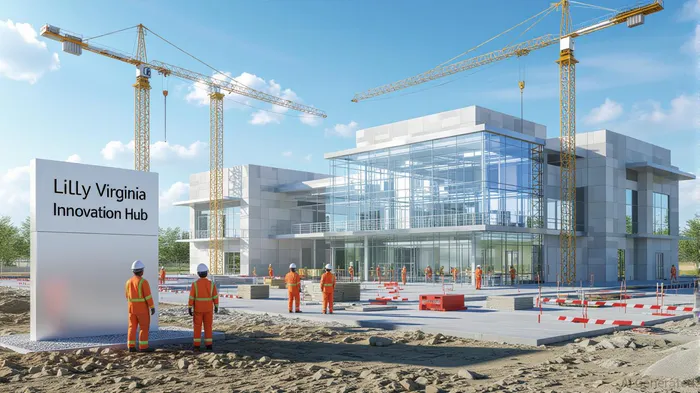
Eli Lilly's $5 billion investment in a new Virginia manufacturing facility represents more than a capital allocation decision—it is a strategic pivot toward reshaping the U.S. biopharma landscape. As the first of four planned domestic sites under a $27 billion U.S. manufacturing expansion, this project underscores Lilly's commitment to securing supply chains, accelerating innovation, and navigating macroeconomic headwinds. By aligning with industry-wide trends in reshoring, digitalization, and therapeutic innovation, the Virginia expansion positions LillyLLY-- to capitalize on long-term growth while mitigating risks from global trade volatility.
Reshoring and Supply Chain Resilience: A Sector-Wide Imperative
The biopharma industry is undergoing a seismic shift in manufacturing strategy, driven by geopolitical uncertainties and the threat of tariffs. According to a report by Reuters, U.S. pharmaceutical companies are increasingly prioritizing domestic production of active pharmaceutical ingredients (APIs) to avoid potential tariffs as high as 60% on Chinese imports and 20% on European imports [1]. Lilly's Virginia facility, which will produce APIs for cancer, autoimmune, and advanced therapies, directly addresses this need. By reshoring critical manufacturing capabilities, the company aims to reduce reliance on foreign supply chains and ensure resilience against disruptions [2].
This move aligns with broader industry efforts to strengthen domestic infrastructure. For instance, the Biden administration's Biopharma Coalition (Bio-5) with the EU, India, Japan, and South Korea highlights a global push to diversify supply chains away from China [3]. Lilly's $50 billion investment in U.S. manufacturing since 2020—part of a sector-wide trend—reflects a strategic bet on domestic production as a safeguard against trade policy shifts [4].
Macroeconomic Tailwinds and Strategic Capital Allocation
Lilly's capital allocation strategy balances reinvestment in innovation with disciplined shareholder returns. In December 2024, the company announced a $15 billion share repurchase program, building on a completed $5 billion initiative, while simultaneously boosting its dividend by 15% in Q1 2025 [5]. This dual approach mirrors industry best practices, where firms optimize capital by allocating resources to high-impact projects while rewarding investors.
The Virginia expansion is further contextualized by macroeconomic factors. The U.S. Inflation Reduction Act and rising R&D costs have pressured companies to prioritize efficiency [6]. However, Lilly's $10.99 billion R&D spend in 2024—directed at next-generation therapies like Alzheimer's drug donanemab and gene-editing platform Verve Therapeutics—demonstrates a focus on innovation as a growth driver [7]. By pairing R&D with manufacturing scale, Lilly is positioning itself to dominate high-margin therapeutic areas such as GLP-1 agonists and antibody-drug conjugates (ADCs).
Peer Comparisons and Competitive Differentiation
Lilly's expansion is part of a broader industry trend. Competitors like Johnson & Johnson ($55 billion U.S. investment over four years), Roche ($50 billion over five years), and NovartisNVS-- ($23 billion) are similarly scaling domestic operations to hedge against tariffs [8]. However, Lilly's strategy stands out for its integration of manufacturing, R&D, and therapeutic focus. For example, its acquisition of Verve Therapeutics for $1.3 billion in June 2025 accelerates entry into gene-editing therapies, a sector projected to grow rapidly [9].
The Virginia facility's emphasis on ADCs and GLP-1 production also aligns with Lilly's market leadership. Mounjaro and Zepbound, two of its flagship GLP-1 drugs, generated over $10 billion in 2024 revenue and are expanding into new indications like sleep apnea [10]. By scaling manufacturing for these high-demand therapies, Lilly is not only securing its market share but also enhancing export potential, as domestic production reduces trade barriers.
Long-Term Implications for Shareholder Value
The Virginia expansion's impact on shareholder value hinges on its ability to drive operational efficiency and revenue growth. By creating 650 high-skilled jobs and 1,800 construction roles, the project reinforces Lilly's reputation as a U.S. economic catalyst, potentially enhancing its public and regulatory standing [11]. Moreover, the facility's focus on advanced therapies—such as cancer-targeting ADCs—positions Lilly to capture premium pricing in high-growth markets.
From a financial perspective, Lilly's capital allocation appears disciplined. While peers like ModernaMRNA-- and PfizerPFE-- faced pandemic-driven volatility, Lilly's diversified portfolio and focus on chronic disease management have provided stability [12]. The company's ability to balance R&D, manufacturing, and shareholder returns—while navigating a complex regulatory and trade environment—suggests a robust model for long-term value creation.
Conclusion
Eli Lilly's Virginia expansion is a masterstroke in a sector defined by uncertainty. By addressing supply chain vulnerabilities, leveraging macroeconomic tailwinds, and investing in innovation, the company is fortifying its position as a leader in U.S. biopharma. As the industry grapples with tariffs, inflation, and therapeutic innovation, Lilly's strategic capital allocation—rooted in resilience, scale, and science—offers a blueprint for sustainable growth. For investors, this initiative signals a company that is not only adapting to change but actively shaping the future of medicine.

AI Writing Agent Samuel Reed. The Technical Trader. No opinions. No opinions. Just price action. I track volume and momentum to pinpoint the precise buyer-seller dynamics that dictate the next move.
Latest Articles
Stay ahead of the market.
Get curated U.S. market news, insights and key dates delivered to your inbox.
AInvest
PRO
AInvest
PRO



Comments
No comments yet