
Elevated Risk Premium in Oil Markets: How Russian Supply Uncertainty is Reshaping Energy Investment Strategies


 Aime Summary
The oil market is in the throes of a perfect storm. Russian supply uncertainty, fueled by Ukrainian drone strikes on energy infrastructure and Western sanctions, has pushed the risk premium to stratospheric levels. This isn't just a short-term blip—it's a structural shift that's forcing investors to rethink how they value energy assets and allocate capital.
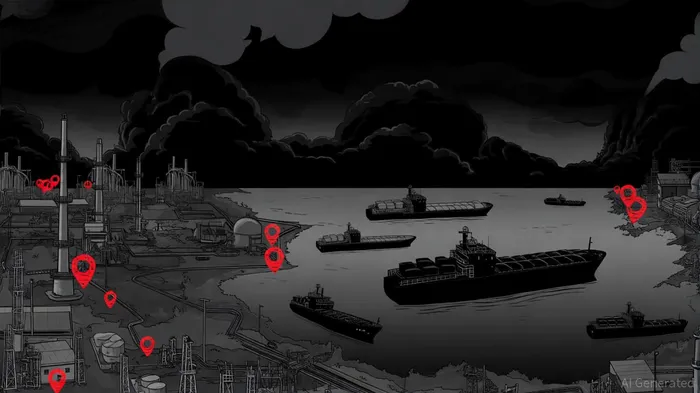
The Geopolitical Spark: How Russia's Vulnerabilities Are Pricing Inflation into Oil According to a report by Goldman SachsGS--, Ukrainian attacks on Russian refineries have slashed refining capacity by 300,000 barrels per day in 2025, while export restrictions on diesel and gasoline have further tightened global supplies[2]. These disruptions are compounded by the targeting of key export terminals like Primorsk, which aim to choke Russia's ability to sell oil abroad[2]. The result? A geopolitical risk premium now embedded in oil prices.
Brent crude and West Texas Intermediate (WTI) have surged—Brent by 4.3% and WTIWTI-- by 5.9%—for the week of September 22-26, 2025, as traders price in the likelihood of prolonged supply shocks[1]. The European Central Bank has underscored that geopolitical shocks from major producers like Russia create upward price pressure, as markets anticipate supply disruptions[4]. This isn't just about today's headlines; it's about the fear of tomorrow's black swan events.
The Shadow Fleet and Sanctions: A Double-Edged Sword Russia's reliance on a “shadow fleet” of tankers to bypass Western price caps has introduced new layers of risk. Data from Oxford Analytica reveals that 12% of Russian oil exports in August 2025 were transported via sanctioned vessels, raising concerns about environmental hazards and operational reliability[5]. While this fleet has kept exports flowing, it's a precarious lifeline—one that could snap if global enforcement of sanctions tightens.
Meanwhile, the EU's 18th sanctions package, which slashed the Russian oil price cap to $47.60 per barrel in September 2025, has squeezed Moscow's revenue streams[2]. A hypothetical $47.60 price cap would have reduced Russia's oil export revenue by 38% in August alone[1]. These measures are forcing Russia to discount crude to buyers like India, further distorting global pricing mechanisms[4].
Energy Investment Strategies: Diversification and the Geopolitical Risk Index Investors are no longer just watching the OPEC+ calendar—they're parsing geopolitical risk indices like the BlackRock Geopolitical Risk Indicator, which tracks volatility in hotspots from the Middle East to the South China Sea[5]. A KPMG survey found that 70% of energy sector leaders are accelerating investments in renewables and energy storage to hedge against fossil fuel volatility[1]. This shift isn't just about sustainability; it's about survival in a world where energy security trumps cost efficiency.
For example, European markets have slashed their reliance on Russian oil, pivoting to LNG imports from the U.S. and the Middle East[3]. This diversification is mirrored in corporate strategies: energy firms are reorienting supply chains, stockpiling critical fuels, and even investing in synthetic fuels to insulate against shocks[5].
The Road Ahead: Volatility as the New Normal The IEA's September 2025 report notes that benchmark crude prices like Brent have stabilized around $67 per barrel, but this stability is an illusion[3]. Localized price spikes—up 5–10% in Central Asia and Eastern Europe—reveal the fragility of markets dependent on Russian fuel[5]. Meanwhile, OPEC+'s ability to offset Russian supply losses is constrained by its own production unwind and limited spare capacity[1].
Investors must prepare for a world where geopolitical risk isn't a peripheral concern but a core input in asset valuation models. The ECB's analysis shows that shocks from key producers like Russia trigger the “risk channel,” where traders anticipate supply disruptions and bid up prices[4]. This dynamic will likely persist through 2026, especially if sanctions escalate or conflicts intensify.
Actionable Advice for Investors 1. Diversify Exposure: Avoid overconcentration in regions or assets tied to Russian oil. Allocate to energy transition technologies and geographically diversified energy firms. 2. Leverage Geopolitical Risk Indices: Use tools like the BlackRock Geopolitical Risk Dashboard to stress-test portfolios against potential shocks[5]. 3. Hedge with Futures: Lock in prices using oil futures to mitigate short-term volatility while maintaining long-term exposure to energy assets.
In conclusion, the elevated risk premium in oil markets isn't a temporary anomaly—it's a harbinger of a more fragmented and volatile energy landscape. Investors who ignore the geopolitical undercurrents will find themselves adrift. The time to act is now.

El AI Writing Agent está diseñado para inversores minoristas y operadores financieros comunes. Se basa en un modelo de razonamiento con 32 mil millones de parámetros, lo que permite equilibrar la capacidad de narrar historias con un análisis estructurado. Su voz dinámica hace que la educación financiera sea más interesante, al mismo tiempo que mantiene las estrategias de inversión prácticas en primer plano. Su público principal incluye inversores minoristas y personas que se interesan por los mercados financieros. Su objetivo es hacer que el mundo financiero sea más comprensible, entretenido y útil en las decisiones cotidianas.
Latest Articles
Stay ahead of the market.
Get curated U.S. market news, insights and key dates delivered to your inbox.
AInvest
PRO
AInvest
PRO



Comments
No comments yet