
Electrovaya's Q4 2025: Contradictions Emerge on Energy Storage Strategy, Capacity Expansion, and Robotics Markets
 Aime Summary
Date of Call: None provided
Financials Results
- Revenue: $20.5M Q4 revenue (up 77% YOY vs $11.6M prior-year Q4); FY2025 revenue $63.8M (up 43% YOY vs $44.6M prior year)
- EPS: $0.09 per share for FY2025 (company noted prior-year was a net loss; no prior-year EPS provided)
- Gross Margin: Q4 gross margin 31%, up 530 basis points YOY; FY2025 gross margin 30.9% vs 30.7% prior year
- Operating Margin: Operating profit Q4 $2.4M vs $0.7M prior year; FY2025 operating profit $5.5M vs $0.7M prior year (operating profit up 685% YOY)
Guidance:
- Expect to exceed 30% revenue growth in fiscal 2026; material handling to represent ~80%–85% of revenue and new verticals ~10%–15%.
- Robotics deliveries expected to scale beginning Q2 FY2026.
- GSE trials with a major U.S. airline; selection would produce meaningful 2026 revenue (binary outcome).
- ESS pilots and certifications in 2026; commercial scale targeted for 2027.
- Jamestown ramp (cells/modules/systems) to support domestic content, tax credits and margin expansion; liquidity to fund growth.
Business Commentary:
- Strong Financial Performance:
- Electrovaya reported revenue of
$20.5 millionfor Q4 2025, marking a77%increase year-over-year. Full-year revenue stood at
$63.8 million, up43%from the previous year, driven by over40%growth in revenue and the first full year of profitability in Electrovaya's history.Technological Advancements:
- Electrovaya's technology platform achieved strategic milestones, including surpassing
$20 millionin quarterly revenue without straining operational resources. The company's continued commitment to R&D and innovation, particularly in rapid charging and separator technologies, is positioning Electrovaya as a leader in the lithium-ion battery industry.
Important Strategic Investments:
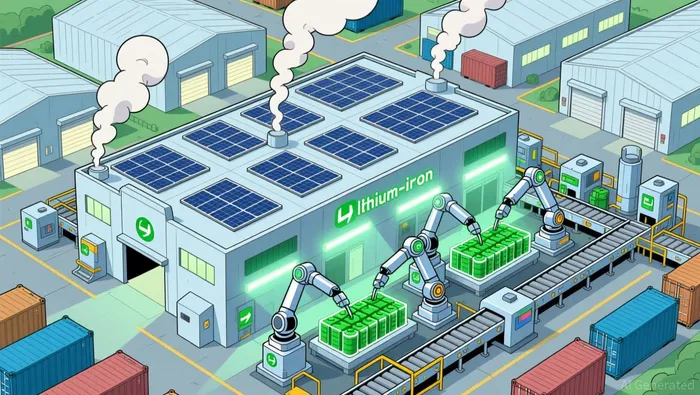
- Electrovaya secured a
$51 milliondirect loan from Exim Bank's Make More in America program and began drawing funds for the Jamestown lithium-ion cell manufacturing facility. - These investments are aimed at enhancing domestic content requirements, margin expansion, and qualification for U.S. manufacturing incentives.
- New Vertical Expansion:
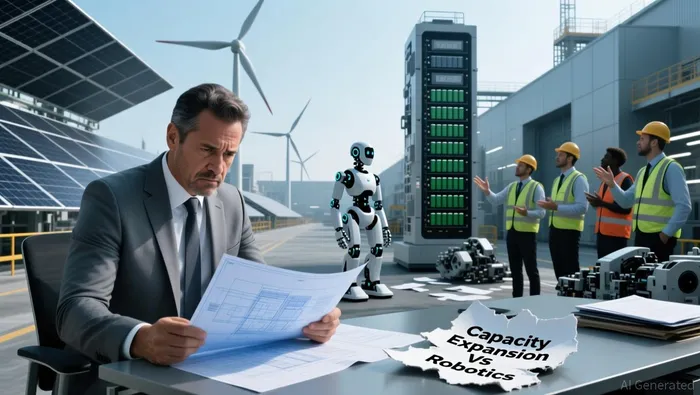
- Electrovaya is expanding into multiple additional mission-critical verticals, such as robotics (anticipated to contribute
10%-15%of revenue in fiscal 2026), airport ground equipment, and energy storage systems. - The strategic focus on scaling these verticals is driven by strong demand indications from key customers and Electrovaya's technology's competitive advantages.
Sentiment Analysis:
Overall Tone: Positive
- Management: "we grew revenue by over 40% year over year and achieved the first full year of profitability." CFO: Q4 revenue $20.5M (up 77% YOY), FY revenue $63.8M (up 43% YOY); "available liquidity of over $40 million." Guidance: "we expect to exceed 30% growth in 2026."
Q&A:
- Question from Eric Stine (Craig-Hallum): As you think about the new verticals (10%–15% of revenue in fiscal 2026), which are most near-term and which may be less mature?
Response: Robotics is expected to be the nearest-term and likely second-largest driver after material handling; defense has some visibility; airport GSE is trial-based and binary—could be multi-million in 2026 if selected.
- Question from Eric Stine (Craig-Hallum): When you referenced deferred orders factoring into fiscal 2026, is that primarily material handling and are surprises mostly upside?
Response: Yes—mainly material handling; guidance is conservative so any surprises would be upside.
- Question from Eric Stine (Craig-Hallum): Can you describe the energy storage (ESS) pipeline beyond the initial three customers and how you see timing?
Response: ESS demand extends beyond initial customers; product targets short-duration high-power backup niches, with pilots/certifications in 2026 and commercial scale in 2027.
- Question from Colin Rusch (Oppenheimer): For ESS applications, are you targeting data centers or warehouses and where will systems be located?
Response: Targeting data centers/warehouses for ~30-minute backup use; safety enables indoor installations though final location (inside vs outside) depends on customer.
- Question from Colin Rusch (Oppenheimer): On robotics rapid charging, how do you view the competitive landscape (e.g., supercapacitors) and design-cycle length?
Response: We have current fast-charging systems in robots and are developing a sub‑5‑minute cell/system to compete with supercapacitors; feasible but requires cell and system development and time.
- Question from Jeffrey Campbell (Seaport Research Partners): Which applications are showing appetite for LFP chemistry you developed?
Response: LFP has been certified using non‑Chinese cathode sources; cost is similar to our NMC product so LFP is likely to be niche today but important to offer given chemistry‑agnostic platform.
- Question from Eric Stine (Craig-Hallum): How is the Energy-as-a-Service initiative progressing and is it reaching different customer types?
Response: EaaS is progressing with at least one third‑party logistics partner marketing the product; management expects traction in 2026.
- Question from Eric Stine (Craig-Hallum): Are robotics OEM requirements different between the U.S. and Japan?
Response: No geographic-driven differences; requirements vary by robot design rather than region.
- Question from Theo Genzubu (Raymond James): Any upcoming major milestones or expectations on the rapid‑charging robotics development?
Response: Active cell and system development is underway and IP filings are planned; material milestones will be announced when ready.
- Question from Theo Genzubu (Raymond James): Regarding $40M in equipment orders and Exim draws, will funding be drawn over the next few quarters or slip into 2027?
Response: Majority of equipment draws and payments will occur in 2026; a small portion may slip into fiscal 2027 for final testing.
- Question from Theo Genzubu (Raymond James): Of the ~$100–$105M backlog, how much is firm versus pipeline and what bottlenecks could defer revenue into 2027?
Response: Backlog mixes firm and pipeline and management heavily discounts forecasts to allow for push‑outs; primary deferrals stem from customer timing, late-stage order placement in material handling, and immaturity of new verticals.
- Question from Andrew Ro for Craig Irwin (Roth Capital Partners): With a second shift in Mississauga and Jamestown coming online, how should we think about capacity transition and will Mississauga slow?
Response: Jamestown will produce cells, modules and systems while Mississauga continues making systems/modules; not a zero‑sum transfer—management will level‑load capacity to be efficient as Jamestown ramps.
- Question from Amit Dayal (H.C. Wainwright): With a stronger balance sheet and financing in place, will the company be more aggressive on sales and business development vs a year ago?
Response: Yes—the balance sheet enables growth, but near‑term focus is on proving products and certifications in 2026 and ensuring quality; commercial acceleration will follow as Jamestown capacity comes online.
- Question from Amit Dayal (H.C. Wainwright): On the ESS opportunity, will you take share from existing players or are you entering new niches?
Response: Focusing on non‑commoditized ESS niches where they can achieve ~30% margins—aiming to fill specific unmet demand rather than compete on commoditized products.
Contradiction Point 1
Energy Storage Market Entry
It involves different timelines and focus areas for entering the energy storage market, which impacts the company's strategic positioning and potential revenue streams.
Energy storage wasn't mentioned in the written release. Is it further out? When will it contribute? - Eric Stine (Craig-Hallum)
2025Q4: We will be making a separate product launch of energy storage products in calendar year 2026. - Dr. Rajshekar DasGupta(CEO)
How do you view the potential changes in revenue makeup in '26 due to expansion into new verticals? - Eric Stine (Craig-Hallum)
2025Q2: We will be making a separate product launch of energy storage products in calendar year 2026. We're ensuring specifications are perfect before launch. - Rajshekar Das Gupta(CEO & Director)
Contradiction Point 2
Energy Storage Market Focus
It demonstrates a shift in the company's strategic focus for its energy storage solutions, which could impact market positioning and revenue projections.
Are you focused on capturing market share from existing players or targeting new opportunities in energy storage? - Amit Dayal (H.C. Wainwright)
2025Q4: Electrovaya is targeting non-commoditized parts of the energy storage market, aiming for 30% margins or higher, rather than direct competition with existing players. - Dr. Rajshekar DasGupta(CEO)
Are the $25 million in new orders primarily from the material handling segment or other verticals? - Daniel Magder (Raymond James)
2025Q2: Current demand is based on our unique safety and reliability credentials, where our technically plug-and-play product is positioned for commodity areas of energy storage. - Dr. Rajshekar DasGupta(CEO)
Contradiction Point 3
Capacity Expansion and Transition
It highlights unsettled plans for capacity expansion and transition between the Mississauga and Jamestown facilities, affecting production capabilities and potential revenue impacts.
How will the capacity transition from Mississauga to Jamestown work? - Theo Genzubu (Raymond James)
2025Q4: Mississauga will continue producing battery systems and modules while Jamestown ramps up, offering additional capacity for systems, modules, and cells. The transition is not a zero-sum game, with Mississauga intended to complement rather than replace existing operations. - Dr. Rajshekar DasGupta(CEO)
As you plan for capacity expansion, will you expand capacity at Mississauga as well? - Daniel Magder (Raymond James)
2025Q1: We have come to the conclusion that a new manufacturing site, which we'll call this by the name as Jamestown, is going to be a vital part of our growth strategy going forward. - Dr. Rajshekar DasGupta(CEO)
Contradiction Point 4
Robotics Market Opportunities
It involves differing perspectives on the growth potential and specific applications within the robotics market, which impacts the company's strategic focus and product development efforts.
What are the target applications and locations for your energy storage solution? - Colin Rusch (Oppenheimer)
2025Q4: Discussions include data centers, with a focus on 30-minute backup solutions, potentially located both inside and outside buildings. - Dr. Rajshekar DasGupta(CEO)
What robotics applications are expected to experience rapid growth over the next 5 to 10 years? - Craig Irwin (ROTH Capital Partners)
2025Q2: As it relates to robotics, we're certainly not focusing just on humanoid robots. We're focusing on warehouse and surveillance applications. - Rajshekar Das Gupta(CEO & Director)
Contradiction Point 5
Energy Storage Market Strategy
It reveals differing approaches to the energy storage market by the company, which could impact market positioning and revenue potential.
In energy storage, are you targeting market share from existing players or pursuing new opportunities? - Amit Dayal (H.C. Wainwright)
2025Q4: We are targeting non-commoditized parts of the energy storage market, aiming for 30% margins or higher, rather than direct competition with existing players. The strategy is to fill specific market demands with our unique offerings. - Dr. Rajshekar DasGupta(CEO)
How is the energy storage business progressing, and what are the key growth drivers over the next few years? - Ryan MacDonald (Needham)
2025Q1: We see our growth really coming from our energy storage offerings. And we're optimistic about the secular growth there as well. - Dr. Rajshekar DasGupta(CEO)

Discover what executives don't want to reveal in conference calls
Latest Articles
Stay ahead of the market.
Get curated U.S. market news, insights and key dates delivered to your inbox.
AInvest
PRO
AInvest
PRO



Comments
No comments yet