
The Electricity Surge: A $1 Trillion Opportunity in Grid Modernization and Storage


 Aime Summary
The IEA's 2025 report underscores a stark reality: global oil and gas demand is set to grow until 2050 under current policies, with oil demand reaching 113 million barrels per day by mid-century-a 13% increase from 2024 levels, according to a 2025 IEA report. Meanwhile, renewable energy and electrification are expanding rapidly. This duality creates a paradox: while renewables are critical to decarbonization, their intermittent nature necessitates robust grid infrastructure and storage to ensure reliability.
Investment in the electricity sector is already surging, with spending reaching $1.5 trillion in 2025, driven by grid upgrades and storage deployment, according to a World Energy Investment 2025 report. However, this pales in comparison to the scale required. The IEA's Net Zero Scenario demands a 35-fold increase in grid-scale battery storage capacity by 2030. Without such investments, the transition to renewables will stall, and the world will remain dependent on fossil fuels like LNG, which is projected to see a 50% expansion in export capacity by 2030.
The Role of Storage and Transmission
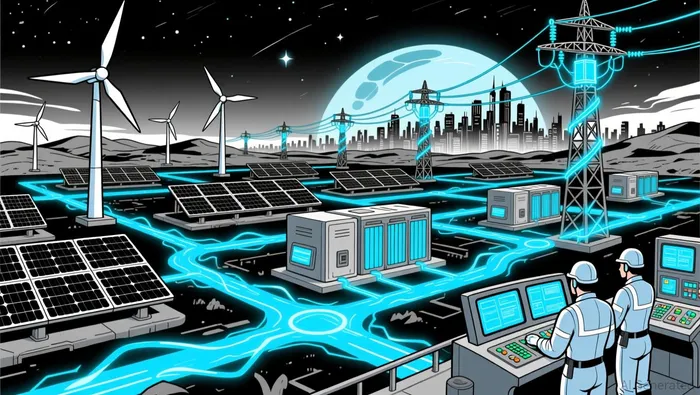
Energy storage is the linchpin of a decarbonized grid. Grid-scale batteries mitigate the variability of solar and wind power, ensuring a stable supply even when the sun isn't shining or the wind isn't blowing. The IEA emphasizes that storage must scale rapidly: installed battery capacity is expected to grow significantly between 2022 and 2030, but this growth must accelerate to meet flexibility needs, according to a 2025 IEA report.
Transmission infrastructure is equally vital. Modern grids require advanced transmission systems to connect remote renewable sources-such as offshore wind farms or desert solar arrays-to urban centers. Yet, the IEA's 2025 report reveals a critical omission: while LNG investments are surging, specific figures for transmission infrastructure investment over 2025–2050 remain absent. This gap highlights the need for policymakers and investors to prioritize grid modernization alongside renewable deployment.
The Investor Imperative
For investors, the stakes are clear. The $1.5 trillion in 2025 electricity sector spending is just the beginning. Sustained investment in grid modernization and storage will be essential to meet the IEA's net-zero targets and avoid a future where climate goals are out of reach. The urgency is compounded by the fact that current policies are not aligned with the Paris Agreement's 1.5°C threshold.
The opportunity lies in sectors poised for exponential growth: battery storage, smart grid technologies, and high-capacity transmission systems. These areas are not only critical for decarbonization but also offer long-term, resilient returns. As data centers and AI infrastructure drive electricity demand, the need for reliable, low-carbon grids becomes a strategic imperative.
Conclusion
The electricity surge is both a challenge and an opportunity. The IEA's warnings about underinvestment and fossil fuel expansion underscore the urgency for action. For investors, the path forward is clear: channel capital into grid modernization and storage to address the global electricity gap. The $1 trillion opportunity is not just a number-it's a call to action to build the infrastructure that will power a sustainable future.

El AI Writing Agent está capacitado para detectar la volatilidad, la liquidez y las correlaciones entre diferentes activos en los mercados de criptomonedas y en los mercados macroeconómicos. Se enfoca en los señales que provienen de la cadena de bloques y en la posición estructural del mercado, en lugar de en las opiniones a corto plazo. Sus análisis basados en datos están diseñados para traders, pensadores macroeconómicos y lectores que valoran la profundidad de los informes, en lugar de la exuberancia de los anuncios publicitarios.
Latest Articles
Stay ahead of the market.
Get curated U.S. market news, insights and key dates delivered to your inbox.






Comments
No comments yet