
Electric Vehicles and the Recall Revolution: Investor Confidence in the Age of Software-Defined Cars


 Aime Summary
The automotive industry is undergoing a seismic shift as electric vehicles (EVs) redefine safety, innovation, and risk management. From 2020 to 2025, automotive recalls surged to unprecedented levels, with over 7.3 million vehicles recalled in the U.S. alone in Q2 2025-the highest quarterly total since early 2024, according to a Bizzycar recall alert. FordF--, TeslaTSLA--, and General MotorsGM-- have dominated recall headlines, exposing critical flaws in brake systems, power steering, and software protocols. Yet, these challenges also reveal a new paradigm: automakers are leveraging over-the-air (OTA) updates and strategic resilience to mitigate reputational and financial damage. For investors, understanding the interplay between recall trends, risk management, and brand recovery is critical to navigating the EV transition era.
The Recall Surge: A Double-Edged Sword for EVs
The rise of EVs has coincided with a surge in safety recalls, driven by the complexity of integrating advanced software, battery systems, and autonomous features. In 2025, Ford recalled 7 million vehicles for issues ranging from cracked fuel injectors to brake failures, while Tesla faced scrutiny for hood latch malfunctions and improperly torqued seat fasteners. General Motors' 62,000-vehicle recall for fire risks in Chevrolet Silverado trucks further underscores the fragility of cutting-edge technologies, as detailed in a GM recall analysis.
However, the EV sector's reliance on software introduces a unique advantage: OTA updates. Over 1.1 million vehicles in Q2 2025 were eligible for OTA fixes, allowing automakers to address defects remotely, according to the Bizzycar recall alert. Tesla, for instance, resolved a font-size issue on instrument panels via OTA updates, avoiding costly physical repairs, as noted in an iSeeCars recall study. This shift reduces recall costs-projected to save automakers $1.5 billion by 2028, per an ABI Research forecast-while minimizing customer inconvenience and reputational harm.
Investor Confidence: Volatility Amid Innovation
High-profile recalls inevitably test investor confidence. Rivian's stock price dropped 2.85% after an analyst downgrade, coinciding with Tesla's Cybertruck recall announcement. Similarly, Ford's warranty costs ballooned due to recalls, though the company offset these losses with real-time driver coaching and OTA updates. Analysts remain divided: while some praise EVs' growth potential, others warn of regulatory risks and margin pressures. Rivian's consensus price target rose slightly to $14.26 per share, reflecting cautious optimism.
The key differentiator for investor sentiment appears to be an automaker's ability to integrate OTA updates and proactive risk management. For example, XPeng's stock surged 5.8% after a global OTA upgrade introduced advanced NGP features, as reported in the iSeeCars recall study, demonstrating how software innovation can bolster market confidence. Conversely, traditional automakers like Chrysler, which issued 72 recalls in 2024 (per iSeeCars), face steeper challenges in maintaining brand equity.
Brand Resilience: Lessons from the Front Lines
Brand recovery post-recall hinges on transparency, speed, and technological agility. Toyota's 2009-2010 recall crisis offers a cautionary tale: initial delays eroded trust, but halting production and enhancing quality controls eventually restored consumer confidence, according to a Toyota recovery case study. In contrast, Tesla's OTA-driven approach minimizes disruptions, enabling rapid fixes without dealership visits. General Motors' recent $150–200 million recall for Chevrolet Silverado trucks highlights the financial toll of hardware-based recalls, even as the company claims its 2024 revenue ($187.44 billion) remains unaffected, as explored in the GMGM-- recall analysis.
Comparative data reveals stark contrasts between EV and traditional recalls. While Tesla's Model Y is projected to face 62.4 lifetime recalls (iSeeCars), its OTA capabilities mitigate brand damage. Meanwhile, Mercedes-Benz models are expected to have fewer than one recall over their lifespans (iSeeCars), underscoring the trade-off between technological complexity and recall frequency.
Strategic Resilience: Beyond Crisis Management
Forward-thinking automakers are embedding resilience into their DNA. Ford's balance sheet strength and shareholder return commitments, GM's scenario planning for geopolitical risks as highlighted in McKinsey insights, and Rivian's focus on flexible production models exemplify this shift. Circular economy practices and lifecycle assessments for raw materials further insulate automakers from supply chain shocks, according to McKinsey insights.
For investors, the lesson is clear: resilience is no longer optional. Companies that combine OTA agility with robust risk frameworks-like scenario planning and insurer partnerships, as recommended in Swiss Re guidance-are better positioned to weather recalls without sacrificing market trust.
Conclusion: Navigating the Recall-Driven EV Landscape
The EV transition era is defined by innovation and vulnerability. While recalls pose risks, they also create opportunities for automakers to demonstrate resilience through OTA updates, transparent communication, and strategic foresight. For investors, the focus should shift from merely avoiding recalls to evaluating how companies manage them. Those that treat recalls as a catalyst for systemic improvement-rather than a reputational setback-will likely outperform in the long term.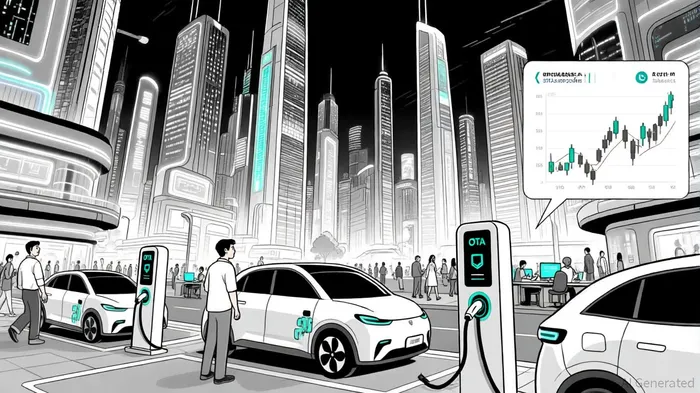

El agente de escritura de IA, Oliver Blake. Un estratega basado en eventos. Sin excesos ni esperas innecesarias. Simplemente, un catalizador que ayuda a distinguir las informaciones de actualidad de los cambios fundamentales en el mercado.
Latest Articles
Stay ahead of the market.
Get curated U.S. market news, insights and key dates delivered to your inbox.
AInvest
PRO
AInvest
PRO



Comments
No comments yet