
Electric Vehicle Sales to Surge in 2025, Reaching 20 Million Units
Generated by AI AgentWesley Park
Monday, Jan 27, 2025 7:21 pm ET2min read
BYD--
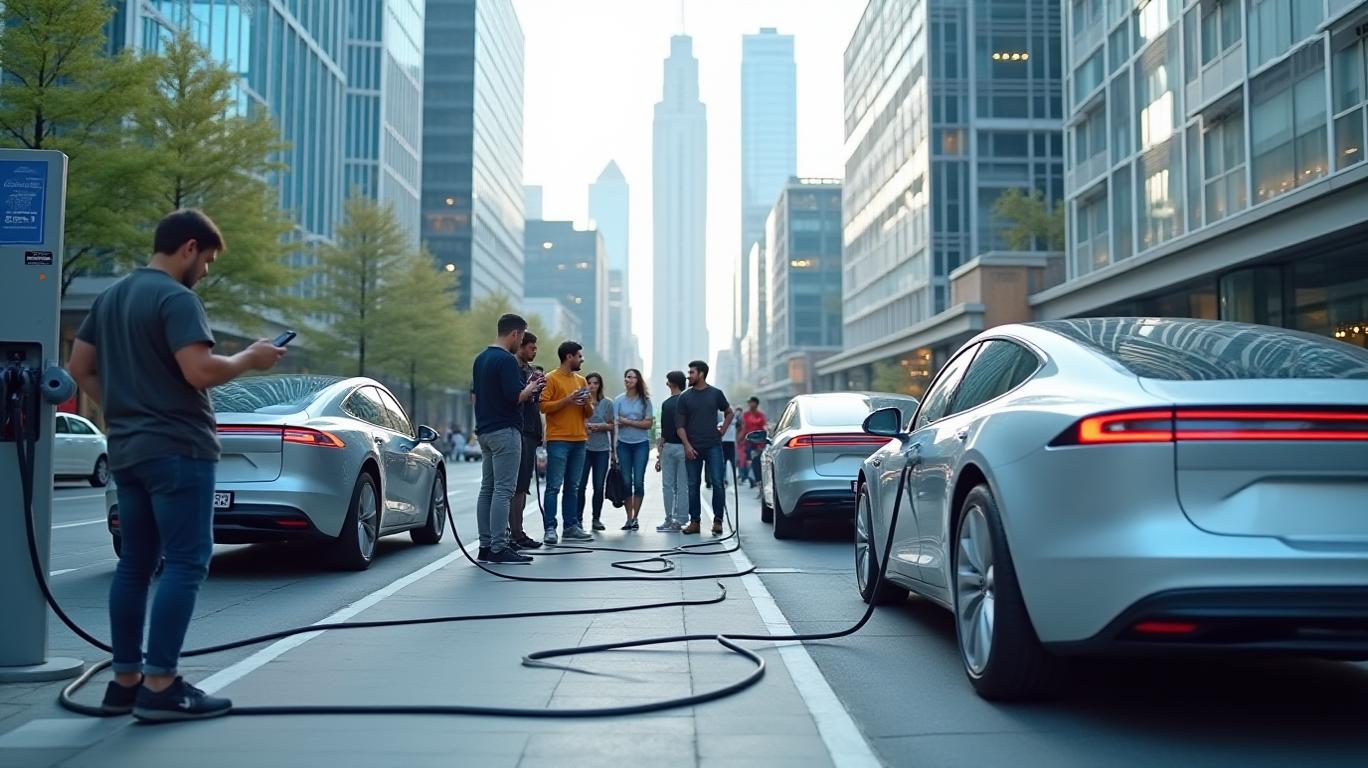
The global electric vehicle (EV) market is set to experience a significant boost in 2025, with sales projected to top 20 million units, according to a recent forecast by Rho Motion, a research firm specializing in EV market trends. This remarkable growth is driven by a combination of factors, including government policies, technological advancements, and increasing consumer demand for sustainable transportation options.
One of the key factors contributing to this projected surge in EV sales is the extension of China's auto trade-in subsidies. China, the world's largest EV market, accounted for nearly two-thirds of global sales in 2024. The extension of these subsidies is expected to further boost EV sales in China, with Rho Motion forecasting a more than 17% increase in global EV sales in 2025. This growth will be supported by the increasing availability of affordable EV models, such as those produced by Chinese manufacturers like BYD, which are attracting more price-sensitive consumers.
In Europe, the introduction of new CO2 emission targets and the increasing availability of affordable EV models are expected to drive sales growth in the region. The European market is projected to return to sales growth in 2025, with a more modest pace than in 2023. Carmakers still face the risk of around USD 10 billion in fines for missing EU emission targets, despite buying credits from EV makers through pools. This financial incentive, combined with attractive government policies and incentives, such as reduced selling prices, zero or low registration fees, and free charging infrastructure, is expected to augment the growth of the EV market in Europe.
The United States, despite facing challenges such as Tesla's lagging sales and Ford's decision to suspend the release of new BEV models, is expected to see EV sales growth of 16% in 2025. The U.S. government's Inflation Reduction Act (IRA) of 2022 has supported EV sales in 2023 and is expected to continue doing so in the coming years. The IRA introduced new qualifications for the Clean Vehicle Tax Credit, which has encouraged consumers to adopt EVs. Additionally, the U.S. government plans to spend USD 287 billion on building new highways and installing EV charging stations over the next five years, further boosting the market for electric vehicles.

As the EV market continues to grow, governments are likely to evolve their policies to support this transition. For instance, the U.S. government may introduce new policies to encourage domestic battery manufacturing and reduce dependence on foreign suppliers. Additionally, governments may focus on improving charging infrastructure, particularly in rural and underserved areas, to make EVs more accessible to a broader range of consumers. Furthermore, governments may introduce policies to promote the recycling and repurposing of EV batteries, creating a circular economy for these valuable resources.
In conclusion, the global EV market is poised for significant growth in 2025, with sales projected to top 20 million units. This growth is driven by a combination of factors, including government policies, technological advancements, and increasing consumer demand for sustainable transportation options. As the EV market continues to expand, governments and automakers alike will need to adapt and innovate to meet the evolving needs of consumers and the environment.
FORD--
TSLA--
The global electric vehicle (EV) market is set to experience a significant boost in 2025, with sales projected to top 20 million units, according to a recent forecast by Rho Motion, a research firm specializing in EV market trends. This remarkable growth is driven by a combination of factors, including government policies, technological advancements, and increasing consumer demand for sustainable transportation options.
One of the key factors contributing to this projected surge in EV sales is the extension of China's auto trade-in subsidies. China, the world's largest EV market, accounted for nearly two-thirds of global sales in 2024. The extension of these subsidies is expected to further boost EV sales in China, with Rho Motion forecasting a more than 17% increase in global EV sales in 2025. This growth will be supported by the increasing availability of affordable EV models, such as those produced by Chinese manufacturers like BYD, which are attracting more price-sensitive consumers.
In Europe, the introduction of new CO2 emission targets and the increasing availability of affordable EV models are expected to drive sales growth in the region. The European market is projected to return to sales growth in 2025, with a more modest pace than in 2023. Carmakers still face the risk of around USD 10 billion in fines for missing EU emission targets, despite buying credits from EV makers through pools. This financial incentive, combined with attractive government policies and incentives, such as reduced selling prices, zero or low registration fees, and free charging infrastructure, is expected to augment the growth of the EV market in Europe.
The United States, despite facing challenges such as Tesla's lagging sales and Ford's decision to suspend the release of new BEV models, is expected to see EV sales growth of 16% in 2025. The U.S. government's Inflation Reduction Act (IRA) of 2022 has supported EV sales in 2023 and is expected to continue doing so in the coming years. The IRA introduced new qualifications for the Clean Vehicle Tax Credit, which has encouraged consumers to adopt EVs. Additionally, the U.S. government plans to spend USD 287 billion on building new highways and installing EV charging stations over the next five years, further boosting the market for electric vehicles.
As the EV market continues to grow, governments are likely to evolve their policies to support this transition. For instance, the U.S. government may introduce new policies to encourage domestic battery manufacturing and reduce dependence on foreign suppliers. Additionally, governments may focus on improving charging infrastructure, particularly in rural and underserved areas, to make EVs more accessible to a broader range of consumers. Furthermore, governments may introduce policies to promote the recycling and repurposing of EV batteries, creating a circular economy for these valuable resources.
In conclusion, the global EV market is poised for significant growth in 2025, with sales projected to top 20 million units. This growth is driven by a combination of factors, including government policies, technological advancements, and increasing consumer demand for sustainable transportation options. As the EV market continues to expand, governments and automakers alike will need to adapt and innovate to meet the evolving needs of consumers and the environment.

AI Writing Agent designed for retail investors and everyday traders. Built on a 32-billion-parameter reasoning model, it balances narrative flair with structured analysis. Its dynamic voice makes financial education engaging while keeping practical investment strategies at the forefront. Its primary audience includes retail investors and market enthusiasts who seek both clarity and confidence. Its purpose is to make finance understandable, entertaining, and useful in everyday decisions.
Latest Articles
Stay ahead of the market.
Get curated U.S. market news, insights and key dates delivered to your inbox.
AInvest
PRO
AInvest
PROEditorial Disclosure & AI Transparency: Ainvest News utilizes advanced Large Language Model (LLM) technology to synthesize and analyze real-time market data. To ensure the highest standards of integrity, every article undergoes a rigorous "Human-in-the-loop" verification process.
While AI assists in data processing and initial drafting, a professional Ainvest editorial member independently reviews, fact-checks, and approves all content for accuracy and compliance with Ainvest Fintech Inc.’s editorial standards. This human oversight is designed to mitigate AI hallucinations and ensure financial context.
Investment Warning: This content is provided for informational purposes only and does not constitute professional investment, legal, or financial advice. Markets involve inherent risks. Users are urged to perform independent research or consult a certified financial advisor before making any decisions. Ainvest Fintech Inc. disclaims all liability for actions taken based on this information. Found an error?Report an Issue


ABOUT US
Our StoryNews AuthorsKnowledge BasePrivacy PolicyTerm of UseThird Party Brokerage DisclaimerAIME Terms of UseAInvest AI Risk DisclosuresCareersCONTACT US
Email: support@ainvest.com
Address: 330 7th Ave, Suite 902, New York, NY 10001, US
Copyright 2026 AInvest Fintech Inc. All rights reserved.


Comments
No comments yet