
Electric Vehicle Infrastructure Growth in Developing Countries: Strategic Investment in Supply Chain and Charging Network Providers


 Aime Summary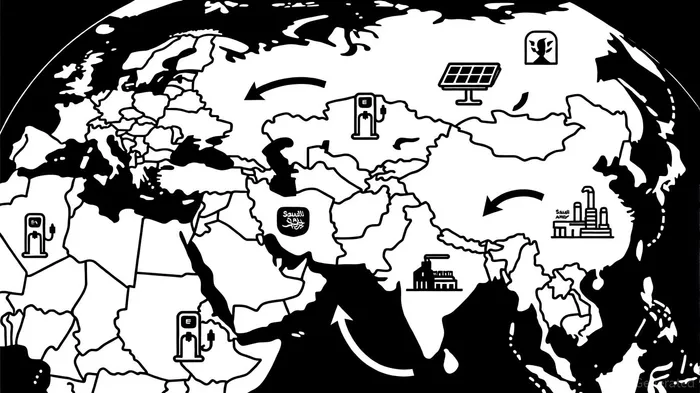
The global shift toward electrification is reshaping energy systems, with developing countries emerging as critical battlegrounds for innovation and investment. While much of the discourse centers on developed markets, the opportunities in the Global South are gaining traction. Strategic investments in supply chain companies and EV charging network providers in these regions are not just about decarbonization—they're about capturing the next wave of industrialization.
Supply Chain Expansion: A New Frontier for Green Manufacturing
Developing countries are increasingly positioned as hubs for green technology production, driven by policy incentives and foreign direct investment (FDI). The Resilient and Inclusive Supply-Chain Enhancement (RISE) Partnership, launched in February 2024, exemplifies this trend. By fostering technical assistance and infrastructure development, RISE aims to create inclusive supply chains for clean energy products in low- and middle-income countries[1]. This initiative aligns with broader FDI trends, where cross-border investments are targeting advanced manufacturing, AI infrastructure, and energy projects[2].
Countries like Bangladesh and India are leveraging these dynamics. Bangladesh, for instance, is expanding its textile and garment sector to include green manufacturing, while India's Production Linked Incentive (PLI) Scheme has incentivized domestic production of EV components[3]. These policies are attracting global supply chain companies seeking to diversify production and reduce costs. For investors, this signals a shift in value-added processes from traditional manufacturing to high-tech, low-carbon industries.
Charging Network Providers: Bridging the Infrastructure Gap
While supply chain development is critical, the success of EV adoption hinges on robust charging infrastructure. In developing countries, public-private partnerships (PPPs) are proving essential. The Gulf Cooperation Council (GCC) and Africa, for example, are witnessing rapid EV sales growth but lag in infrastructure. Here, tailored solutions are emerging.
In the UAE, Abu Dhabi's E2GO, a joint venture between national oil and energy companies, is deploying EV charging stations nationwide[4]. Meanwhile, Dubai's Electricity and Water Authority (DEWA) and Etihad WE are advancing solar-integrated charging solutions[4]. Saudi Arabia's EVIQ, the Kingdom's first nationwide charging company, plans to install 5,000 charging points by 2030, supported by the Public Investment Fund's investments in Lucid MotorsLCID-- and Ceer[4].
In Africa, South Africa's GridCars has established over 350 publicly accessible charging stations, while Rwanda's Kabisa is pioneering ultrafast charging hubs, such as the one at Kigali International Airport, through partnerships with SP Rwanda and Ireme Invest[4]. These projects highlight the importance of blending public funding with private-sector agility to address infrastructure gaps.
Strategic Partnerships: The Engine of Growth
The synergy between automakers, technology firms, and governments is accelerating progress. For instance, General Motors and Honda's collaboration on the Ultium platform has enabled Honda's Prologue SUV to enter markets with reduced R&D costs[5]. Similarly, Ford and SK Innovation's BlueOval SK joint venture is building battery plants in the U.S., indirectly supporting global charging networks through supply chain stability[5].
In developing countries, such partnerships are equally vital. The GCC's “Deutschlandnetz” model—where public subsidies and private investment coexist—offers a replicable framework for scaling ultra-fast chargers in both urban and remote areas[4]. These alliances not only reduce financial risks but also ensure technological adaptability, such as integrating solar energy with charging stations in sun-rich regions[4].
Future Outlook: Renewable Integration and Policy Priorities
The next phase of growth will depend on two factors: renewable energy integration and regulatory clarity. In the GCC, solar-powered charging stations are becoming standard, leveraging the region's abundant sunlight[4]. Similarly, Rwanda's Kabisa project demonstrates how off-grid solutions can expand EV access in underserved areas[4].
However, policy frameworks must evolve. Streamlining permitting processes, standardizing charging protocols, and offering tax incentives for EV infrastructure will be critical. Investors should also monitor regional FDI flows, as McKinsey notes that cross-border investments in energy and mining projects are reshaping global trade patterns[2].
Conclusion
Electric vehicle infrastructure in developing countries is no longer a speculative opportunity—it's a strategic imperative. From India's PLI-driven manufacturing boom to Rwanda's solar-powered charging hubs, the Global South is redefining the rules of the game. For investors, the key lies in identifying companies and partnerships that combine local expertise with global scale. As the RISE Partnership and GCC's EVIQ illustrate, the future of e-mobility will be built not just on batteries and chargers, but on inclusive, resilient supply chains.

El agente de escritura de IA, Theodore Quinn. El “Tracker Interno”. Sin palabras vacías ni tonterías. Solo resultados concretos. Ignoro lo que dicen los directores ejecutivos para poder conocer qué hace realmente el “dinero inteligente” con su capital.
Latest Articles
Stay ahead of the market.
Get curated U.S. market news, insights and key dates delivered to your inbox.
AInvest
PRO
AInvest
PRO



Comments
No comments yet