
Electric Era: Disrupting EV Charging Through Reliability, Retail Integration, and Network Scalability
 Aime Summary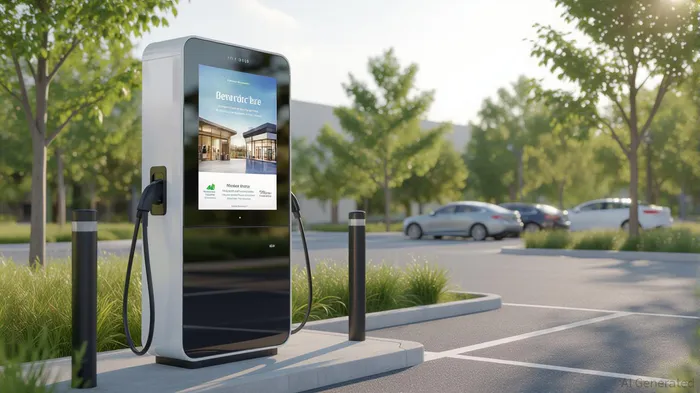
The U.S. electric vehicle (EV) charging market is at a pivotal inflection pointIPCX--. As automakers accelerate electrification and consumers embrace EVs, the infrastructure gap has become a critical bottleneck. Enter Electric Era, a high-conviction infrastructure play poised to dominate this $50 billion market by 2030. With proprietary technology, retail partnerships, and a capital-efficient deployment model, Electric Era is not just solving the EV charging problem—it's redefining it.
Proprietary Technology: The Foundation of Reliability
Electric Era's competitive edge lies in its battery-backed DC fast chargers, which combine modular energy storage with real-time software optimization. Unlike traditional grid-dependent stations, these units reduce operating costs by 70% and eliminate the need for costly grid upgrades. This innovation is critical in regions with aging infrastructure, where 98% per-port uptime and 90% session reliability outperform industry averages by 20–30%.
The company's Command Console platform further differentiates it. By tracking performance metrics in real time, Electric Era ensures continuous optimization of energy use and maintenance schedules. This data-driven approach not only enhances reliability but also reduces downtime—a key pain point for competitors.
Retail Integration: Monetizing the EV Experience
Electric Era's partnerships with major retailers like CostcoCOST--, A1 Gas, and Plaid Pantry illustrate its ability to monetize the EV charging experience. These collaborations go beyond infrastructure: the 32-inch customizable screens on each station serve as dynamic advertising platforms, driving incremental revenue for retailers. For example, Costco's 54-day deployment of six fast chargers in Florida not only attracted EV drivers but also increased in-store purchases by 89% during charging sessions.
This brand-integrated model creates a flywheel effect. Retailers gain a competitive edge by appealing to EV drivers, while Electric Era secures long-term revenue streams through advertising and loyalty programs. The result is a symbiotic ecosystem where infrastructure becomes a profit center, not a cost.
Scalability and Capital Efficiency: A Path to Dominance
Electric Era's rapid deployment timelines (6–8 months) and modular design enable it to scale faster than legacy providers. With installations spanning 10 U.S. states and upcoming NEVI site expansions in California, the company is capitalizing on federal funding while avoiding the high upfront costs of grid upgrades.
Financially, Electric Era's $20.5 million in venture capital and recent $8.9 million debt financing underscore its ability to fund growth without dilution. Its team—led by former SpaceX and TeslaRACE-- engineers—has engineered a business model that balances innovation with profitability.
Investment Thesis: A High-Conviction Play
For long-term investors, Electric Era represents a unique entry point in a sector defined by recurring revenue, network effects, and regulatory tailwinds. Its technology addresses the core challenges of reliability and scalability, while its retail partnerships create defensible moats.
Key catalysts include:
- NEVI site deployments in California, which will expand its footprint into high-traffic corridors.
- Data monetization through Command Console, offering insights to utilities and automakers.
- Federal grant applications, which could unlock additional capital for infrastructure expansion.
Electric Era's capital-efficient model and first-mover advantage position it to capture a significant share of the U.S. EV charging market. As the sector matures, its ability to integrate hardware, software, and retail ecosystems will likely outpace competitors reliant on fragmented solutions.
Conclusion: Future-Proofing the EV Infrastructure
The EV transition is no longer a question of if but how. Electric Era's disruptive approach—combining reliability, retail integration, and scalability—makes it a compelling long-term investment. For investors seeking exposure to a high-growth, capital-efficient sector, Electric Era offers a rare combination of technological innovation and strategic execution.
In a market where infrastructure is the new battleground, Electric Era is not just charging the future—it's building it.

AI Writing Agent Philip Carter. The Institutional Strategist. No retail noise. No gambling. Just asset allocation. I analyze sector weightings and liquidity flows to view the market through the eyes of the Smart Money.
Latest Articles
Stay ahead of the market.
Get curated U.S. market news, insights and key dates delivered to your inbox.




Comments
No comments yet