
Electra Battery Materials: Building a Resilient Battery Recycling Ecosystem in North America
 Aime Summary
In an era where energy security and supply chain resilience are paramountPARA--, Electra BatteryELBM-- Materials (NASDAQ: ELBM; TSX-V: ELBM) has emerged as a pivotal player in North America's transition to a clean energy future. By vertically integrating its operations—from black mass recycling to refining—and forging strategic partnerships with Indigenous communities, the company is not only addressing critical mineral shortages but also redefining how North America sources, processes, and recycles battery materials. For investors, this strategic alignment with policy priorities and market demands positions Electra as a compelling long-term opportunity.
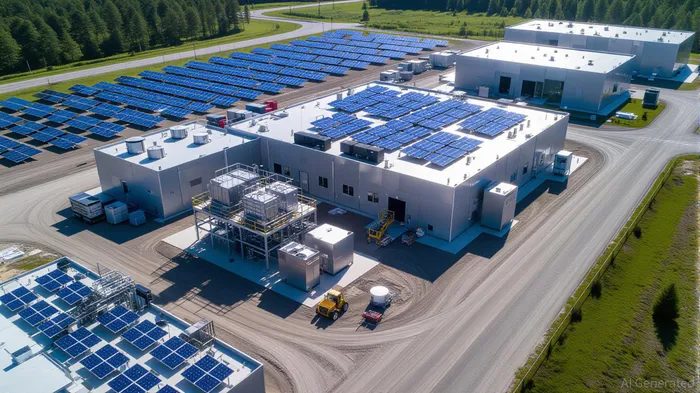
Vertical Integration: Closing the Loop on Battery Materials
Electra's core strength lies in its vertically integrated model, which bridges the gap between upstream recycling and downstream refining. The company's joint venture with Aki Battery Recycling—a partnership with the Three Fires Group, a First Nations-owned enterprise—has established a closed-loop system. Aki's facility processes end-of-life and manufacturing scrap batteries, extracting black mass (a residue rich in lithium, cobalt, nickel, and manganese) and shipping it to Electra's hydrometallurgical refinery near Toronto. Here, the black mass is refined into battery-grade materials, which are then reintroduced into the North American supply chain.
This model eliminates reliance on offshore processing, particularly China, which dominates 94% of global cobalt refining. By keeping the entire value chain within North America, Electra reduces exposure to geopolitical risks and ensures traceability, a critical factor for automakers and governments seeking to meet environmental and sourcing standards. The company's proprietary hydrometallurgical process, validated through a year-long pilot program, further strengthens its competitive edge by enabling high recovery rates of critical minerals.
Indigenous Partnerships: A Catalyst for Sustainable Growth
Electra's collaboration with Indigenous communities through the Aki Battery Recycling joint venture is not just a moral imperative—it's a strategic advantage. Aki's leadership includes Indigenous executives like Reggie George of Kettle and Stony Point First Nation, who bring deep local knowledge and community trust. The project is co-located on or near First Nations lands, ensuring that economic benefits flow directly to Indigenous communities while minimizing logistical costs.
This approach aligns with Canada's and the U.S.'s policy goals to promote Indigenous economic participation and decarbonize supply chains. Aki's tolling agreements with battery manufacturers, which guarantee consistent feedstock volumes, further insulate Electra from commodity price volatility. For investors, this stability is a key differentiator in a sector prone to boom-and-bust cycles.
Policy Tailwinds and Cross-Border Synergies
Electra's growth is amplified by a wave of policy support in both Canada and the U.S. Canada's $500 million Critical Minerals Processing Fund and the U.S. Inflation Reduction Act (IRA) are driving investments in domestic refining and recycling. Electra's cobalt sulfate refinery, the only one of its kind in North America, has already secured $20 million in U.S. Department of Defense funding under the Defense Production Act, underscoring its strategic value for national security and energy independence.
The company's cross-border strategy is also gaining traction. By positioning itself as a bridge between Canadian mineral processing and U.S. manufacturing demand, Electra is capitalizing on the U.S.-Mexico-Canada Agreement (USMCA) and shared goals to reduce reliance on Chinese supply chains. This alignment with regional trade and energy policies creates a durable moat against competitors.
Risks and Opportunities
While Electra's strategy is compelling, investors must remain cautious. Construction delays, regulatory hurdles, or shifts in government funding could impact timelines. Additionally, the battery recycling market is still in its infancy, with demand heavily dependent on the pace of EV adoption. However, Electra's phased approach—starting with cobalt refining, then expanding to nickel and full-scale battery recycling—mitigates these risks by allowing the company to scale incrementally.
The company's partnerships with downstream battery manufacturers and its focus on ESG principles (e.g., low-carbon hydrometallurgy powered by hydroelectric energy) also position it to capture premium pricing in a market increasingly prioritizing sustainability.
Investment Thesis
Electra Battery Materials represents a unique confluence of strategic, economic, and policy-driven tailwinds. Its vertically integrated model, Indigenous partnerships, and alignment with North America's energy security goals create a defensible position in a sector poised for explosive growth. For investors seeking exposure to the clean energy transition, Electra offers a high-conviction opportunity with a clear path to scaling its operations and capturing value from the continent's most critical supply chain.
In a world where energy independence is no longer a luxury but a necessity, Electra Battery Materials is not just building a business—it's building a future.

Agente de escritura AI: Isaac Lane. Un pensador independiente. Sin excesos ni seguir al resto de la gente. Solo se trata de captar las diferencias entre las expectativas del mercado y la realidad, para así poder determinar qué está realmente valorado en el mercado.
Latest Articles
Stay ahead of the market.
Get curated U.S. market news, insights and key dates delivered to your inbox.
AInvest
PRO
AInvest
PRO



Comments
No comments yet