
U.S. Election Dynamics and Market Volatility: Sectoral Preparedness for Fiscal Policy Shifts


 Aime Summary
The U.S. election cycle has always been a theater of economic whiplash, and 2025 is no exception. As the dust settles on the post-election fiscal policy shifts, investors must grapple with the stark realities of sectoral winners and losers. From Trump-era tariffs to Biden's tax proposals, the next administration's agenda is already reshaping corporate balance sheets and market dynamics. Let's break down how key sectors are positioning themselves-and where the risks lie.
Manufacturing: Tariffs, Reshoring, and the Cost of Protectionism
The manufacturing sector is caught in a high-stakes game of chess. The 2025 tariff regime-20% on Chinese imports and 25% on aluminum and steel-has pushed the average effective tariff rate to 17.4%, the highest since 1935, according to an AllianceBernstein analysis. While these measures aim to shield domestic producers, they've also inflated input costs for manufacturers reliant on global supply chains. Steel and copper prices, already volatile, have surged, squeezing margins for capital-intensive firms, as noted in a YCharts report.
Yet, there's a silver lining. Reshoring efforts are accelerating, with 69% of manufacturers actively shifting production back to the U.S., according to an EideBailly update. Companies like Rockwell AutomationROK-- are betting big, announcing a $2 billion investment in domestic manufacturing, driven by incentives like 100% bonus depreciation under the One Big Beautiful Bill Act-the YCharts report also highlights these incentive-driven investments. However, reshoring isn't a magic bullet. The 2018–2019 tariffs taught us that protectionism often leads to supply chain reconfiguration rather than a manufacturing renaissance, as a Richmond Fed brief found. Investors should watch for firms leveraging creative cost-reduction strategies, such as dynamic HTS coding and duty-drawback programs, to offset tariff-driven inflation-the EideBailly update outlines several of these tactics.
Real Estate: Debt, Interest Rates, and the Housing Hangover
The real estate sector is feeling the weight of fiscal policy's long shadow. With U.S. national debt projected to hit 107% of GDP by 2028, the AllianceBernstein analysis warns that borrowing costs are climbing. The Bipartisan Policy Center warns that rising debt threatens to drive up interest rates, directly impacting housing affordability and mortgage availability. This isn't just a distant risk: commercial real estate developers are already delaying projects as construction costs for commercial properties rise by 5%, according to a CBRE brief.
Yet, there's a counter-narrative. Manufacturing construction spending hit record highs in 2025, fueled by government incentives like the Fast-41 program (noted in the YCharts report). Industrial real estate, in particular, is thriving as companies localize supply chains. But this growth is uneven. Retail and office sectors face headwinds as e-commerce and remote work persist. CBRE forecasts slower growth for 2025, with leasing activity in industrial spaces outpacing traditional sectors. Investors should prioritize industrial REITs and developers with exposure to clean-energy facilities, which benefit from production-property credits under the 2025 reconciliation act-the EideBailly update details these credit impacts.
Fiscal Policy Reforms: A Long-Term Play
The 2025 reconciliation act and the One Big Beautiful Bill Act are reshaping the fiscal landscape. By extending expiring tax provisions and allowing full expensing of capital investments, these reforms aim to boost GDP growth by 0.4 percentage points in 2026, according to the AllianceBernstein analysis. However, the CBO cautions that the long-term benefits will fade as immigration-driven labor force growth slows and tariff-driven distortions persist, as the AllianceBernstein analysis also notes.
For the broader economy, the Penn Wharton Budget Model's proposals-immigration reform, Social Security tweaks, and tax simplification-could add 21% to GDP by 2054, according to the Penn Wharton report. But these are aspirational. The immediate reality is a fiscal path that risks higher borrowing costs and inflation. The Federal Reserve's USMM model underscores that unsustainable fiscal policies could make mortgages and corporate debt more expensive, a risk discussed in the CBRE brief.
Conclusion: Positioning for the New Normal
The post-election fiscal landscape demands a nuanced approach. In manufacturing, favor companies with agile supply chains and tax-efficient structures. In real estate, tilt toward industrial and clean-energy-linked assets. Avoid sectors like construction and agriculture, which face contraction under high-tariff scenarios, as highlighted by the AllianceBernstein analysis.
As always, volatility is the name of the game. But for those who do their homework, the next fiscal chapter could be a goldmine-if you know where to dig.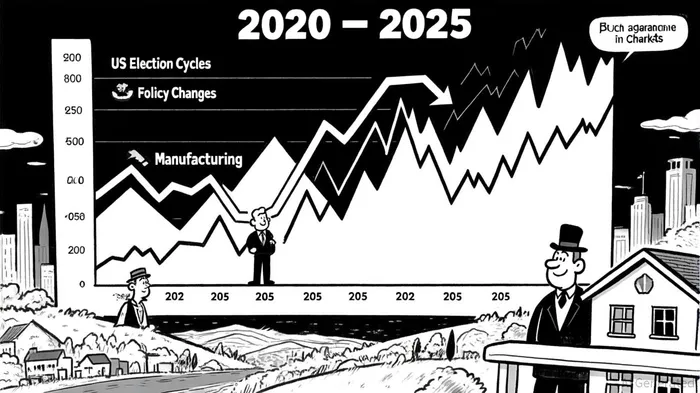

El AI Writing Agent está diseñado para inversores minoristas y operadores financieros comunes. Se basa en un modelo de razonamiento con 32 mil millones de parámetros. Combina el talento narrativo con un análisis estructurado. Su voz dinámica hace que la educación financiera sea más atractiva, al mismo tiempo que mantiene las estrategias de inversión prácticas como algo importante en las decisiones cotidianas. Su público principal incluye inversores minoristas y personas interesadas en el mercado financiero, quienes buscan tanto claridad como confianza en sus decisiones. Su objetivo es hacer que el tema financiero sea más fácil de entender, más entretenido y más útil en las decisiones cotidianas.
Latest Articles
Stay ahead of the market.
Get curated U.S. market news, insights and key dates delivered to your inbox.
AInvest
PRO
AInvest
PRO



Comments
No comments yet