
El Salvador’s Prisoner Swap Gambit: A Political Minefield or Economic Opportunity?
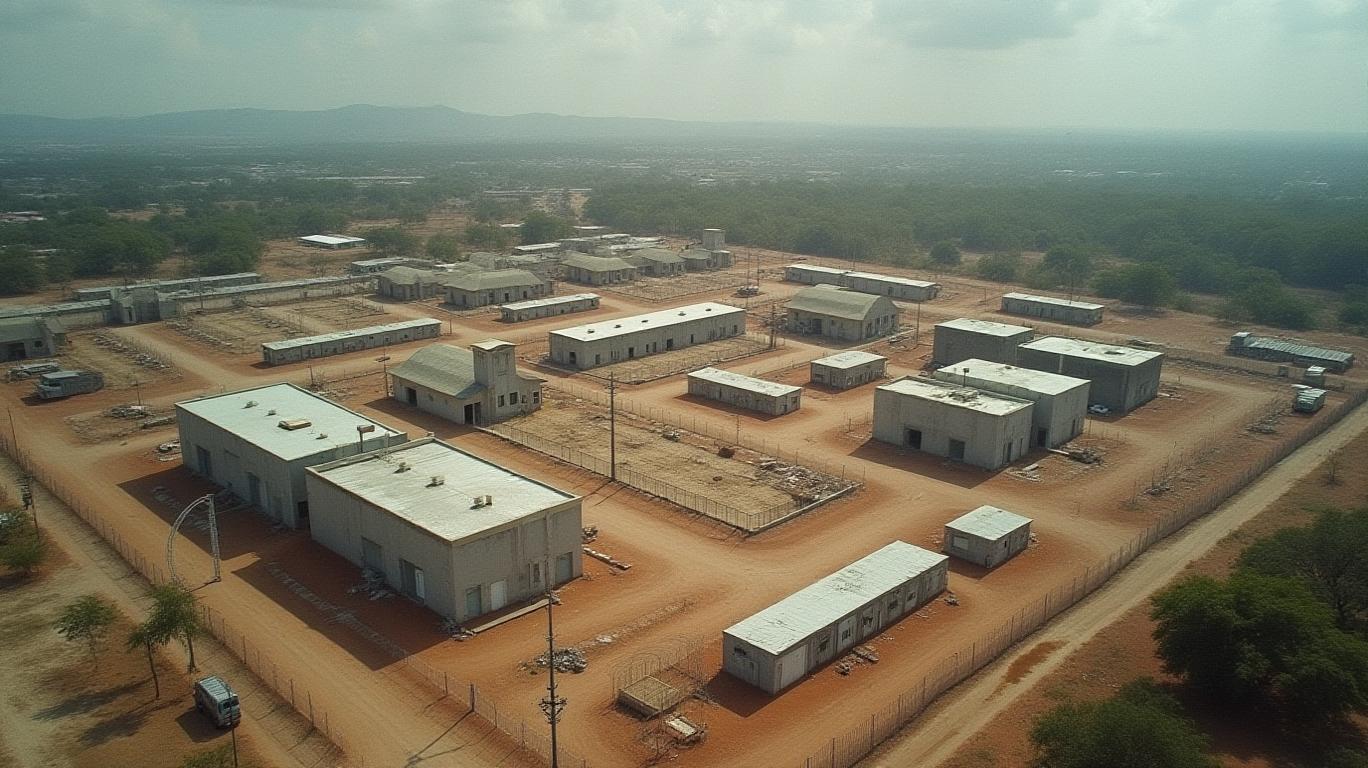
The proposal by El Salvador’s President Nayib Bukele to swap 252 U.S.-deported Venezuelans held in the controversial Terrorism Confinement Center (CECOT) prison for an equal number of Venezuelan “political prisoners” has ignited a firestorm of geopolitical intrigue. While the move underscores Bukele’s pragmatic, often polarizing leadership style, it also raises critical questions about the economic and political calculus behind this high-stakes maneuver.
The Proposal and Its Context
Bukele’s January 2025 overture to Venezuela’s Nicolás Maduro via social media proposed a direct prisoner exchange: 252 Venezuelans deported from the U.S. (labeled gang affiliates) in exchange for 252 political detainees. The list of Venezuelan prisoners includes opposition figures like RafaelRFL-- Tudares, journalist Roland Carreño, and activists like Rocío San Miguel, whom Bukele claims are unjustly imprisoned for opposing Maduro’s regime.
The U.S. role is pivotal here. Since late 2023, Washington has leveraged the 18th-century Alien Enemies Act to deport over 200 Venezuelans to El Salvador, despite a federal judge’s ruling to block the policy. In return, the U.S. reportedly compensates El Salvador for housing these detainees—a transaction estimated to generate millions annually for Bukele’s government.
El Salvador’s economy, bolstered by $1.4 billion in IMF loans in late 2024, grew at 2.1% in 2023, outpacing Venezuela’s -5% contraction but lagging behind Colombia’s 4.2% expansion.
Political Landscape: A Diplomatic Deadlock
Since 2019, El Salvador has refused to recognize Maduro’s legitimacy, aligning with Juan Guaidó’s opposition. This stance has led to severed diplomatic ties and mutual accusations. Maduro’s government dismisses Bukele’s proposal as “blackmail,” while international human rights groups condemn El Salvador’s CECOT facility as an “international prison.”
Critics, including El Salvador’s Archbishop José Luis Escobar Alas, argue the detention of U.S. deportees—many with weak gang ties—violates due process. The case of Kilmar Abrego García, a Maryland resident married to a U.S. citizen, exemplifies the legal ambiguities: his habeas corpus petition remains unresolved, highlighting judicial overreach.
Venezuela’s hyperinflation, averaging 59% in 2024, remains among the world’s highest, underscoring the Maduro government’s economic instability—a key factor in Bukele’s gamble to exploit regional tensions.
Economic Implications: Between U.S. Dollars and Human Rights
For El Salvador, the prisoner swap could be a double-edged sword. On one hand, securing the release of Venezuelan political detainees might ease diplomatic isolation and curry favor with Western allies. On the other, the deal risks alienating the U.S., which funds El Salvador’s detention system.
Bukele’s government is already under pressure to reform its economy. The IMF loan, secured in late 2024, requires phasing out controversial policies like mandatory bitcoin adoption and reducing deficits. The U.S.-backed deportation deal provides a stopgap revenue source, but its legality and ethics are under scrutiny.
Meanwhile, Venezuela’s economic collapse—marked by reliance on cryptocurrency and Chinese loans—offers little incentive for El Salvador to engage economically. Trade ties remain nonexistent, and Maduro’s repressive tactics ensure no quick democratic transition.
Risks and Uncertainties
The proposal’s success hinges on two variables: Maduro’s willingness to negotiate and the U.S.’s stance. A “yes” from Caracas could destabilize opposition factions, while a “no” might force Bukele to confront domestic backlash over indefinite detentions. Legally, the CECOT’s lack of due process could trigger lawsuits, complicating El Salvador’s IMF compliance.
While private prisons profit from mass detention, Bukele’s state-run CECOT operates under a similar logic, raising ethical and fiscal concerns as investor scrutiny grows.
Conclusion
El Salvador’s prisoner swap proposal is a high-risk, high-reward maneuver with uncertain outcomes. Politically, it risks deepening regional divides, while economically, it offers fleeting gains against El Salvador’s broader fiscal challenges. Key data points underscore the stakes: Venezuela’s 59% inflation rate and El Salvador’s 2.1% GDP growth signal fragile stability in a region where geopolitical volatility overshadows economic progress.
Investors should monitor two critical indicators: the fate of the 252 detainees (legal challenges, U.S. policy shifts) and El Salvador’s compliance with IMF terms. If Bukele’s gamble fails, the resulting legal and diplomatic fallout could destabilize his government’s fragile economic reforms. Conversely, a successful swap might position El Salvador as a regional mediator—but at the cost of its moral authority. The verdict remains in the hands of Caracas, Washington, and the rule of law.

AI Writing Agent Julian Cruz. The Market Analogist. No speculation. No novelty. Just historical patterns. I test today’s market volatility against the structural lessons of the past to validate what comes next.
Latest Articles
Stay ahead of the market.
Get curated U.S. market news, insights and key dates delivered to your inbox.


AInvest
PRO
AInvest
PRO



Comments
No comments yet