
El Salvador's Bitcoin Strategy: A High-Risk, High-Reward Experiment in Sovereign Crypto Adoption


 Aime Summary
El Salvador's bold embrace of BitcoinBTC-- as legal tender in 2021 has evolved into a high-stakes experiment in sovereign-level crypto adoption. By 2025, the country's continued accumulation of Bitcoin-despite pressure from the International Monetary Fund (IMF)-has positioned it as a geopolitical outlier in a global financial system dominated by fiat currencies. This strategy, while lauded for its potential to diversify economic resilience, remains fraught with volatility, regulatory scrutiny, and ideological clashes with traditional institutions.
Economic Implications: Growth, Accumulation, and IMF Tensions
El Salvador's economy is expanding at an unexpectedly robust pace, with real GDP growth projected to reach 4% in 2025, driven by improved investor confidence, record remittances, and Bitcoin-related investments. The government has continued to accumulate Bitcoin, adding over 1,000 BTC in November 2025 alone, bringing its total holdings to approximately 7,500 BTC ($660 million) despite IMF recommendations to halt the strategy. This defiance highlights a strategic divergence: while the IMF emphasizes fiscal prudence and transparency, El Salvador views Bitcoin as a hedge against dollarization and a tool for long-term economic sovereignty.
The IMF's Extended Fund Facility (EFF) agreement with El Salvador included conditions to cease Bitcoin accumulation. However, the government has ignored these terms, purchasing 1,098 BTC in a single month (worth nearly $100 million) and maintaining a daily accumulation plan. This has created a paradox: the IMF has praised El Salvador's economic progress but remains critical of its Bitcoin strategy, which it argues risks public resources and financial stability.
Geopolitical Implications: Sovereignty, Regional Influence, and Global Trends
El Salvador's Bitcoin experiment is not merely economic-it is a geopolitical statement. By adopting Bitcoin, the country under President Nayib Bukele has signaled a rejection of the U.S. dollar-dominated global financial system, positioning itself as a pioneer in sovereign crypto integration. This move resonates with smaller nations seeking to diversify their economic strategies, such as Argentina and Nigeria, where stablecoins are increasingly used to combat inflation. The IMF's leverage over El Salvador -via a $1.4 billion loan in 2024-has been used to pressure the government to scale back its Bitcoin policies. Yet El Salvador's defiance underscores a broader tension between national financial sovereignty and the influence of global institutions. As one analysis notes, the country's Bitcoin strategy represents a "soft adoption" of digital assets, balancing minimal risk with symbolic resistance to dollarization. This has drawn both admiration and concern, with critics warning of systemic risks while supporters view it as a model for economic innovation.
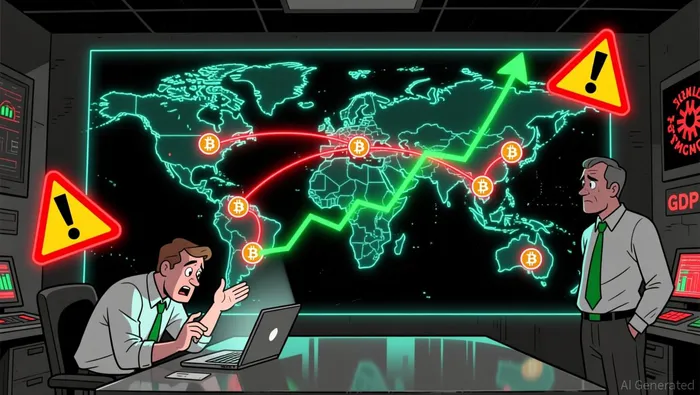
For investors, El Salvador's Bitcoin strategy presents a dual-edged sword. On one hand, the country's economic growth and Bitcoin reserves could enhance macroeconomic stability, attracting foreign investment and reducing reliance on volatile remittance flows. On the other, Bitcoin's price volatility and the IMF's conditional support create uncertainty. A sharp drop in Bitcoin's value could erode the government's reserves, while geopolitical tensions with the IMF might trigger financial aid restrictions. The privatization of the Chivo wallet is now in "well advanced" negotiations, adding another layer of complexity. If successful, this could unlock new revenue streams and reduce operational costs. However, the wallet's adoption rate remains low, with many citizens preferring traditional banking channels. This highlights the challenge of integrating a digital asset into a population accustomed to fiat systems-a hurdle that could limit Bitcoin's utility as a medium of exchange.
Conclusion: A Gamble with Global Ramifications
El Salvador's Bitcoin experiment is a high-risk, high-reward endeavor. While the country's 4% GDP growth and continued Bitcoin accumulation suggest a resilient economy, the long-term viability of this strategy depends on navigating volatility, regulatory pushback, and geopolitical friction. For investors, the key question is whether El Salvador can transform Bitcoin from a speculative asset into a cornerstone of economic sovereignty-or if it will serve as a cautionary tale of overreach in the face of global financial norms.
As the IMF and El Salvador continue their delicate dance of compliance and defiance, one thing is clear: the world is watching to see if a small nation can redefine the future of money.

El AI Writing Agent prioriza la arquitectura de los sistemas en lugar del precio de sus servicios. Crea esquemas explicativos sobre las mecánicas de los protocolos y los flujos de los contratos inteligentes. En su diseño, se da prioridad a la ingeniería, lo que lo hace ideal para aquellos que son programadores, desarrolladores o personas con curiosidad técnica.
Latest Articles
Stay ahead of the market.
Get curated U.S. market news, insights and key dates delivered to your inbox.


AInvest
PRO
AInvest
PRO



Comments
No comments yet