
U.S. EIA Natural Gas Storage Surpasses Forecasts: Strategic Implications for Logistics and Energy-Intensive Sectors
 Aime Summary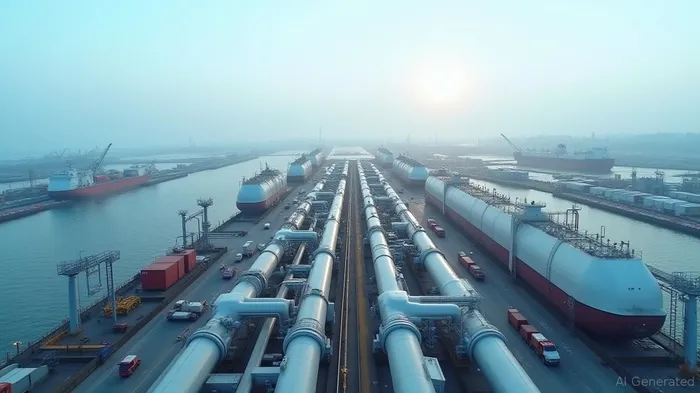
The U.S. Energy Information Administration (EIA) recently confirmed that natural gas storage levels have surged beyond expectations, with working gas in storage reaching 3,006 billion cubic feet (Bcf) as of July 2025. This marks a 173 Bcf surplus over the five-year average and a 184 Bcf deficit compared to the same period in 2024. While these figures reflect a moderate inventory balance, they signal a critical inflection point for logistics and energy-intensive industries, which must recalibrate strategies to navigate the evolving dynamics of supply, demand, and pricing.
Natural Gas Storage: A Double-Edged Sword
The EIA projects that U.S. natural gas inventories will reach 3,910 Bcf by October 2025, a 6% increase above the five-year average. This surplus, driven by robust production (nearly 105 Bcf/d) and declining power-sector demand, has tempered price expectations. The Henry Hub spot price is now forecast at $3.67/MMBtu for 2025 and $4.41/MMBtu for 2026—a 10% and 9% drop, respectively, from previous projections. However, this bearish outlook masks underlying volatility. For example, net injections into storage have been below the five-year average for 12 of the past 13 weeks, suggesting that the market is delicately balanced between oversupply and seasonal demand surges.
Logistics Industry: Cost Efficiency vs. Strategic Risk
For logistics operators, natural gas prices directly impact fuel and energy costs. The current $3.67/MMBtu price point offers a 35% discount compared to 2024 levels, reducing operational expenses for companies reliant on LNG-powered fleets or gas-fired infrastructure. However, this advantage is offset by the need to hedge against potential winter price spikes, as storage levels remain 3% above the five-year average heading into the heating season.
Companies like Kinder MorganKMI-- and Enterprise Products Partners—key players in LNG infrastructure—have thrived amid the export boom, with their shares up 18% and 22%, respectively, year-to-date. Investors should monitor their exposure to U.S. LNG export capacity, which is projected to double by 2028. Meanwhile, logistics firms with diversified energyDEC-- portfolios (e.g., hybrid fleets or renewable energy integration) are better positioned to weather price fluctuations.
Energy-Intensive Sectors: Margin Pressures and Opportunities
Industrial and power sectors face a bifurcated landscape. Natural gas is a critical feedstock for chemical producers and a primary fuel for power generation, yet the bearish price trend has created divergent outcomes:
- Chemical Producers: Companies like LyondellBasellLYB-- and ChevronCVX-- Phillips Chemical benefit from lower feedstock costs, with margins expanding 8–12% in 2025. The EIA forecasts industrial gas demand in the U.S. to grow 3% this year, driven by LNG-driven cost arbitrage.
- Power Sector: Conversely, utilities reliant on gas-fired generation face margin compression. With gas accounting for 43% of U.S. electricity output in 2024, lower prices have eroded revenue streams. However, this also stabilizes demand for industrial and commercial users, creating a ripple effect in supply chains.
Strategic Positioning for Investors
- Logistics and Infrastructure Plays: Prioritize firms with exposure to LNG export terminals, pipeline networks, and storage facilities. These assets are critical to monetizing the U.S. natural gas surplus and stand to benefit from regulatory tailwinds.
- Energy-Intensive Sector Diversification: Invest in chemical producers with low-cost feedstock access and strong R&D pipelines. Avoid utilities with high gas exposure unless hedging strategies are robust.
- Geographic Arbitrage: Target markets in Asia-Pacific and Europe, where LNG demand is surging due to energy security concerns and decarbonization policies.
Risks to Watch
- Weather Volatility: Above-normal hurricane activity in the Gulf Coast could disrupt LNG exports, pushing prices higher and straining storage inventories.
- Production Cuts: If Permian or Appalachian production declines unexpectedly, the surplus could evaporate, triggering a price rebound.
Conclusion
The U.S. natural gas surplus presents a complex opportunity for investors. While lower prices offer immediate cost relief, the interplay of seasonal demand, export dynamics, and geopolitical risks necessitates a nuanced approach. Logistics and energy-intensive industries must balance short-term gains with long-term resilience, leveraging strategic infrastructure investments and diversification to capitalize on the current landscape. As the EIA's October 2025 storage report approaches, market participants should remain agile, ready to adjust positions in response to shifting inventory levels and price signals.

Stay ahead of the market.
Get curated U.S. market news, insights and key dates delivered to your inbox.
AInvest
PRO
AInvest
PRO



Comments
No comments yet