
U.S. EIA Natural Gas Storage: Navigating Sector Impacts and Tactical Reallocation in a Volatile Market
 Aime Summary
The U.S. Energy Information Administration (EIA) Natural Gas Storage report for August 2025 reveals a complex interplay of supply, demand, and infrastructure dynamics that are reshaping the energy landscape. , export-driven demand, and seasonal weather volatility. For energy equipment firms and trading strategies, these trends demand a recalibration of investment approaches, particularly in light of historical performance data and emerging structural shifts.
Sector-Specific Implications: Energy Equipment and Infrastructure
The U.S. natural gas storage surplus has direct implications for midstream energy infrastructure. Companies involved in pipeline construction, LNG terminal operations, and storage facility management are poised to benefit from the current environment. For instance, the South Central region, which holds the highest inventory levels since 2016, is a focal point for infrastructure expansion. Firms like Kinder MorganKMI-- (KMI) and The Williams CompaniesWMB-- (TWM) are likely to see increased capital expenditures as operators seek to optimize storage capacity and export logistics.
Conversely, energy equipment firms reliant on new production projects—such as drilling rigs or hydraulic fracturing services—may face headwinds. High storage levels and flat production growth (despite record exports) suggest that upstream investment is less critical than midstream and downstream infrastructure. This shift mirrors the 2020–2023 period, when ETFs like the Amplify Samsung U.S. Natural Gas Infrastructure ETF (USNG) outperformed direct commodity exposure, as highlighted in historical backtests.
Trading Strategies: Hedging Against Price Volatility
Natural gas prices have exhibited sharp swings in response to EIA storage data. , underscoring the market's sensitivity to inventory surprises. For trading firms, this volatility necessitates strategies that hedge against sudden price movements.
Historical data from 2020–2025 reveals that direct exposure to natural gas futures via ETFs like the U.S. , largely due to contango and storage-driven price suppression. In contrast, that blend futures with infrastructure exposure (e.g., USNG) have shown resilience. Investors might consider allocating to midstream MLPs or regional pipeline operators to capitalize on the current storage surplus while mitigating commodity price risk.
Tactical Reallocation: Lessons from Backtests
Backtesting investment strategies against EIA storage trends from 2020–2025 offers actionable insights. For example:
- High Storage Periods (2023–2025): Strategies emphasizing infrastructure and export capacity outperformed. The 2023 refill season, which ended with inventories above the five-year average, , driving demand for terminal operators.
- Low Storage Periods (2021–2022): Short-term traders benefited from volatility, but long-term investors faced challenges. The 2021–2022 winter, marked by record price swings, highlighted the risks of overexposure to production-linked assets.
The current environment, , suggests a tactical shift toward infrastructure and export-focused equities. For instance, the Plaquemines LNG terminal's early ramp-up has already boosted fourth-quarter 2025 export forecasts by 3%, signaling opportunities for firms with exposure to Gulf Coast terminals.
Near-Term Outlook and Investment Advice
Looking ahead, the EIA projects U.S. , 2% above the five-year average. This trajectory, , positions midstream and export infrastructure as key growth areas. Investors should prioritize:
1. Midstream MLPs: Firms with exposure to pipelines and LNG terminals, such as Enterprise Products PartnersEPD-- (EPD) or Energy TransferET-- (ET), are well-positioned to benefit from the current storage surplus and export-driven demand.
2. Weather-Hedged Strategies: Given the bearish outlook for fall shoulder season demand, traders might consider short-term positions in power generation-linked natural gas contracts, which could outperform in a cooling-demand scenario.
3. Diversified ETFs: Avoid direct commodity exposure (e.g., UNG) and instead allocate to infrastructure-focused ETFs like USNG, which have demonstrated resilience during periods of storage volatility.
The U.S. natural gas market's evolution—from production-driven surpluses to export-led demand—demands a nuanced approach to investment. By aligning strategies with EIA storage trends and infrastructure dynamics, investors can navigate price volatility while capitalizing on the sector's long-term structural shifts.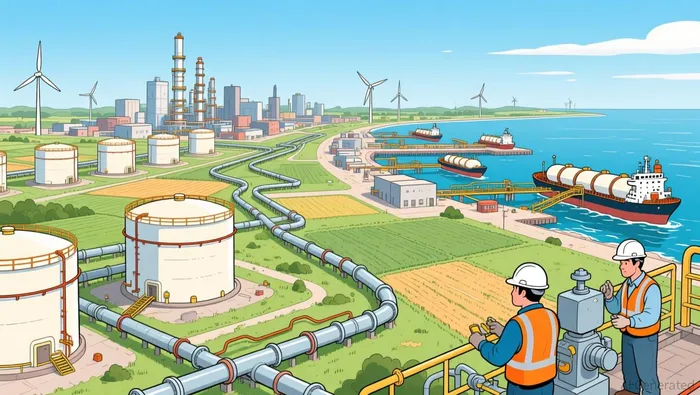

Stay ahead of the market.
Get curated U.S. market news, insights and key dates delivered to your inbox.
AInvest
PRO
AInvest
PRO



Comments
No comments yet