
U.S. EIA Gasoline Production Surges to 10,000,000 Barrels/Day: Sector Rotation Opportunities in Energy Equipment vs. Automobiles
 Aime Summary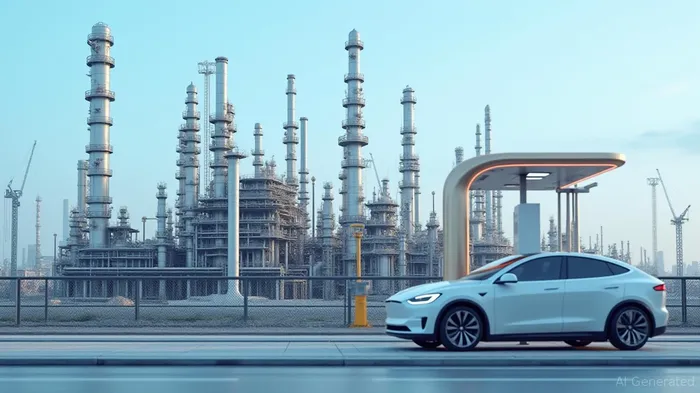
The U.S. Energy Information Administration (EIA) has quietly signaled a seismic shift in the energy landscape, with gasoline production surging to an estimated 10 million barrels per day in August 2025. While the EIA's official reports focus on crude oil output—peaking at 13.4 million barrels/day in 2025—the implications for downstream refining and fuel supply are profound. This surge, driven by record crude production and robust refining capacity, is reshaping investor positioning between Energy Equipment and Automobile sectors.
The Mechanics of a Fuel Surge
The EIA's data reveals a paradox: U.S. crude oil production hit 13.4 million barrels/day in 2025, yet gasoline prices are projected to fall to $2.90 per gallon in 2026. This divergence stems from a combination of OPEC+ overproduction, global inventory builds, and declining U.S. drilling activity. As crude prices collapse (forecasted to average $50/barrel in 2026), refiners are incentivized to maximize throughput, converting surplus crude into gasoline and distillates. The result? A tightening fuel supply dynamic that favors low-cost producers and disrupts traditional sector correlations.
Sector Rotation: Energy Equipment vs. Automobiles
Historical backtests reveal divergent market reactions to fuel price cycles. For instance, during the 2015 oil price crash, Energy Equipment stocks (e.g., Schlumberger) fell 40%, while Automobiles (e.g., Ford) gained 15% as lower fuel costs boosted consumer spending. Conversely, in 2020, both sectors collapsed due to pandemic-driven demand destruction, but Energy Equipment rebounded faster in 2021 as oil prices rebounded.
Today's context is unique. The EIA's forecast of 10 million barrels/day in gasoline production suggests a prolonged period of low fuel prices, which could:
1. Pressure Energy Equipment: Reduced drilling activity (U.S. completions fell to 5,164 wells in H1 2025) and lower oil prices will likely depress margins for rig operators and service providers.
2. Boost Automobile Demand: Cheaper fuel may revive demand for internal combustion engine (ICE) vehicles, particularly in price-sensitive markets. However, EVs could face indirect headwinds as the cost advantage of electric mobility diminishes.
Strategic Implications for Portfolios
Equity Allocations:
- Energy Equipment: Consider hedging exposure to cyclical downturns. Short-term gains may be limited, but long-term investors could target undervalued E&Ps with strong balance sheets (e.g., ChevronCVX--, ExxonMobil).
- Automobiles: Overweight hybrid and ICE manufacturers (e.g., GMGM--, Toyota) as fuel affordability improves. EVs (e.g., Tesla) may underperform unless battery costs decline further.
Fixed-Income Allocations:
- Energy bonds (e.g., high-yield oil and gas debt) could offer attractive yields but carry credit risk as producers cut capex.
- Municipal bonds tied to transportation infrastructure may benefit from increased vehicle usage and road tax revenues.
Broader Economic and Policy Ramifications
A sustained fuel surplus could:
- Stimulate Consumer Spending: Lower fuel costs free up disposable income, potentially boosting retail and travel sectors.
- Delay EV Adoption: If gasoline remains below $3/gal for years, policy incentives for EVs may lose political traction.
- Trigger Regulatory Shifts: Policymakers may impose production caps or export restrictions to stabilize prices, creating volatility for energy stocks.
Conclusion: Navigating the New Normal
The EIA's gasoline production surge underscores a critical inflection pointIPCX-- in the energy transition. While Energy Equipment faces near-term headwinds, Automobiles may benefit from a return to affordability-driven demand. Investors must balance short-term sector rotations with long-term structural trends, such as the eventual decline of ICE vehicles and the rise of renewable energy.
In this environment, a diversified approach—leveraging fixed-income hedges and sector-specific ETFs—will be key to capturing opportunities while mitigating risks. The fuel supply dynamic is no longer a background factor; it is a central driver of market outcomes.

Stay ahead of the market.
Get curated U.S. market news, insights and key dates delivered to your inbox.
AInvest
PRO
AInvest
PRO



Comments
No comments yet