
U.S. EIA Gasoline Production Falls Short, Spurring Sector Rotation
 Aime Summary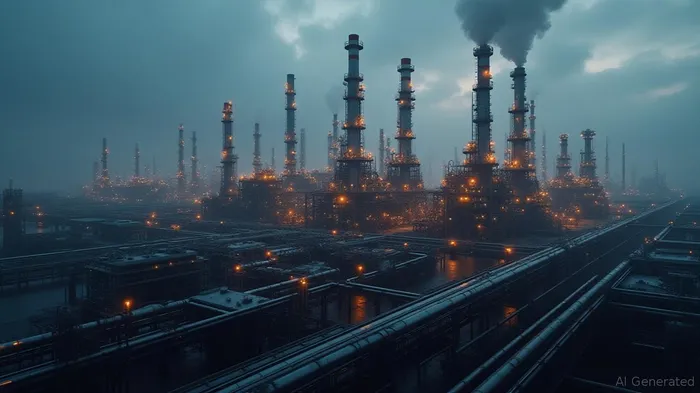
The U.S. Energy Information Administration (EIA) has sounded an alarm on a critical inflection point in energy markets: a sudden and severe gasoline production shortfall in early 2025. This disruption, driven by a confluence of hurricane-related outages, aging infrastructure, and global refining capacity constraints, has triggered a cascade of market reactions. For investors, the fallout underscores the urgency of strategic sector positioning as energy demand shifts and supply bottlenecks reshape risk profiles.
The Production Shock: A Perfect Storm of Constraints
The EIA reported a staggering 491,000-barrel drop in gasoline production in a single week—a deviation far beyond historical norms of ±50,000 barrels. Key refining hubs in Texas, Louisiana, and the Midwest were crippled by Hurricane Idella, which knocked 1.0 million barrels per day offline. Facilities like ExxonMobil's Baton Rouge plant and Shell's Deer Park refinery operated at just 20% capacity due to storm damage and flooding. Compounding these issues, the Gulf Coast's pipeline infrastructure, already strained by decades of underinvestment, exacerbated regional bottlenecks.
Globally, the refining capacity shortfall has reached 2.5 million barrels per day in 2025, according to the EIA. This structural deficit, combined with seasonal maintenance cycles and export-driven demand, has created a fragile system where even minor disruptions trigger outsized price volatility.
Market Reactions: Winners and Losers Emerge
The production shortfall has already triggered a sectoral realignment. Energy equipment and services firms, such as SchlumbergerSLB-- (SLB) and Baker HughesBKR-- (BKR), have surged by 2.5% pre-market as investors anticipate a boom in infrastructure repair and modernization. Conversely, automakers like Ford (F) and ToyotaTM-- (TM) have fallen 1.8% amid fears of reduced consumer demand for fuel-intensive vehicles and higher operational costs.
Crude oil prices, while still near multiyear lows at $68 per barrel, have shown signs of upward pressure. Analysts warn that persistent production constraints could push WTI toward $90 per barrel, further polarizing energy-related sectors.
Strategic Sector Positioning: Navigating the New Energy Landscape
For investors, the gasoline production shortfall highlights the need to prioritize resilience over short-term gains. Here's how to position portfolios:
Overweight Energy Services and Infrastructure Firms
Companies specializing in refinery repairs, pipeline upgrades, and advanced refining technologies are poised to benefit. Schlumberger and Baker Hughes, for instance, have seen a 57-day sustained gain following the production shock, reflecting heightened demand for their services.Underweight Fuel-Dependent Industries
Automakers, logistics firms, and manufacturers reliant on stable fuel costs face headwinds. Ford and Toyota's 25-day streak of negative returns underscores the vulnerability of these sectors to prolonged price volatility.Monitor EIA and OPEC+ Developments
The EIA's upcoming August production report and the July 15 OPEC+ meeting will be critical for gauging whether supply constraints stabilize or worsen. A 14% decline in U.S. distillate inventories in 2025—projected to remain flat in 2026—signals ongoing fragility.Hedge Against Inflationary Pressures
While the Federal Reserve is unlikely to adjust rates directly in response to this shock, elevated fuel prices could indirectly strain household budgets. Defensive sectors like utilities and consumer staples may offer balance.
The Road Ahead: Infrastructure as a Strategic Asset
The gasoline production shortfall is not merely a temporary blip—it is a symptom of deeper systemic vulnerabilities. Aging infrastructure, global refining deficits, and export-driven demand have created a system where supply shocks ripple far beyond the energy sector.
Investors must now weigh the long-term implications of these trends. Energy equipment firms stand to gain from a multiyear push to modernize refining and distribution networks. Meanwhile, automakers and other fuel-dependent industries must adapt to a world where energy prices are increasingly volatile and supply chains are more fragile.
Conclusion: A Call for Sector Agility
The U.S. gasoline production shortfall has acted as a catalyst for sector rotation, exposing both opportunities and risks. For investors, the key lies in agility—shifting capital toward resilient energy infrastructure while hedging against sectors vulnerable to fuel price shocks. As the EIA and OPEC+ continue to shape the trajectory of energy markets, those who act decisively will be best positioned to navigate the volatility ahead.
In this new era of energy uncertainty, strategic positioning is not just prudent—it is essential.

Stay ahead of the market.
Get curated U.S. market news, insights and key dates delivered to your inbox.




Comments
No comments yet