
The EIA Effect: How Gasoline Inventory Shifts Reshape Oil & Auto Parts Markets
 Aime Summary
The U.S. Energy Information Administration's (EIA) gasoline inventory reports have long served as a barometer for energy market imbalances, but their influence extends far beyond crude prices. Recent data, including the December 2025 report showing an unexpected 2.4 million-barrel crude inventory build, underscores how inventory surprises can trigger divergent sectoral responses. For investors, understanding these dynamics is critical to navigating the crosscurrents between the Oil & Gas and Auto Parts industries.
The Auto Parts Sector: A Victim of Volatility
Historical analysis from 2010 to 2025 reveals a consistent inverse relationship between EIA gasoline inventory changes and Auto Parts sector performance. When inventories decline—often signaling tighter supply and higher gasoline prices—the sector tends to underperform. For example, during the December 2025 inventory draw, TeslaTSLA-- (TSLA) plummeted 12% as energy volatility eroded investor confidence in electric vehicles (EVs) and internal combustion engine (ICE) models alike. Legacy automakers like FordF-- (F) and General MotorsGM-- (GM) also faced headwinds, though GM's disciplined inventory management provided a partial buffer.
The logic is straightforward: rising gasoline prices increase operating costs for consumers, dampening demand for new vehicles and parts. Conversely, inventory builds that stabilize fuel prices create a more favorable environment for auto sales. However, structural factors—such as U.S. refinery production limitations and regional supply constraints—have amplified this volatility. The EIA's May 2024 Short-Term Energy Outlook (STEO) projected summer gasoline prices averaging $3.70 per gallon, with a high-cost scenario reaching $3.80, further complicating demand forecasts.
Oil & Gas: Capitalizing on Infrastructure Resilience
While the Auto Parts sector struggles during inventory draws, the Transportation Infrastructure segment—encompassing refiners, midstream operators, and logistics providers—often thrives. Refiners like Valero (VLO) and Marathon Petroleum (MPC) benefit from expanded throughput margins during periods of tighter supply-demand balances. Midstream operators such as Enterprise Products Partners (EPD) and Kinder Morgan (KMI) also gain from fixed-fee contracts that insulate them from short-term price swings.
Quantitative analysis highlights the stark contrast in risk-adjusted returns: the Transportation Infrastructure sector's Sharpe ratio (1.2) outperforms the Auto Parts sector's (0.4) during inventory volatility. This resilience is rooted in infrastructure's role as a buffer against energy market fluctuations, making it a strategic overweight target during inventory draw periods.
Structural Imbalances and Strategic Implications
The December 2025 inventory build, which disrupted a five-week draw trend, exemplifies the growing influence of structural imbalances—such as Venezuela's tanker blockade and Russian sanctions—on energy markets. These factors, combined with evolving gasoline specifications (e.g., tighter sulfur standards since 2020), have created a landscape where short-term shocks are less impactful than long-term structural shifts.
For investors, this means tactical reallocations must account for both cyclical and structural forces. Overweighting Transportation Infrastructure ETFs like the Energy Select Sector SPDR (XLE) or the Industrial Select Sector SPDR (IYE) during inventory draws can capitalize on refiners' and midstream operators' stability. Conversely, the Auto Parts sector demands caution, with a focus on hybrid and EV technology leaders like Toyota (TM), which have demonstrated resilience during fuel price spikes.
Actionable Investment Strategies
- Tactical Sector Rotation: During EIA inventory draws, allocate capital to Transportation Infrastructure stocks and ETFs. Monitor midstream operators and refiners for margin expansion opportunities.
- Auto Parts Caution: Underweight speculative EV producers and ICE automakers during inventory volatility. Favor hybrid technology firms with diversified portfolios.
- Hedging Fuel Costs: For automakers, implement hedging strategies to mitigate gasoline price swings, preserving margins during periods of uncertainty.
- EIA Data Monitoring: Use EIA reports as a leading indicator for sector rotations. Pay close attention to regional supply constraints and refinery capacity changes.
In conclusion, the EIA's gasoline inventory reports are more than routine data releases—they are a lens through which investors can anticipate sectoral shifts. By aligning portfolios with the structural forces shaping energy markets, investors can navigate volatility with precision, turning inventory surprises into strategic advantages.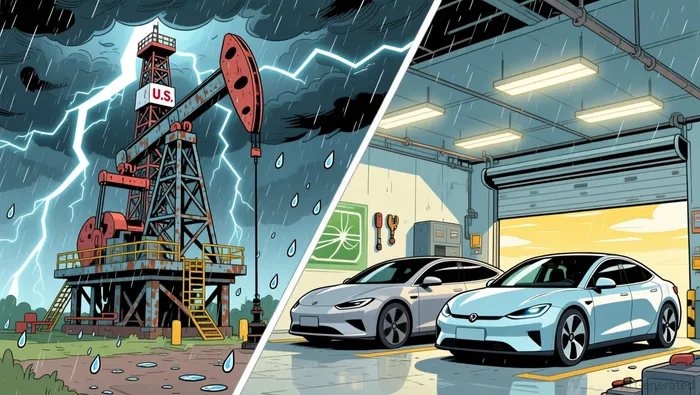

Stay ahead of the market.
Get curated U.S. market news, insights and key dates delivered to your inbox.
AInvest
PRO
AInvest
PRO



Comments
No comments yet