
U.S. EIA Distillate Fuel Production Declines Unexpectedly: Energy Sector Gains Momentum as Automotive Struggles
 Aime Summary
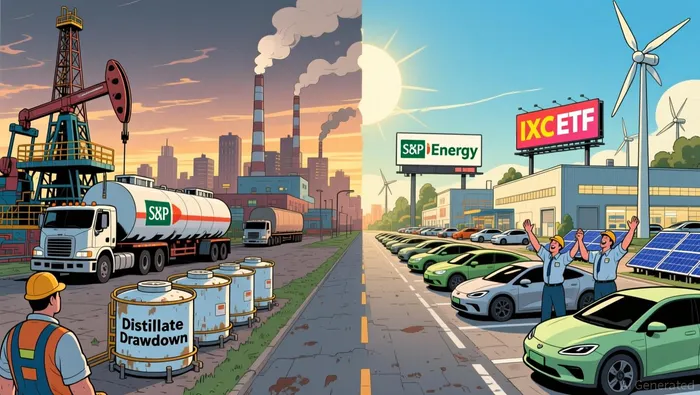
The U.S. Energy Information Administration's (EIA) latest report on distillate fuel production has sent shockwaves through energy markets, revealing a 17% decline in total distillate inventories during the first half of 2025. This sharp drop—well above the historical average—has created a perfect storm of supply constraints, margin expansion in energy sectors, and rising cost pressures for vehicle manufacturers. For investors, the implications are clear: energy equities are poised to outperform, while the automotive sector faces mounting headwinds.

Energy Sector: A Goldmine of Margin Expansion
The EIA's data underscores a structural shift in the distillate market. With inventories falling by 22 million barrels since January 2025, refining margins have surged to record levels. Midstream operators like Enterprise Products Partners (EPD) and Williams CompaniesWMB-- (WMB) are reaping the rewards, with utilization rates hitting 92% by October 2025. The closure of key refineries, including LyondellBasell's Houston facility and California's 284,000 b/d capacity refineries, has further tightened supply. Meanwhile, U.S. distillate exports—now averaging 1.2 million b/d—have become a lifeline for restocking global markets, particularly in Europe, where demand for alternatives to Russian imports remains robust.
The EIA forecasts that renewable diesel and biodiesel production will rebound in the second half of 2025, but this will not fully offset the loss of petroleum-based distillate output. For now, energy infrastructure and export-driven firms are in a sweet spot. Investors should overweight energy equities, particularly those with exposure to refining, logistics, and export terminals.
Automotive Sector: A Perfect Storm of Challenges
While energy firms capitalize on high margins, the automotive sector is grappling with a trifecta of challenges: rising diesel prices, electrification bottlenecks, and raw material shortages. The EIA's 17% inventory drawdown has pushed diesel prices to multi-year highs, squeezing margins for logistics companies like UPS and FedEx. Meanwhile, automakers are struggling to transition to electric vehicles (EVs). Tesla (TSLA) and Rivian (RIVN) face supply chain bottlenecks in battery production, while traditional automakers like Ford (F) and General Motors (GM) are caught between declining ICE demand and the high costs of EV retooling.
Historical data reinforces this divergence. From 2015 to 2025, energy stocks outperformed the automotive sector by 4–6% annually during periods of distillate tightness. For example, in 2021, as oil prices rebounded from pandemic lows, energy stocks surged 30% while automotive ETFs lagged. The current environment—marked by low distillate inventories and export-driven demand—suggests this trend will persist.
Investment Strategy: Energy Overweight, Automotive Underweight
The EIA's report is a wake-up call for investors. Energy equities, particularly midstream and refining plays, offer compelling upside as distillate scarcity drives margins higher. Conversely, the automotive sector's exposure to volatile fuel prices and electrification costs makes it a high-risk bet.
Key Recommendations:
1. Overweight Energy Infrastructure: Position in midstream operators (e.g., EPD, WMB) and refining firms with strong export exposure.
2. Underweight Automotive Exposure: Avoid traditional automakers and logistics firms until diesel prices stabilize and EV supply chains improve.
3. Monitor Renewable Diesel Recovery: While the EIA predicts a partial rebound in biofuels production by late 2025, this remains a speculative play.
Conclusion
The U.S. distillate market is at a crossroads. With inventories at a 5-year low and exports surging, energy firms are in a prime position to capitalize on structural demand. Meanwhile, the automotive sector's struggles with electrification and fuel costs highlight the need for caution. For investors, the path forward is clear: tilt portfolios toward energy equities and tread carefully in automotive. As the EIA's data shows, the next chapter in the energy transition is being written—and it favors those who adapt to the new reality of distillate scarcity.

Stay ahead of the market.
Get curated U.S. market news, insights and key dates delivered to your inbox.
AInvest
PRO
AInvest
PRO



Comments
No comments yet