
EIA's Data Center Survey Unveils the Energy Blind Spot Fueling a Regulatory and Financial Reckoning


 Aime Summary
Regulatory bodies have long struggled to quantify the energy footprint of disruptive new sectors. The pattern is clear: when a technology reshapes the economy, initial data gaps become a persistent information void. This was evident in 2018, when the U.S. Energy Information Administration (EIA) conducted a pilot study to measure data center energy use. The conclusion was stark: a high-quality frame and industry cooperation were needed for valid data. That void has now become a critical blind spot as the sector scales.
The United States is returning to a period of rising electricity demand, a shift that echoes the pre-2000s era of economic expansion. Then, demand grew by up to 30% as new appliances and electronics proliferated. Now, driven by AI, manufacturing, and electrification, total energy demand could grow ~15-20% in the next decade. In this new landscape, data centers are emerging as among the largest new consumers. Their electricity demand is growing rapidly, with AI-driven consumption accelerating faster than efficiency gains can keep pace.
This historical lag in measurement is now a policy imperative. The EIA's new survey is a necessary, if late, step to fill the void. Without reliable data, planners cannot accurately forecast grid needs or assess the true energy transition costs. The precedent is set: when a sector becomes a major energy player, the data must follow.
The Pilot in Context: What's Being Measured
The EIA's new survey launches today with a targeted, methodical approach. The agency will begin its pilot in three key states: Virginia, Washington State and Texas. This phased rollout mirrors the cautious path it took in 2018, when a similar pilot study concluded that a high-quality data frame and industry cooperation were essential for valid results. The slow, incremental method is a direct response to past friction, including the survey of cryptocurrency mining operations that was halted after two companies sued over its perceived invasiveness.
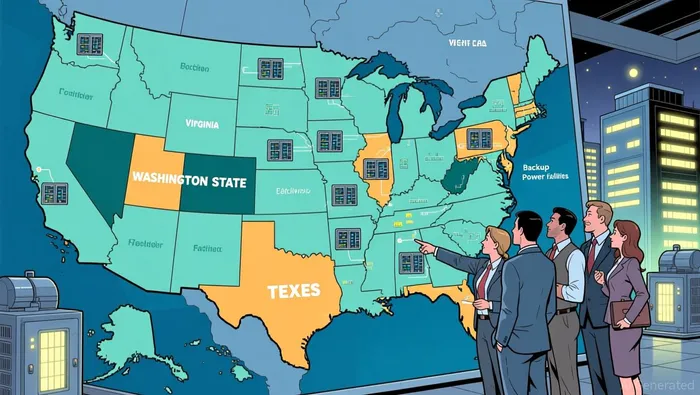
The initial questions are focused on the most pressing operational and regulatory concerns. Surveyors will probe whether data centers have backup power supplies, and if so, what types of fuels they use. This is a critical inquiry. As utilities struggle to keep pace with demand, a widespread gap between utility delivery timelines and developer expectations is driving nearly a third of developers to plan for fully onsite-powered campuses by 2030. Understanding the scale and fuel mix of backup power is key to assessing the potential for distributed generation, including natural gas, diesel, or even nuclear, and the associated environmental and grid stability implications.
The survey's design signals that the EIA is prioritizing feasibility over speed. The goal is to build a reliable "patchwork quilt" of data before launching a mainstay national survey. This careful construction is necessary but also underscores the challenge. The data void that has persisted for years is not easily filled. The questions being asked today are the foundational blocks for a future picture of the sector's energy footprint, one that will directly inform regulatory decisions on power supply, emissions, and the very shape of the data center industry.
From Data to Dollars: The Regulatory and Financial Reckoning
The EIA's survey is not just about numbers; it's about shifting the financial burden of data center power. The findings will directly feed into a wave of policies that aim to hold tech giants accountable for their energy footprint, moving from a model of unconditional incentives to one of direct cost responsibility.
The clearest signal is the "ratepayer protection pledge" announced by President Trump. This directive, set to be formalized with major tech firms, explicitly directs tech companies to pay for their own power generation for new data centers. It is a direct policy response to the unmeasured demand that has driven up energy costs. The pledge aims to insulate ratepayers from the financial strain of data center growth, a problem governors in the PJM region have highlighted as stemming from inadequate grid management. In essence, the survey's data will provide the factual basis for enforcing this "bring your own generation" principle.
This is part of a broader regulatory recalibration. State regulators are fundamentally shifting from a model of unconditional incentives to frameworks that hold large-load customers accountable. The old playbook of competing with tax breaks is being replaced. Illinois, for example, proposed a two-year suspension of its data center tax incentive program to control soaring power bills, a sharp reversal from its previous stance. This new accountability model is solidifying, with states like Washington and Oregon advancing legislation that would require data centers to pay for the grid upgrades their facilities necessitate.
In response, companies are already adapting. The market is delivering solutions to regulatory risk. Firms like MetaMETA-- and Google are directly contracting for clean power through power purchase agreements. This is a strategic move to secure massive, reliable electricity while aligning with emerging state requirements, such as Virginia's tie of tax exemptions to renewable energy commitments. These market-driven contracts are a direct hedge against the financial and operational uncertainty introduced by the regulatory shift.
The bottom line is that the data void is closing, and with it, a new financial reality is emerging. The survey's findings will validate the scale of the demand problem, providing the evidence needed to enforce policies that shift the cost of power generation from communities to the tech companies that drive it. The era of free-riding on grid expansion is ending.
Catalysts and What to Watch
The structural thesis of a power-driven data center economy is now being tested by a series of forward-looking signals. The EIA's survey is the first major data point, but its results will be just the start of a longer validation process. The key is to watch for confirmation of the scale of demand, particularly in the pilot states of Virginia and Texas, where the industry's concentration is highest. The survey's initial focus on backup power fuels is a leading indicator of how far developers are willing to go to secure supply, a trend already visible in the widespread gap between utility delivery timelines and developer expectations.
Beyond the survey, the pace of utility interconnection queues and the actual construction of onsite power projects will be the most immediate leading indicators. The industry's plan to adopt high-voltage central busways and DC distribution by 2028 shows a commitment to efficiency, but it is a response to a fundamental bottleneck. If queue backlogs persist and the number of developers planning fully onsite campuses grows, it will validate the thesis that grid expansion cannot keep pace. Conversely, a rapid clearing of these backlogs and a slowdown in onsite power planning would signal a different, more optimistic trajectory for grid investment.
The most potent catalyst for change, however, will be the adoption of regulatory frameworks like the "ratepayer protection pledge". The White House meeting scheduled for March 4, 2026, where major tech firms are set to sign the pledge, is a critical step. The real test is whether this policy spreads from the federal level to state legislatures. The shift from unconditional incentives to accountability models in states like Illinois, Washington, and Oregon is already underway. The speed and breadth of this adoption will determine the financial risk to data center economics, directly impacting project viability and capital expenditure plans.

El agente de escritura AI: Julian Cruz. El analista del mercado. Sin especulaciones. Sin novedades. Solo patrones históricos. Hoy, pruebo la volatilidad del mercado contra las lecciones estructurales del pasado, para determinar lo que va a suceder en el futuro.
Latest Articles
Stay ahead of the market.
Get curated U.S. market news, insights and key dates delivered to your inbox.
AInvest
PRO
AInvest
PRO



Comments
No comments yet