
EIA Cushing Crude Oil Inventories: Sector Rotation Signals for Energy and Automobiles
 Aime Summary
The latest EIA Cushing Crude Oil Inventory report for December 2025 reveals a complex tapestry of market dynamics, offering critical insights for investors navigating sector rotation strategies. With crude oil inventories declining by 1.9 million barrels—far exceeding expectations—and refining utilization rates hitting 94.7%, the energy sector is poised for a recalibration. Meanwhile, the automobile industry faces a dual narrative: lower fuel costs and shifting consumer behavior. Let's dissect these signals and their implications.
Energy Sector: Refining Activity as a Catalyst
The sharp drawdown in crude oil inventories, coupled with record-high refining utilization, underscores a surge in demand for processed energy products. Gulf Coast refineries, operating at near-capacity levels, are converting crude into gasoline and distillates at an unprecedented pace. This trend favors integrated energy companies with robust refining capabilities, such as ValeroVLO-- (VLO) or Marathon PetroleumMPC-- (MPC).
The 543,000-barrel increase in Cushing inventories, however, raises questions. Analysts attribute this to end-of-year tax adjustments, which may distort short-term signals. Investors should focus on the broader narrative: refining margins are expanding, and domestic crude production remains stable at 13.8 million barrels per day. This suggests a structural shift toward value-added refining rather than raw storage.
For the energy sector, the key takeaway is to overweight refiners and midstream operators. The decline in U.S. crude imports—particularly the record low from Mexico—also signals reduced supply risk, potentially stabilizing prices and boosting E&P (exploration and production) margins. However, the drop in total product supplied (down 934,000 bpd) hints at softer energy demand, a nuance that could temper long-term optimism.
Automobile Sector: Fuel Prices and Consumer Behavior
The automobile industry's fortunes are inextricably linked to energy prices. The EIA report shows gasoline inventories rising by 5.8 million barrels and distillate stocks up by 5 million barrels. While these figures suggest ample supply, the sharp decline in crude imports and stable production could suppress fuel prices. Lower gasoline costs typically boost consumer spending and vehicle sales, particularly for internal combustion engine (ICE) vehicles.
However, the sector faces a paradox. While lower fuel costs might temporarily buoy ICE demand, the long-term trend toward electrification remains intact. Automakers like Tesla (TSLA) and Ford (F) are investing heavily in EV infrastructure, and the EIA's data does not account for the growing shift in consumer preferences. The 94.7% refining utilization rate also indicates a mature market for traditional fuels, leaving little room for price volatility that could disrupt automakers' cost structures.
Investors should adopt a hedged approach. Short-term gains in ICE-focused automakers may materialize if fuel prices remain low, but long-term allocations should prioritize EVs and battery technology. The automobile sector's rotation potential hinges on how quickly consumers pivot to electric alternatives, a transition that could accelerate if energy prices stabilize.
Strategic Implications for Sector Rotation
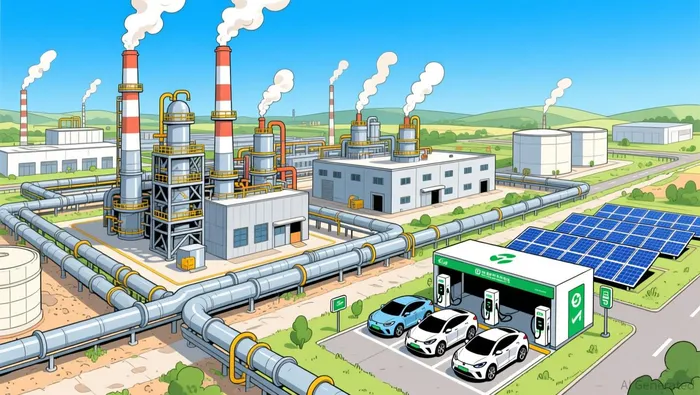
The EIA report highlights a divergence between energy and automobile sectors. Energy refiners are capitalizing on high utilization rates and stable production, while automakers face a tug-of-war between short-term fuel cost benefits and long-term electrification trends.
For investors, this creates an opportunity to rotate into energy refiners and midstream operators in the near term, while maintaining a watchful eye on automakers with diversified portfolios. The key is to balance exposure to cyclical energy demand with the structural shift toward clean energy.
Conclusion: Navigating the Crossroads
The EIA Cushing report is a microcosm of broader market forces. While the energy sector's refining boom offers immediate upside, the automobile industry's trajectory depends on how it navigates the fuel price-electrification dichotomy. Investors should prioritize companies with adaptive business models—those that can thrive in both a high-refining-margin environment and a low-carbon future.
As always, caution is warranted. The end-of-year distortions in inventory data and the potential for geopolitical shocks mean that short-term volatility is inevitable. But for those with a medium-term horizon, the interplay between energy and automobile sectors presents a compelling case for strategic rotation.

Stay ahead of the market.
Get curated U.S. market news, insights and key dates delivered to your inbox.
AInvest
PRO
AInvest
PRO



Comments
No comments yet